Giảm giá hấp dẫn cho tour du lịch!



THE SUBTERRANEAN CATHEDRAL: PHONG NHA — DECODING THE PHILOSOPHY OF THE HIDDEN, GEOLOGICAL TIME, AND THE SACRED SANCTUARY OF THE EARTH
More than caves: exploring Vườn Quốc Gia Phong Nha (Phong Nha National Park) as Việt Nam’s ultimate testament to geological immensity, analyzing the profound philosophy of the Hidden (tàng ẩn), its role as an archive of deep time, and its embodiment of spiritual stillness and national resilience.
VIETNAMESE CULTURETHE WATER CIVILIZATIONLOCAL EXPERIENCES
Tobin Nguyen
11/8/20255 phút đọc
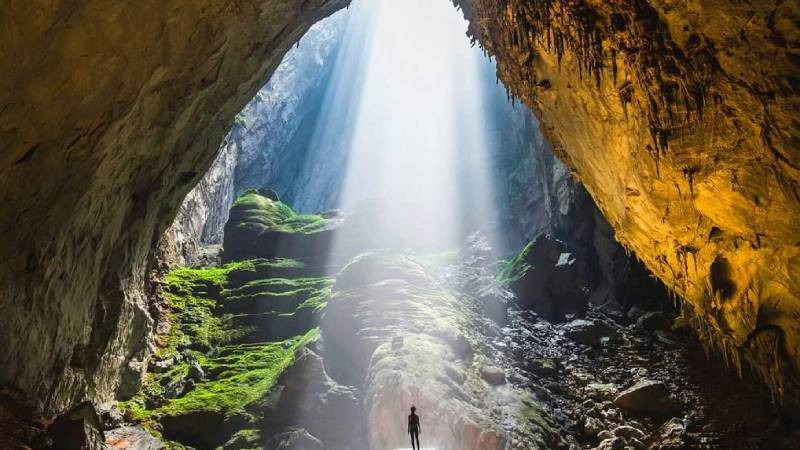
For the international explorer, the geologist, and the seeker of the sublime, Vườn Quốc Gia Phong Nha – Kẻ Bàng—a vast, rugged park of towering limestone mountains and subterranean rivers in Central Việt Nam—is far more than a collection of natural wonders. Recognized by UNESCO as a World Heritage Site, the park's heart lies in its immense, labyrinthine caves and grottos, most famously Sơn Đoòng (the world's largest). This environment is the nation's primal sanctuary, a landscape defined by profound contradiction: a fiercely rugged surface hiding a vast, cathedral-like universe of stillness, immense scale, and terrifying beauty beneath the earth. The cave, in this culture, is the ultimate philosophical space—the silent, hidden archive of the earth's deepest history.
As specialists in Vietnamese heritage and profound cultural analysis at Vietnam Charm, we embark on an essential, detailed exploration to decode this philosophy of the hidden. We will meticulously analyze the geological mandate that sculpted the towering caves and valleys, the spiritual geometry that transforms the cave into a "subterranean cathedral," the historical mandate that required these hidden spaces for national survival, and the profound way this environment articulates the core values of disciplined stillness, environmental humility, and the enduring resilience of memory. Understanding Phong Nha is essential to grasping the emotional weight and the immense, silent power of Central Vietnamese identity.
1. The Geological Mandate: Limestone, Water, and the Archive of Deep Time
The physical reality of Phong Nha is a direct, humbling result of a geological mandate—a relentless, slow-motion transformation of rock by water, spanning over 400 million years. The park is the ultimate, readable archive of the Earth’s deep time.
The entire landscape is defined by its massive, ancient karst topography—thick, uplifted layers of limestone rock. The formation of the caves is a testament to the inexorable power of water. Over millennia, the tropical climate's heavy rainfall, combined with the presence of immense subterranean rivers, dissolved the soluble limestone along its natural fissures. This process, known as karst erosion, created the unique structural phenomenon: the towering, isolated limestone peaks on the surface are merely the roof of a vast, complex, hidden universe beneath the ground. The most immense chambers, like Sơn Đoòng, are large enough to contain entire city blocks and possess their own microclimates, jungles, and weather systems.
The key to this geological power is the water cycle. The rivers—such as the Sông Son (Son River)—are the visible external conduits that feed the vast, hidden arteries below, demonstrating a continuous, living connection between the surface world and the subterranean darkness. The stalactites, stalagmites, and flowstone formations within the caves are not static decorations; they are the visible, crystallized record of time, showing the slow, patient, continuous work of mineral-rich water deposition over hundreds of thousands of years. Phong Nha is a scientific and spiritual lesson in immensity and patience.
2. The Philosophy of the Hidden: The Cave as a Spiritual Sanctuary
The profound spiritual resonance of the cave in Vietnamese culture is rooted in the philosophy of the Hidden (tàng ẩn)—the belief that the deepest truths, the greatest powers, and the most sacred sanctuaries are often found not in the open light, but in the stillness and secrecy of the earth’s interior.
The cave naturally possesses an architecture of profound stillness and isolation. The immediate darkness, the constant, cool temperature, and the muffled silence create a perfect environment for contemplation and detachment. For both Buddhist and folk practitioners, the cave is seen as an ideal location for meditation (thiền) and spiritual retreat, offering a natural separation from the chaos, ego, and distraction of the surface world. The cave becomes a natural pagoda—a sanctuary where the mind can reset and pursue inner clarity.
The aesthetic of the cave is defined by its spiritual geometry. The immense, towering chambers and massive stone formations evoke a feeling of sublime humility and awe, reminding the human observer of their smallness when measured against geological time. The natural forms—often resembling thrones, guardian figures, or altars—are immediately imbued with spiritual significance, transforming the geological space into a functional temple. This philosophy asserts that the ultimate truth is not loud or obvious; it is silent, hidden, and requires disciplined effort to uncover, mirroring the necessary difficulty of achieving enlightenment.
3. The Historical Mandate: Survival, Secrecy, and the Resilience of the Earth
The caves of Phong Nha hold a vital, profound historical mandate—they served as the necessary sanctuary for survival, secrecy, and resilience during the 20th-century conflicts that ravaged Central Việt Nam.
During the intense warfare and bombing campaigns that targeted the Trường Sơn (Annamite Range), the immense, hidden network of Phong Nha’s caves became a crucial logistical, military, and human sanctuary. The caves were used as field hospitals, weapons depots, command centers, and safe havens for the local populace. The geological protection provided by the limestone mountains was absolute, ensuring that these vital operations could continue, even under the heaviest external bombardment. The ability of the Vietnamese people to utilize the natural terrain for strategic defense is a hallmark of their military genius.
This historical role imbues the caves with a profound emotional weight and national memory. They are not merely geological features; they are sacred memorials to endurance and survival. The darkness within the caves is a repository of silent human courage, hardship, and the absolute resilience of the national spirit. The historical memory ensures that the caves are viewed as a partner in the struggle—a testament to the land's fierce, hidden protection of its people. The Earth itself became an active agent of national sovereignty.
4. The Sociological Impact: Exploration, Conservation, and the New Frontier
The global discovery and exploration of the immense caves (starting prominently with the finding of Sơn Đoòng) have created a profound sociological and ethical challenge for the region: balancing the economic necessity of tourism with the spiritual and ecological mandate of preservation.
Phong Nha has become a global frontier for exploration and geological discovery, attracting scientists, explorers, and adventure tourists from around the world. This attention provides immense economic opportunity for the traditionally impoverished region, transforming local villagers from farmers into guides, porters, and conservation specialists. This shift has created a unique, visible form of cultural empowerment, where the local, intimate knowledge of the terrain (the "primal literacy" of the forest) is suddenly elevated to a globally valuable skill set.
However, this boom creates an urgent conservation mandate. The fragile, unique ecology and geology of the caves—their rare species, pristine air quality, and slow formation rates—demand strict, disciplined management. The park must negotiate a careful ethical line: how to share the sublime beauty of the caves with humanity while ensuring that their spiritual stillness and geological integrity remain utterly uncompromised. The pursuit of economic gain must be perpetually balanced by a profound, abiding respect for the ancient wisdom preserved in the rock.
5. Conclusion: The Permanent Testament to Inner Power
Phong Nha National Park is the ultimate, enduring, and visually magnificent testament to the power of geological time, the wisdom of the hidden, and the resilience of the human spirit. It is a landscape that transforms massive scale into profound stillness. By analyzing the geological mandate that sculpted the subterranean cathedrals, the philosophical reverence for the sacred interior, the historical mandate that used the caves for survival, and the sociological challenge of managing its global fame, the observer gains access to a core truth: the caves are far more than rock. They are the permanent, unwavering sanctuary of the earth's deepest memory—a powerful, quiet declaration that asserts the cultural value of disciplined introspection, environmental humility, and the belief that the greatest, most resilient power is often found not in the open light, but in the vast, silent, and beautifully hidden chambers of the soul.
We are on social media
Vietnam Charm belongs to Vietpearl Travel., JSC
Contact:
Email: info@vietnamcharm.top
© 2026. by Vietnam Charm. All rights reserved
Travel license number: 01-827/2020
Refund Policy