Giảm giá hấp dẫn cho tour du lịch!


THE TASTE OF THE KARST: WHERE LIMESTONE AND FIRE MEET
A tale of two textures: One is the sun-dried crunch of the delta’s rice, the other is the mineral-rich tenderness of the mountain’s goat. Discover why the food of Ninh Binh isn’t just a meal—n it is a biological map of the landscape, forged in the heat of the kiln and seasoned by the wild herbs of the cliffs.
NINH BINHLOCAL EXPERIENCES
Tobin Nguyen
1/23/20263 phút đọc
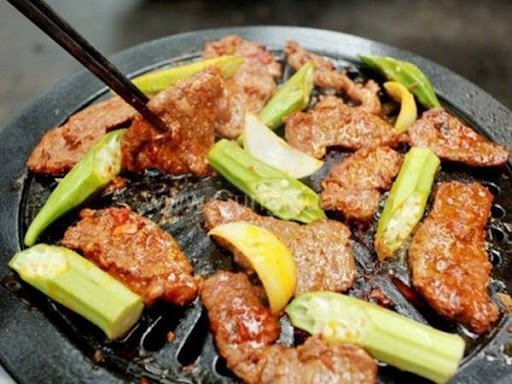
In Ninh Binh, you don't just eat the food; you eat the geography. As a journalist who has spent weeks tracking the "Flavors of the Soil," I’ve realized that the local menu is a direct reflection of the Dual Heritage. Every bite is a dialogue between the flat, fertile rice paddies and the vertical, herbal limestone peaks. If the mountains are the bones and the rivers are the blood, then the cuisine is the "Spirit" of the province—a fierce, earthy, and uncompromising taste that can’t be replicated anywhere else.
1. The Mountain Goat: The Alchemist of the Cliffs
The undisputed king of Ninh Binh’s table is the Mountain Goat (Thịt Dê Núi). But this isn't your average livestock. These goats are world-class rock climbers. They spend their days leaping between limestone crags, grazing on rare medicinal plants and wild herbs like bách bộ and tầm gửi that grow only in the crevices of the karst.
This "herbal diet" creates meat that is lean, incredibly firm, and infused with a subtle, mineral "tang" that you won't find in farm-raised animals. The most authentic way to experience this is Dê Tái Chanh (Goat meat lightly cured in lime juice). The meat is sliced paper-thin, mixed with ginger, garlic, chili, and sesame seeds, and served with green bananas and "lá sung" (fig leaves). The result is a "Visual and Sensory Slap"—a burst of sour, spicy, and earthy flavors that taste like the mountain itself. You aren't just eating protein; you are consuming the distilled essence of the limestone peaks.
2. Cơm Cháy: The Sun-Baked Heart of the Delta
If the goat represents the mountains, then Cơm Cháy (Crispy Rice) is the soul of the delta. Born from the tradition of saving the scorched rice at the bottom of the pot, Cơm Cháy has evolved into a national icon. But the real "Insider" version is an art form.
The rice must be sun-dried for days until it is bone-dry, then deep-fried in boiling oil until it puffs up like a golden cloud. It is light, incredibly crunchy, and carries the toasted aroma of the summer harvest. It’s usually topped with "ruốc" (savory pork floss) and a secret, thick sauce made from goat heart and kidney. This is the "Texture of Resilience"—a food that was built to last, a food of soldiers and travelers that has become the definitive snack of the province. Every crunch is a reminder of the sun that baked the paddies and the fire that tempered the rice.
3. Kim Sơn Wine: The Liquid Fire of the Coast
To wash it all down, you need the "Liquid Fire" of the south—Rượu Kim Sơn. Distilled in the coastal district where the river meets the sea, this sticky rice wine is famous for its potency and its clarity. It is fermented using a secret recipe of 36 traditional medicinal herbs, resulting in a spirit that is remarkably smooth despite its high alcohol content.
The locals say that Kim Sơn wine is the "Blood of the Earth." It is often aged in ceramic jars buried underground, allowing it to absorb the "Yin" energy of the soil. Drinking it is a ritual; it warms the chest and sharpens the mind, making it the perfect companion for a long night of storytelling after a day in the caves. It is the bridge between the salt of the sea and the minerals of the mountain.
4. The Hidden Gems: Eel Vermicelli and Nem Chua Yen Mac
Beyond the famous duo of goat and rice, Ninh Binh hides smaller, more intimate flavors. There is Miến Lươn (Eel Vermicelli), where the small, firm eels of the marshes are fried until crispy and served in a broth so dark and rich it looks like liquid mahogany. And then there is Nem Chua Yên Mạc, a fermented pork dish inspired by the royal snacks of the Hue court but adapted with the local flair for sour and spicy notes.
Each of these dishes is a chapter in the province's survival story. They use what the land provides—the eels from the mud, the pigs from the village, the herbs from the cliff. To eat in Ninh Binh is to perform an act of cultural communion. You are tasting the labor of the farmers, the agility of the goats, and the thousands of years of human ingenuity that turned a rugged landscape into a feast.
The Journalist's Epilogue:
Ninh Binh Cuisine is the ultimate "Visual and Sensory Slap" for the palate. It doesn't hide behind heavy sauces or complex techniques; it relies on the raw power of the ingredients and the purity of the landscape.
Next time you sit down at a local "Quán," don't just look for the familiar. Order the goat cured in lime, try the crispy rice with the heart-sauce, and take a sip of the liquid fire from Kim Sơn. You’ll realize that the true heritage of Ninh Binh isn't just found in the stone temples, but in the lingering taste of the mountain air and the delta’s sun on your tongue.
We are on social media
Vietnam Charm belongs to Vietpearl Travel., JSC
Contact:
Email: info@vietnamcharm.top
© 2026. by Vietnam Charm. All rights reserved
Travel license number: 01-827/2020
Refund Policy