Giảm giá hấp dẫn cho tour du lịch!


THE THREADS OF THE MOUNTAIN: UNRAVELING THE IDENTITY, COSMOLOGY, AND WEAVING ART OF VIỆT NAM'S ETHNIC DRESS
More than mere clothing: decoding the profound visual language encoded in the garments of Việt Nam’s 53 ethnic minority groups, exploring how fabric, pattern, and color chronicle history, social hierarchy, and the spiritual relationship with the forest.
HERITAGE & SPIRITLOCAL EXPERIENCES
Tobin Nguyen
11/6/20255 phút đọc
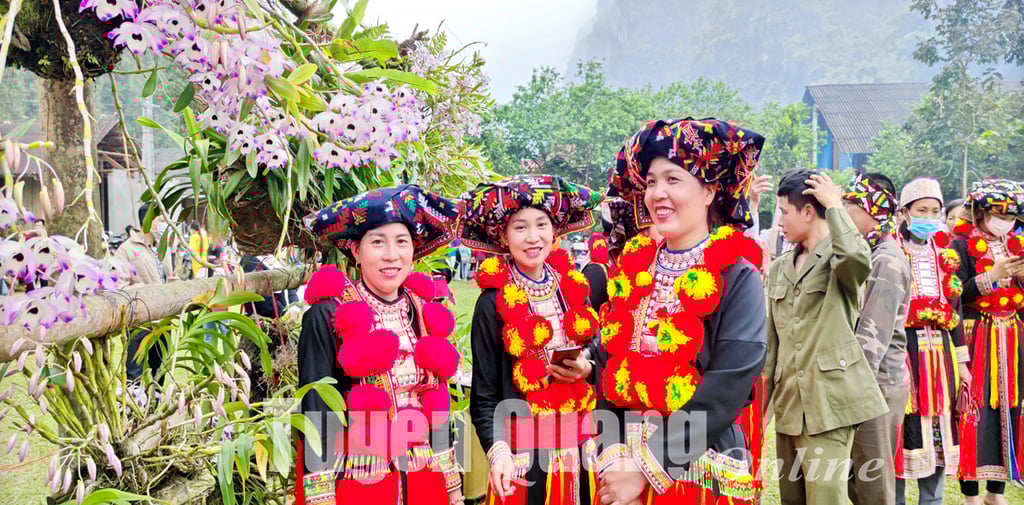
For the cultural anthropologist, the textile artist, and the discerning traveler, the dress of Việt Nam’s 53 ethnic minority groups—stretching from the Northern Highlands of Hà Giang and Sa Pa down through the Central Highlands of Tây Nguyên—offers an immense, vibrant, and complex visual library. This collection of garments is far more than a matter of regional fashion; it is a profound system of non-verbal communication, where every stitch, every dye color, and every embroidered motif serves as an essential code. The traditional dress acts as a living chronicle, documenting tribal history, ancestral beliefs, marital status, and the intimate spiritual relationship between the community and the challenging, isolated landscape they inhabit.
As specialists in Vietnamese heritage and profound cultural analysis at Vietnam Charm, we embark on an essential, detailed exploration to decode this visual language. We will meticulously analyze the geographical necessity that dictates material choice, the spiritual theology embedded in the common motifs, the matriarchal skill required for the painstaking process of weaving and dyeing, and the crucial role these fabrics play in preserving cultural sovereignty and memory against the pressures of modernity. Understanding the ethnic dress is essential to grasping the sheer ecological, social, and spiritual diversity that forms the magnificent tapestry of the Vietnamese nation.
1. The Geographical Imperative: Materials, Ecology, and Survival
The choice of fabric and the resulting structure of the dress are dictated not by aesthetic preference alone, but by the relentless, practical necessity of the terrain and climate. The garment is first and foremost a tool for survival.
In the challenging, often cold, high-altitude environment of the Northern Highlands (home to groups like the H'Mông, Dao, and Tày), the clothing is structurally designed for insulation, layering, and rugged durability. The H'Mông, for example, traditionally rely on hemp (linen)—a coarse, resilient fiber that provides excellent warmth and can withstand the rigors of mountain farming and travel. The deep indigo dye, achieved through weeks of painstaking fermentation, serves not only an aesthetic purpose but also makes the fabric highly resistant to dirt and wear. The clothing is heavy, layered, and built for protection against the intense cold and seasonal dampness, reflecting a philosophy of pragmatic endurance.
Conversely, the garments of the Central and Southern Highlands (home to groups like the Gia Rai, Ba Na, and Ê Đê) are designed for the intense, humid heat and thick jungle environment. Their traditional attire is often made from lighter cotton or even the inner bark of specific trees. The garments are simpler, less layered, and focus on providing ventilation and ease of movement during hunting, foraging, and ceremonial dancing. This geographical difference means that dress is the most immediate, visible articulation of a group's relationship with its specific ecological environment.
2. The Matriarchal Craft: Weaving, Dyeing, and the Art of Patience
The creation of the traditional garment is an intense, multi-stage process that is almost universally preserved as a matriarchal responsibility. The skill of transforming raw fiber into complex, meaningful cloth is the core competency of the woman, and this control grants her immense social and cultural authority.
The process is defined by an absolute dedication to patience and generational knowledge. The traditional dyeing process, particularly the indigo dye used extensively by the H'Mông and Dao, is a chemically complex ritual involving the fermentation of indigo leaves in giant vats over weeks or months. The depth and stability of the color depend entirely on the skill and ancestral knowledge of the female artisan.
Weaving is equally demanding. Many groups, such as the Tày and the Chăm, maintain the use of traditional, fixed-loom techniques that require immense focus and physical stamina. The resulting fabric—often a unique blend of cotton, silk, and local fibers—is imbued with the artisan's personal time, labor, and spiritual focus. In many ethnic groups, a woman is not considered fully marriageable until she has mastered the art of weaving and produced a dowry of her own intricately crafted cloth, cementing the skill as a crucial rite of passage and a public demonstration of her worth and diligence.
3. The Lyrical Language of Motifs: Cosmology and Social Code
The true depth of the ethnic dress lies not just in the fabric, but in the motifs and patterns embroidered, woven, or appliquéd onto the surface. These patterns constitute a complex, lyrical visual language that chronicles the group's cosmology, history, and the wearer's immediate social status.
The patterns are rarely decorative; they are narrative codes.
Cosmology and Nature: Common motifs often represent crucial elements of the spiritual world: the sun and stars (symbolizing fertility and destiny), the water buffalo horn (symbolizing wealth and agricultural power), the rice grain, and the mountain peak. For many groups, the complex diamond or spiral patterns represent the ancestors or the unraveling of the universe, turning the clothing into a wearable spiritual map.
The Social Biography: The dress acts as a visible biography of the wearer. Specific patterns, colors, or arrangements of silver jewelry (prominently worn by the H'Mông and Dao) indicate: Marital Status (married, single, widowed); Tribal Sub-Group (distinguishing between Red Dao, Black H'Mông, etc.); Age, and Wealth. For instance, the intricate headscarves and leg wrappings of the Dao women communicate complex information about their age and village identity to anyone who knows the visual code. This system ensures that the garment maintains social order and communicates identity silently and instantly.
4. The Challenge of Preservation: Sovereignty and Identity
The cultural space of ethnic dress faces immense, multi-faceted challenges in the face of rapid economic change and globalization, making its preservation a critical act of cultural sovereignty.
The primary threat is the disconnection from the source. The labor-intensive process of traditional weaving and dyeing is being replaced by cheaper, mass-produced fabrics imported from neighboring countries. While these substitutes are more affordable and easier to maintain, they lack the spiritual connection and the narrative code of the indigenous materials. The displacement of homemade fabric by commercial cloth is a direct threat to the matriarchal skill set and the generational transfer of knowledge.
Furthermore, there is the challenge of commercialization and simplification. When traditional garments are adapted for the tourist market, the meticulous patterns are often simplified, and the color palettes are altered to suit Western tastes. This external commodification risks stripping the garments of their profound, complex meaning, reducing them to mere aesthetically pleasing costumes.
The preservation effort is therefore a profound act of self-affirmation. Initiatives focus intensely on revitalizing the traditional craft villages, promoting indigenous dyes and fibers, and most importantly, educating the younger generation within the community on the sacred, narrative meaning of every pattern and stitch. Preserving the traditional dress is fundamentally preserving the historical and spiritual memory of the tribe itself.
The traditional dress of Việt Nam’s ethnic groups is one of the world's great archives of human history and textile art. It is a profound, eloquent testament to the resilience of isolated communities, the enduring skill of the women who are its guardians, and the spiritual power of their intimate connection to the mountain and the forest. By analyzing its structural necessity, its matriarchal production, and the lyrical code of its motifs, the traveler gains access to the deep, complex soul of the Vietnamese Highlands.
We are on social media
Vietnam Charm belongs to Vietpearl Travel., JSC
Contact:
Email: info@vietnamcharm.top
© 2026. by Vietnam Charm. All rights reserved
Travel license number: 01-827/2020
Refund Policy