Giảm giá hấp dẫn cho tour du lịch!



THE TRIUMPHANT FUSION: BÁNH MÌ — FROM COLONIAL STAPLE TO THE WORLD'S MOST COMPLEX SANDWICH
More than bread: exploring Bánh Mì as Việt Nam's ultimate culinary narrative of resilience and creative assimilation, analyzing its engineering genius, its layered history, and its profound role as the ultimate expression of democratic, high-impact street food.
VIETNAMESE CULTUREGASTRONOMY & TRADITIONLOCAL EXPERIENCES
Tobin Nguyen
11/6/20255 phút đọc
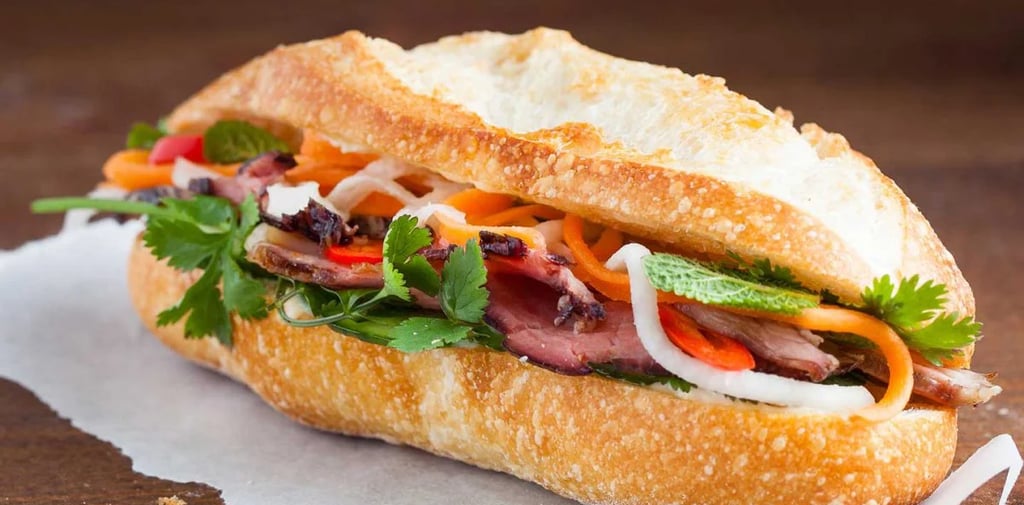
For the global traveler, the Bánh Mì stands as the definitive, irresistible symbol of Vietnamese culinary ingenuity. It is a deceptively simple baguette sandwich, yet its complexity of flavor, texture, and history elevates it far beyond mere street food. Bánh Mì is not just a meal; it is a portable history lesson—a culinary monument to the nation's profound ability to absorb external influence, deconstruct it, and transform it into something uniquely and triumphantly Vietnamese. The preparation of a perfect Bánh Mì is a high-speed ritual demanding precision, balance, and an intimate understanding of the sensory jolt required for the urban soul.
As specialists in Vietnamese heritage and profound cultural analysis at Vietnam Charm, we embark on an essential, detailed exploration to decode this global masterpiece. We will meticulously analyze the historical intersection that mandated its creation, the engineering genius of its shatteringly crisp crust, the philosophical layering of its internal components, and the profound role Bánh Mì plays as the ultimate expression of democratic, affordable, and high-impact urban gastronomy. Understanding Bánh Mì is essential to grasping the core values of creative assimilation, entrepreneurial speed, and the comforting resilience embedded in Southern Vietnamese flavor.
1. The Historical Mandate: From Colonial Staple to National Icon
The genesis of Bánh Mì is a direct, clear narrative of culinary decolonization and adaptive genius, rooted in the necessity created by the French colonial presence and the subsequent resilience of the local population.
The original baguette was introduced by the French during the mid-19th century. Initially, it remained a foreign, expensive commodity consumed primarily by the colonial administration and the Vietnamese urban elite. It was a symbol of French power and dietary difference. However, during times of scarcity and rising food costs, the local bakers, driven by economic pressure and ingenuity, began to gradually replace the costly imported wheat flour with cheaper, locally abundant rice flour. This seemingly simple substitution had a transformative, profound effect on the final product: the traditional French baguette, which is dense and chewy, was replaced by a loaf that was lighter, airier, and possessed a unique, thinner crust that shatters explosively upon the first bite. This lighter bread became instantly and universally more suitable for the tropical humidity and the local palate.
The sandwich form evolved rapidly, particularly in the South, as the country sought to replace expensive, foreign fillings with cheap, abundant, and intensely flavorful local ingredients. The simple colonial ham-and-butter sandwich was deconstructed and rebuilt using rich, local pâté, Vietnamese cold cuts (chả lụa), savory sauces, and the crucial cooling contrast of pickled vegetables (đồ chua). This final synthesis was a powerful statement: the material symbol of the colonizer (the baguette) was consumed, stripped of its original meaning, and reborn as the ultimate, affordable, and uniquely Vietnamese expression of democratic cuisine.
2. The Engineering Genius: Crust, Crumb, and the Layered Jolt
The true mastery of Bánh Mì lies not just in its assembly, but in the engineering perfection of the bread itself—a structural and textural masterpiece that dictates the entire sensory experience.
The perfect Bánh Mì demands a profound, structural dichotomy: the brittle, shattering crust and the light, airy, near-weightless crumb. This dual-texture is achieved by the subtle incorporation of rice flour into the wheat dough, which radically alters the gluten structure. The thin, fragile crust breaks apart under minimal pressure, creating an audible crackle that is the necessary sonic signal of its quality. The interior crumb, or ruột, must be highly absorbent and almost hollow, designed to soak up the rich, savory sauces and oils from the filling without becoming soggy or heavy. This structural genius ensures that the sandwich is remarkably light to consume despite its powerful flavor profile.
The construction of the filling is a lesson in sensory layering. The layers are added meticulously to achieve a sequence of high-impact flavors and textures:
Base Layer: A creamy, savory spread of homemade pâté and often rich mayonnaise or bơ (butter), providing fat and moisture.
Core Layer: The protein—whether rich grilled pork (thịt nướng), delicate cold cuts, or soft fried eggs—providing the primary savory flavor.
The Crunch and Cool Layer: The indispensable inclusion of fresh, crisp cucumber slices, cilantro, and the sharp, bright contrast of the pickled carrots and daikon (đồ chua).
The Final Jolt: A dash of complex, savory soy or fish sauce, and the necessary, immediate heat from sliced chili or chili sauce, providing the final, high-impact flavor profile that defines Southern Vietnamese gastronomy.
This methodical layering ensures that every single bite delivers a complex, high-impact sensory jolt—a perfect synthesis of savory, sweet, sour, spicy, and umami.
3. The Democratic Platform: Affordability, Mobility, and Urban Life
The Bánh Mì is the ultimate democratic platform for urban commerce, embodying the core values of affordability, speed, and logistical ingenuity that power the modern Vietnamese metropolis.
The sandwich is designed for maximum affordability and minimum consumption time. It is fast food perfected for the high-velocity urban worker, allowing for a nutritious, flavorful, and filling meal to be consumed rapidly, often while standing or immediately before mounting a motorbike. This speed ensures that the urban worker minimizes downtime, maximizing their productive hours—a crucial element of the nation’s fierce economic drive.
The production of Bánh Mì is integrated into the pervasive micro-business ecosystem of the Vỉa Hè (sidewalk). The entire operation—the portable oven for warming the bread, the display case of fresh ingredients, and the simple counter—is condensed onto a single, highly mobile cart. This minimal infrastructure ensures that the Bánh Mì vendor can set up shop anywhere, providing vital food security and easy access to workers across every urban corridor. The sheer ubiquity of the Bánh Mì vendor—at every intersection, every market, every alley mouth—makes it the most reliable, ubiquitous logistical solution for urban sustenance. The Bánh Mì cart is thus the ultimate monument to the power of the small-scale entrepreneur.
4. The Regional Identity: Sài Gòn's Richness vs. Hà Nội's Subtlety
While Bánh Mì is now a national icon, its execution and emphasis still reflect the profound regional differences in culinary philosophy between the North and the South.
Bánh Mì Sài Gòn (Southern Style): Characterized by abundance, richness, and complexity of filling. The Southern style embraces a wider variety of cold cuts, more sauces, richer pâté, and often sweeter mayonnaise or butter spreads. This reflects the Southern aesthetic preference for flavor exuberance, textural diversity, and immediate, high-impact sensory pleasure. The emphasis is on the complete, complex sandwich experience, often served hot and loaded with fresh chili.
Bánh Mì Hà Nội (Northern Style): Characterized by simplicity, focus, and minimalism. The Northern style often pares down the filling to focus on one or two high-quality ingredients, such as a simple Bánh Mì Trứng (fried egg) or Bánh Mì Bơ (butter). The philosophy prioritizes the quality of the bread and the primary ingredient, reflecting the Northern aesthetic preference for restraint, clarity, and savory purity.
These variations prove that even a globalized, ubiquitous food maintains its deep-seated connection to the contrasting cultural palates and philosophical approaches of the North and the South, turning the sandwich into a complex map of national flavor identity.
5. Conclusion: The Portable Testament to Resilience
The Bánh Mì is the ultimate, enduring testament to the Vietnamese spirit of resilience, creativity, and profound adaptability. It transforms the legacy of colonial imposition into a democratic, unique, and delicious expression of national sovereignty. By decoding the engineering genius of the rice-flour crust, the layered complexity of its flavor profile, the historical narrative embedded in its ingredients, and its essential role as the fuel of the urban micro-economy, the observer gains access to a profound truth: Bánh Mì is more than a sandwich. It is a portable cultural monument—a symbol of the nation’s ability to take the past, deconstruct it, and rebuild it into a triumphant, forward-looking masterpiece that feeds the body and uplifts the entrepreneurial soul of the metropolis.
We are on social media
Vietnam Charm belongs to Vietpearl Travel., JSC
Contact:
Email: info@vietnamcharm.top
© 2026. by Vietnam Charm. All rights reserved
Travel license number: 01-827/2020
Refund Policy