Giảm giá hấp dẫn cho tour du lịch!


THE UMAMI DOCTRINE – THE SECRET OF FISH & FLAVOR
"In Nha Trang, we don't just eat; we listen to the ocean through a bowl of broth. Discover the 'Umami Doctrine'—where the clarity of a fish soup and the salt of the bay create a culinary frequency found nowhere else on earth."
NHA TRANGSHORE EXCURSIONLOCAL EXPERIENCES
Tobin Nguyen
1/17/20264 phút đọc
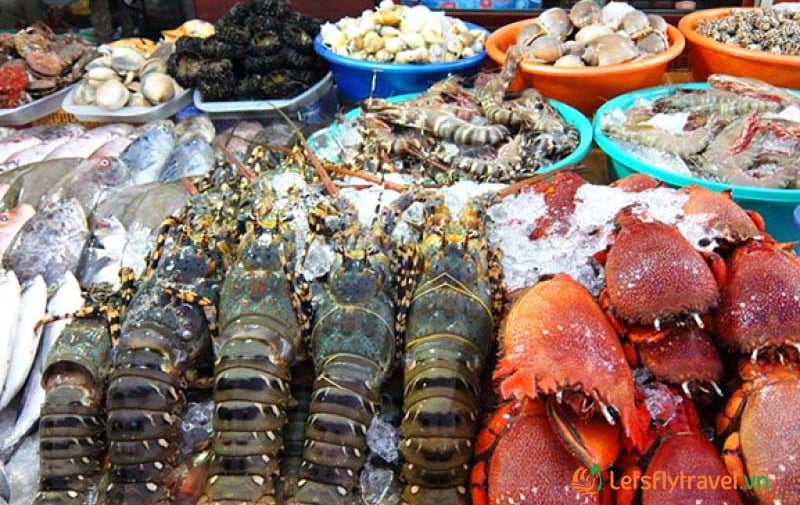
To understand the culinary soul of Nha Trang, one must first discard the notion that Vietnamese food is defined solely by Phở. While the beef-laden bowls of the North have conquered the globe, the coastal "Guru" knows that the real test of a kitchen—and the ultimate expression of the "Slow Pulse"—lies in the Bún Cá (Fish Noodle Soup).
In this city, seafood is not just an ingredient; it is a sacred text. The way a local chef treats a mackerel or a sailfish tells you everything you need to know about their relationship with the sapphire bay. This is what we call The Umami Doctrine: a philosophy of extreme freshness, transparency of flavor, and a specific "sweet aftertaste" that can only be produced by the unique salinity of this coastline.
1. The Clarity of the Sea: Why the Broth Must Be Transparent
In the West, a "rich" soup usually implies cream, fat, or a thick reduction of bones. In Nha Trang, richness is defined by clarity. If you sit down at a legendary Bún Cá stall in a hidden hẻm, you will notice that the broth looks almost like spring water. This is not a sign of weakness; it is a sign of supreme technical mastery.
The Physics of Simmering: The broth of Nha Trang's Bún Cá is a distillation of the ocean. It is made primarily from the bones of sailfish (cá cờ) and mackerel (cá thu). Unlike meat-based broths, these fish bones contain very little fat. The local secret lies in the temperature control: the pot must never reach a rolling boil. A gentle simmer ensures that the proteins do not emulsify, keeping the liquid crystal clear while extracting a profound, clean sweetness.
The Pineapple & Tomato Balance: To sharpen the Umami, local chefs introduce a subtle acidity using pineapple and tomatoes. This isn't to make the soup sour, but to "brighten" the fish profile, cutting through any potential briness and leaving the palate feeling refreshed rather than heavy. To a Westerner used to heavy chowders, this clarity is a revelation—it is a soup that feels like it is detoxifying your body with every spoonful.
2. The Science of the "Hậu Ngọt" (Sweet Aftertaste)
Travelers often remark that the seafood in Nha Trang tastes "sweeter" than in other parts of the world, even compared to other coastal cities in Vietnam like Da Nang or Vung Tau. This isn't an illusion; it is a result of the salinity and depth of the bay.
Nha Trang Bay is deep and protected by a vanguard of islands, creating a specific mineral concentration in the water.
Mineral Concentration: The higher salt content in the sapphire waters forces the local marine life—from the snapper to the squid—to produce more amino acids to maintain their internal fluid balance.
The Result: When you eat a grilled squid or a steamed snapper here, your tongue detects a high concentration of glutamates. This produces the "Hậu Ngọt"—a natural, lingering sweetness that stays on the back of your throat long after the saltiness has faded. It is the purest form of "Coastal Umami," and once your palate adjusts to it, "regular" seafood will always taste flat by comparison.
3. The "Chả Cá" Philosophy: Texture as Language
If the broth is the soul of the meal, the Chả Cá (Fish Cakes) are its personality. These aren't the breaded, deep-fried patties found in Western fast food. Chả Cá is a labor of love, made by hand-scraping the flesh of mackerel or lizardfish, then pounding it with a mortar and pestle until it reaches a bouncy, elastic texture.
Steamed vs. Fried: A bowl of Bún Cá usually offers two varieties.
The Steamed (Hấp): This preserves the pure, delicate flavor of the fish and highlights its smooth, almost silk-like texture.
The Fried (Chiên): The golden-brown skin adds a savory, smoky dimension and a satisfying "snap" when you bite into it. For the local, the interplay between these two textures—set against the softness of the rice vermicelli—is a form of culinary communication. It tells the story of the fish’s journey from the net to the table.
4. The Sứa (Jellyfish) Paradox: Eating the Ocean’s Crunch
For the adventurous "Guru," no bowl of fish soup is complete without Sứa (Jellyfish). To the uninitiated, the idea of eating jellyfish is strange, but in Nha Trang, it is a seasonal delicacy that adds a crucial architectural element to the meal.
The Texture Play: The jellyfish used here (sand jellyfish) are translucent, white, and have absolutely no flavor of their own. Their value lies entirely in their crunch. When added to the hot broth, they remain firm, providing a spectacular "snap" that contrasts with the tender fish cakes. It is the ultimate "Slow Food" experience—you cannot rush through a bowl of jellyfish soup; you have to engage with every crunch, making you more mindful of the flavors surrounding it.
5. Tactical Dining: How to Eat Like a Coastal Guru
To truly experience the Umami Doctrine, you cannot simply walk into a hotel restaurant. You must follow the "Slow Pulse" into the streets.
The Condiment Ritual: A local never eats the soup as it is served. You must first "prepare" your bowl. This involves a squeeze of lime to wake up the acidity, a small dollop of spicy shrimp paste (mắm tôm) to deepen the Umami, and a mountain of shredded herbs (raw sprouts, split water spinach, and fish mint).
The Timing: The best Bún Cá is found between 6:00 AM and 9:00 AM. This is when the broth is at its freshest—having simmered since 3:00 AM—and the fish cakes are still warm from the fryer.
The "Hẻm" Rule: Look for the places where the floor is covered in napkins and lime wedges, and where the lady behind the pot is moving with the rhythmic precision of an orchestra conductor. If there is no English menu, you’ve found the gold.
THE UMAMI DOCTRINE TOOLKIT
Nha Trang Seafood & Fish Soup Deep-Dive: Vetted street food tours focusing on the "Secret Broths" of the Grid. 👉 [Insert Link Here]
Vietnamcharm’s "Market to Table" Experience: Learn to identify the freshest catch and the secret of the fish-cake bounce. 👉 [Insert Link Here]
We are on social media
Vietnam Charm belongs to Vietpearl Travel., JSC
Contact:
Email: info@vietnamcharm.top
© 2026. by Vietnam Charm. All rights reserved
Travel license number: 01-827/2020
Refund Policy