Giảm giá hấp dẫn cho tour du lịch!



The Unfolding Feast: The Philosophy of the Vietnamese Roll — A Masterclass in Texture, Herbs, and the Art of Dipping
An exercise in elegant self-assembly: exploring the Vietnamese roll as the ultimate culinary expression of freshness, balance, and democratic dining, where every bite is a bespoke creation.
LOCAL EXPERIENCESFOODS
Tobin Nguyen
11/6/20256 phút đọc
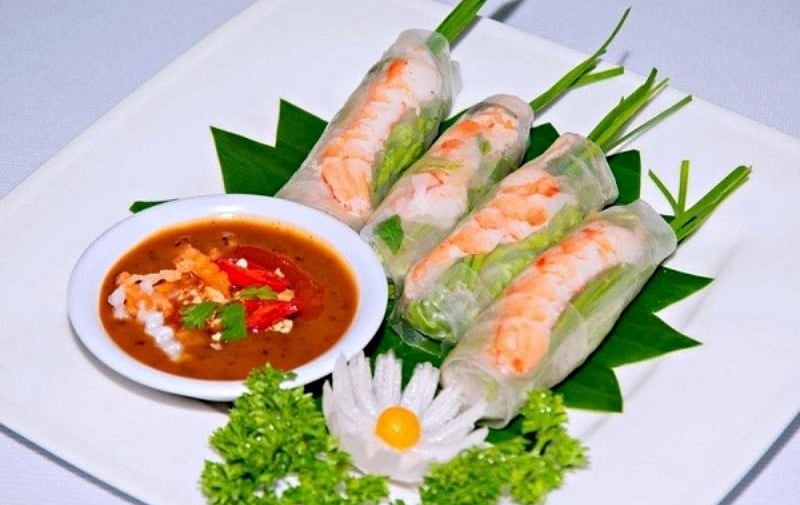
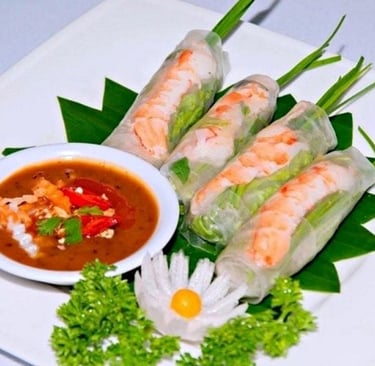
For the international palate, the Vietnamese roll is often first encountered as Gỏi Cuốn (Summer Roll)—the familiar, translucent, refreshing cylinder of shrimp, vermicelli, and greens. Yet, the roll (Món Cuốn) is not merely a single dish; it is a profound and versatile culinary philosophy—a methodology of eating that permeates the entire spectrum of Vietnamese gastronomy. This style of dining—where the diner is deliberately given the raw components and tasked with assembling, layering, and creating their own perfect bite—epitomizes the Vietnamese obsession with freshness, contrasting texture, flavor balance, and communal participation. It is the ultimate expression of self-assembly in food, transforming the act of eating into a personalized ritual.
As specialists in Vietnamese culinary arts, cultural rituals, and the deep philosophy embedded in daily dining at Vietnam Charm, we embark on a comprehensive analytical journey into the world of Món Cuốn. We will dissect the three critical, inseparable elements—the Wrapper (Bánh Tráng), the Herbs (Rau Thơm), and the Dipping Sauce (Nước Chấm)—revealing why this seemingly simple act of rolling is, in fact, a masterclass in controlled nutrition, flavor complexity, and elegant, high-engagement dining. Understanding the roll is to understand the Vietnamese reverence for raw ingredients and the complexity of their combinations.
I. The Wrapper: Bánh Tráng — The Edible Canvas and Textural Mediator
The foundation of nearly every Vietnamese roll is the edible wrapper, or Bánh Tráng (Rice Paper). This thin, delicate, often translucent sheet, usually crafted from rice flour, water, and sometimes a small amount of tapioca starch for essential elasticity, serves as the neutral, pliable canvas upon which the explosion of colors and flavors inside is built.
The Art and Science of the Sheet
Artisanal Heritage: The process of making Bánh Tráng is ancient and highly artisanal, rooted deeply in the nation's rice culture. The thin, liquid batter is meticulously spread over a steamed cloth stretched across a pot of boiling water, creating a vapor-cooked sheet. It is then gently peeled and carefully dried on woven bamboo mats under the intense tropical sun, which imparts a characteristic delicate flavor and texture.
Texture and Transformation: The primary role of the rice paper is textural. For the refreshing Gỏi Cuốn, the wrapper is used soft and pliable, contributing a delicate, satisfying chewiness to the finished roll. Conversely, for dishes like Bánh Tráng Cuốn Thịt Heo (Sliced Pork Roll), the complexity is increased: the wrapper is often layered—a piece of hard, dry rice paper on the outside is cushioned and softened by a wet, thin sheet on the inside—to provide a necessary, deliberate crunch alongside the smooth, resulting in the desired textural duality in a single bite.
The Neutralizer and Binder: The subtle, starchy flavor of the rice paper is essential because it acts as a perfect neutralizer, binding the intense, often contrasting, flavors of the meat and the highly pungent herbs without competing with them. It is the silent, structural mediator of the entire bite.
II. The Core Principle: Rau Thơm — The Herbaceous Heart and Nutritional Imperative
If the rice paper wrapper is the canvas, the abundant supply of Rau Thơm (Fresh Herbs) are the vivid, complex colors. The role of herbs in Vietnamese cuisine is uniquely pervasive, sophisticated, and fundamentally integral, offering a crucial element of flavor complexity and providing essential nutritional balance.
The Function of Fiber, Flavor, and Healing
The Vietnamese diet is universally recognized by global nutritionists for its high consumption of fiber and fresh vegetables, and the Món Cuốn philosophy is the prime, most delicious mechanism for ensuring this vital intake. The herb platter accompanying the roll is not merely decoration or an optional side; it is a mandatory component for achieving the traditional and necessary balance in the meal.
Digestive and Nutritional Balance: The copious use of raw, fresh herbs is a deliberate, traditional method for aiding the digestion of protein and fat (such as pork belly or grilled meat), ensuring that the complex, rich meal feels surprisingly light, refreshing, and clean upon consumption. It is traditional medicine applied directly to the plate.
Aromatic Complexity (The Calculated Mix): The herb platter itself is not random; it is a calculated mix of temperatures, aromas, and flavor intensities:
Cooling Herbs: Mint (Húng Lủi), Lettuce, and sometimes Coriander provide a refreshing, cool, and watery base element.
Pungent and Earthy Herbs: Fish Mint (Rau Diếp Cá) and Perilla (Tía Tô) add a sharp, pungent, earthy, sometimes slightly metallic, savory punch that is vital for cutting through the fat and sweetness of the dipping sauce.
Citrus/Spicy Herbs: Basil or Sawtooth Herb (Ngò Gai) adds a sharp, spicy, citrusy complexity.
The culinary goal is profound: to ensure that every single, individual bite contains a perfectly calculated, balanced trinity of cool, pungent, and savory aromas and textures.
III. The Unifier: Nước Chấm — The Art of the Perfect Dip
The dipping sauce (Nước Chấm) is the final, unifying, indispensable element. It is the conductor that brings the entire, disparate orchestra of textures, temperatures, and flavors into absolute harmony. Without the correct sauce, the roll is incomplete.
Nước Mắm vs. Tương Đậu: A Regional and Flavor Divide
The choice of dipping sauce is rigorously determined by the main protein being served or by the regional culinary tradition, demonstrating two distinct, fundamental approaches to flavor:
Nước Mắm Pha (Fish Sauce Dip): This clear, acidic sauce is composed of high-quality Fish Sauce, fresh lime juice, sugar, water, chili, and minced garlic. This sauce is designed to provide the classic Chua-Mặn-Ngọt (Sour-Salty-Sweet) balance. Its light, sharp, and intense acidity is essential for refreshing dishes like Gỏi Cuốn, where the overall taste must remain bright and clean.
Tương Đậu (Peanut/Hoisin Sauce): This sauce is fundamentally different: it is thick, rich, savory, and often warmed. It is based on fermented soybeans, ground peanuts, Hoisin sauce, coconut milk, garlic, and chili. This composition provides a dense, comforting Béo-Ngọt-Bùi (Fatty-Sweet-Nutty) profile. Its richness works best with heavier fillings like grilled beef (Bò Bảy Món), seasoned pork skewers (Nem Nướng), or the dark flavors of the North's Phở Cuốn.
The complexity of Vietnamese dipping sauces lies in the fact that they are built to balance the specific deficiencies of the food they accompany. The light roll needs the intense flavor, and the heavy meat needs the cutting acid.
IV. The Ritual of Assembly: DIY Gastronomy and Social Engagement
The ultimate, crowning joy of Món Cuốn is the participatory, communal ritual of self-assembly—the DIY Gastronomy. The entire dining table immediately transforms into a collaborative assembly line, fostering deep communal interaction, conversation, and individual creative expression.
Steps to the Perfect, Bespoke Bite
The Preparation: If using the semi-hard rice paper, the process begins by lightly moistening it with water until it is pliable (but crucially, not overly wet).
The Layering (The Base): The diner places the wrapper flat, then adds the base layer: a full lettuce leaf, which protects the wrapper and adds immediate crunch.
Core Components: The main protein (e.g., grilled pork, shrimp, seasoned tofu) is placed strategically in the center, alongside a bundle of the neutral vermicelli noodles and perhaps a small piece of a contrasting vegetable (like cucumber).
The Herb Bouquet (The Signature): The diner adds a small, calculated selection of Rau Thơm. This is the moment where personal balance and regional identity are achieved—more fish mint for the savory intensity, more lettuce for cooling crunch, or more perilla for its aromatic punch.
Roll and Dip: The wrapper is rolled tightly and cleanly, tucking the sides in to create a secure, bespoke cylinder. This cylinder is then dipped fully and satisfyingly into the unifying Nước Chấm.
This physical, intimate act of rolling gives the diner ultimate, immediate control over the precise ratio of protein, fiber, texture, and sauce in every single bite—a level of culinary democracy and personal involvement rarely found in established Western dining protocols. It makes the meal both an art form and a communal game.
V. Conclusion: The Masterpiece of Balance and Participation
Món Cuốn, in its various forms (from the fresh Summer Roll to the hearty Nem Nướng Roll), represents the pinnacle of Vietnamese culinary intelligence. It brilliantly solves the complex equation of flavor, texture, and nutritional necessity by fundamentally decentralizing the cooking process. It is a powerful cultural statement: a communal, high-engagement dish that explicitly encourages individual creativity, a high-fiber meal that never feels heavy, and a profound lesson in the elegant simplicity achieved through the masterful pairing of the delicate rice paper, the vibrant herbaceous heart, and the unifying complexity of the dipping sauce. The roll is the ultimate metaphor for Vietnamese society—individuals coming together to create a perfect, balanced whole.
We are on social media
Vietnam Charm belongs to Vietpearl Travel., JSC
Contact:
Email: info@vietnamcharm.top
© 2026. by Vietnam Charm. All rights reserved
Travel license number: 01-827/2020
Refund Policy