Giảm giá hấp dẫn cho tour du lịch!



THE VERTICAL LIFE: DECODING THE TUBE HOUSE ARCHITECTURE — SPACE, SOCIAL FLUIDITY, AND THE INTIMACY OF VIETNAMESE LIVING
More than necessity: exploring the nhà ống as a masterful response to urban density, analyzing its unique vertical spatial philosophy, its role as a flexible commercial and domestic anchor, and its profound reflection of familial and urban fluidity.
VIETNAMESE CULTUREURBAN & DAILY LIFELOCAL EXPERIENCES
Tobin Nguyen
11/6/20255 phút đọc
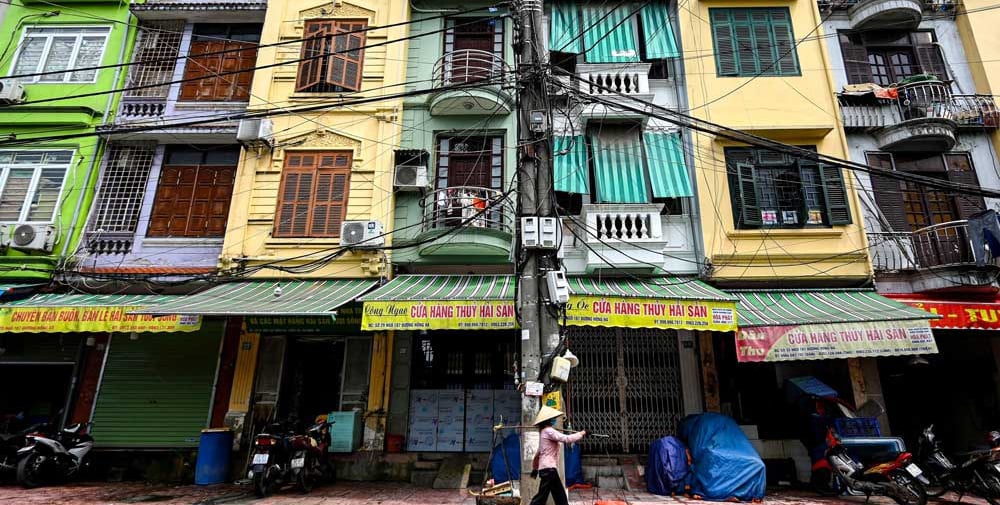
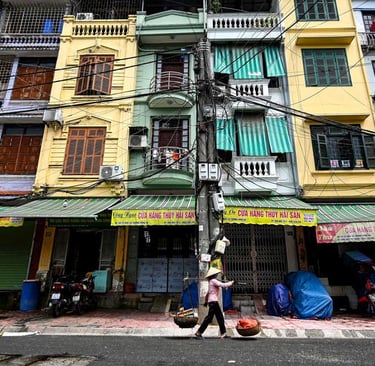
For the international visitor navigating the dense, historical corridors of Hà Nội or the bustling commercial heart of Ho Chi Minh City, the predominant architectural form is the Nhà Ống (Tube House)—a tall, narrow, and structurally challenging edifice that stands shoulder-to-shoulder with its neighbors. This architecture, often dismissed as merely a practical response to narrow street frontage and high urban density, is in fact a sophisticated, culturally profound statement on Vietnamese spatial philosophy, social hierarchy, and economic ingenuity. The Tube House is the physical realization of the nation's ability to maximize utility and maintain intimacy within highly constrained boundaries.
As specialists in Vietnamese heritage and profound cultural analysis at Vietnam Charm, we embark on an essential, detailed exploration to decode this enduring urban form. We will meticulously analyze the historical and economic pressures that mandated its creation, the vertical spatial logic that governs its internal structure, the sociological function of its permeable ground floor, and the profound way this architecture articulates the resilience, discipline, and absolute priority of the family unit within the chaos of the modern metropolis. Understanding the Tube House is essential to grasping the core values of resourcefulness, privacy, and commercial integration in the Vietnamese urban experience.
1. The Genesis and Necessity: Land Scarcity and the Tax Code
The ubiquitous presence of the Tube House is not an accidental design choice; it is a direct, ingenious, and almost compulsory adaptation to historical land ownership and taxation realities that long prioritized street frontage over depth.
Historically, land taxes, both under imperial and early colonial rule, were often calculated based on the width of the property facing the street. This system created an immediate economic imperative: property owners maximized their depth and minimized their visible width to reduce tax burden while still securing valuable commercial access to the street. The result was the Nhà Ống—a structure typically measuring only 3 to 5 meters wide but stretching dramatically backward for 15 to 30 meters or more. This long, narrow plot became the standard commercial and domestic unit in all major urban centers, from the ancient 36 Phố Phường (36 Guild Streets) of Hà Nội to the commercial arteries of Sài Gòn.
This unique geometry immediately dictated a vertical spatial logic. With minimal light and air available from the sides, the house was forced to grow upward—often reaching four, five, or six stories—to create sufficient living area. The Tube House is thus a direct, architectural testament to the Vietnamese genius for maximizing confined space, turning a tax constraint into a structurally resilient, multi-generational home and business platform. It is a monument to resourcefulness built on economic necessity.
2. The Internal Logic: Vertical Zoning and Functional Permeability
The interior of the Tube House operates under a strict, disciplined vertical and horizontal zoning system that meticulously balances the demands of public commerce, family privacy, and domestic utility. This logic transforms the long, narrow space into a highly functional, multi-layered environment.
The structure is typically organized by floors, each serving a distinct, non-negotiable function:
The Ground Floor (Tầng Trệt): This is the most permeable and public space. It acts as the commercial interface, serving simultaneously as a family parking garage (for motorbikes), a street-facing shop, a small café, or a workspace. Its fluidity allows the family to engage directly with the urban economy. The division between the street and the home here is intentionally ambiguous, reflecting the integration of commerce into daily life.
The Mezzanine/First Floor (Lầu Một): This often houses the kitchen, the primary living/receiving room, and the Ancestral Altar (Bàn Thờ). Moving the living space up one level offers essential privacy and spiritual sanctity away from the street noise and pollution, ensuring that the sacred duty of ancestor worship is performed in a clean, elevated environment.
Upper Floors (Các Lầu Trên): These floors are strictly dedicated to private, multi-generational living—bedrooms and personal retreats. They are the most secure and private spaces, symbolizing the absolute priority of the familial unit over the chaos of the external world.
The Rooftop (Sân Thượng): The most public and spiritual space for the family. Often utilized for laundry, growing small gardens, and critically, as a space to burn offerings to the heavens or the deceased, symbolizing the family's direct line of communication with the celestial realm, unhindered by adjacent buildings.
3. The Sociological Function: Privacy, Intimacy, and Light Negotiation
The Tube House poses fundamental challenges to natural light and airflow, forcing the architecture to integrate specific cultural and structural solutions to maintain domestic health and spiritual well-being.
The long, narrow structure often suffers from the "tunnel effect," lacking natural light in the deep interior. This is solved by the strategic use of Sân Trong (Interior Courtyards) or Giếng Trời (Light Wells). These vertical shafts, strategically placed between functional zones (such as the living area and the kitchen), pierce through all floors, drawing essential light and air deep into the core of the house. These light wells are not just engineering solutions; they are often landscaped, becoming the spiritual heart of the home, allowing the residents to maintain a connection with the weather, the sky, and nature within the dense urban shell.
Sociologically, the Tube House creates a profound contrast between the public facade and the internal intimacy. The highly visible, often brightly tiled or painted street facade is the family's public statement—their visible economic health and aesthetic pride. However, once inside, the architecture immediately shifts to deep, private intimacy. The long corridor and the necessary verticality restrict casual access, ensuring that only the most trusted guests move beyond the public receiving area. The space is engineered to preserve the family's sanctity against the overwhelming, ceaseless fluidity of the Vietnamese street.
4. The Aesthetic of Fusion: From Colonial Echoes to Modernist Statements
The Tube House is a continuous, evolving canvas for Vietnamese aesthetic fusion, reflecting changing tastes and political climates while maintaining its core structural necessity.
In older districts, the facades often bear the distinct, fading elegance of French colonial influence—ornate ironwork balconies, pastel-colored tiles, and high-quality wooden louvers. These designs symbolize a period of colonial elegance and the early aspirations of the urban bourgeoisie. Post-war and during periods of rapid construction, the facades often became simpler, bolder, and more utilitarian, reflecting the functional urgency of rebuilding and economic expansion.
The contemporary Tube House is now often a bold, minimalist, and highly creative structure. Architects employ sophisticated techniques to manage light and heat, using vertical garden walls, sophisticated latticework, and deep cantilevered balconies to break the monolithic facade. The modern architectural challenge is to retain the core functionality (commercial ground floor, vertical separation) while introducing the necessary light, airflow, and aesthetic uniqueness that distinguishes the family in the increasingly dense, visually competitive urban environment. The Tube House remains a continuous laboratory for sustainable, high-density urban design in Asia.
5. Conclusion: The Resilient Anchor of the Family
The Tube House is the most accurate, enduring architectural metaphor for the Vietnamese urban experience. It is a triumphant, resilient answer to the constraints of history, economics, and density. By analyzing its mandated narrowness, its sophisticated vertical zoning, its use of the light well as a spiritual anchor, and the disciplined separation between the street's chaos and the family's private sanctity, we gain access to the core value system of the metropolis. The Tube House is a monument to resourcefulness, proving that the Vietnamese spirit can maximize utility, maintain profound intimacy, and build a resilient, multi-generational future within the smallest, most challenging of spaces.
We are on social media
Vietnam Charm belongs to Vietpearl Travel., JSC
Contact:
Email: info@vietnamcharm.top
© 2026. by Vietnam Charm. All rights reserved
Travel license number: 01-827/2020
Refund Policy