Giảm giá hấp dẫn cho tour du lịch!


THE VOICE OF THE FOUNDING KINGS: HÁT XOAN — DECODING THE ANCIENT RITUAL, ANCESTRAL DEVOTION, AND THE SACRED STRUCTURE OF VIỆT NAM'S EARLIEST THEATRE
More than folk theatre: exploring Hát Xoan as Việt Nam's ultimate, ancient religious rite, analyzing its structural division into three ritualistic parts, its profound, unbroken link to the Hùng Kings, and its role as the oldest mechanism for securing fertility, stability, and spiritual memory in the Northern Delta.
VIETNAMESE CULTURELOCAL EXPERIENCESTHE SOUNDSCAPE
Tobin Nguyen
11/20/20256 phút đọc
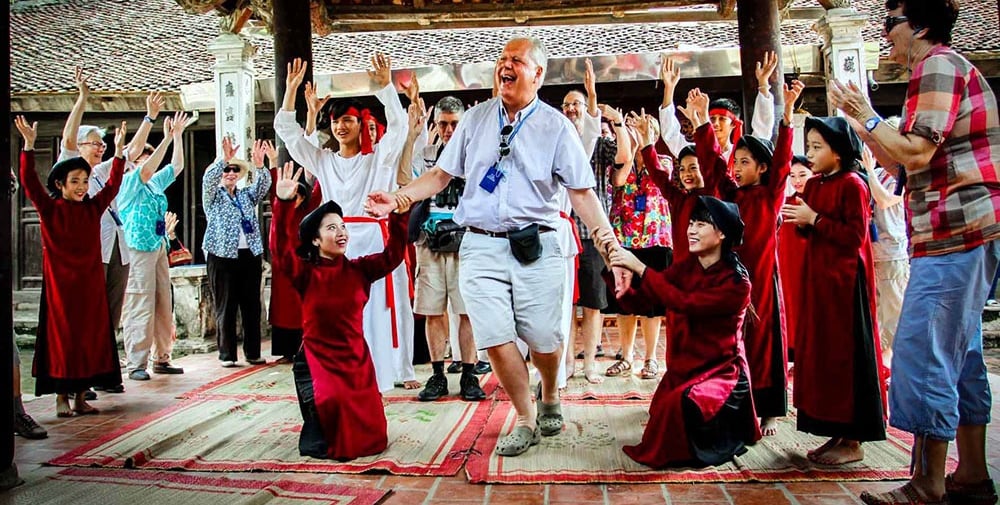
For the cultural historian, the ethnomusicologist, and the seeker of profound spiritual origins, Hát Xoan (Xoan Singing)—unique to the Phú Thọ province of Northern Việt Nam—is a tradition that transcends mere art. Recognized by UNESCO as an Intangible Cultural Heritage in Need of Urgent Safeguarding in 2011, Hát Xoan is widely considered one of the oldest forms of performing arts in the nation, a profound, living spiritual rite whose repertoire and structure are intrinsically linked to the legendary Hùng Kings—the mythical founders of the Vietnamese nation. Hát Xoan is not historical reenactment; it is a mandatory, sacred performance designed to communicate directly with the most ancient ancestors, securing agricultural fertility, community peace, and the spiritual continuity of the entire bloodline.
As specialists in Vietnamese heritage and profound cultural analysis at Vietnam Charm, we embark on an essential, detailed exploration to decode this sacred, ancestral theatre. We will meticulously analyze the cosmological necessity that mandates its performance during the Spring festivals, the structural genius of its three distinct ritualistic parts (The Ceremony, The Customary Songs, and The Festival Games), the profound spiritual link it maintains with the Hùng Temple, and the way Hát Xoan articulates the core national values of reverence for origins, ritual purity, and the enduring belief in the power of music to shape spiritual destiny. Understanding Hát Xoan is essential to grasping the deepest, most resilient layers of the Northern Vietnamese spiritual psyche.
1. The Cosmological Mandate: Spring, Fertility, and the Ancestral Origin
The genesis and enduring necessity of Hát Xoan are rooted in a deep, ancient cosmological imperative: the ritual must be performed during the Spring (Mùa Xuân) to invoke blessings for fertility, communal prosperity, and health for the new agrarian cycle. The performance is fundamentally an offering designed to ensure the Earth yields its bounty and the community remains safe from malevolent forces.
The origin narrative of Hát Xoan places it directly at the heart of the Hùng Kings Temple Festival—the ultimate, most sacred site of Vietnamese origin belief. Legend holds that the songs were originally taught by a consort of the Hùng Kings, solidifying its status as an ancestral art form with a direct, unbroken lineage to the nation’s mythical foundation. The performance is, therefore, a crucial act of spiritual and political affirmation: by performing the ancient songs, the practitioners ritually reaffirm the sovereignty of the Hùng Kings and the historical continuity of the Vietnamese state. The music is the living spiritual contract with the ancestors.
The performance environment is critical. Hát Xoan is traditionally performed in the most sacred communal spaces—the Đình (Communal House), the Chùa (Pagoda), and the Miếu (Temple)—during the Tết and Spring festival season. The music is used to purify the space, call the protective spirits, and create an atmosphere of immense solemnity and spiritual readiness before the community embarks on the labor of the new agricultural year. The power of Hát Xoan lies in its ability to transform the local community's need for fertility into a profound, national spiritual duty.
2. The Structural Genius: The Tripartite Ritual of Theatre
The artistic structure of Hát Xoan is rigidly divided into three distinct, non-negotiable parts (quả), each serving a specific, intense ritualistic function. This tripartite structure elevates the performance from mere singing to a complete, formalized spiritual theatre.
The structure is commanded by the Kép (Male Master) and the Đào (Female Singer), who are custodians of the complex musical repertoire and the ancient ritualistic movements (múa Xoan).
Part I: The Ceremony (Nghi Thức - Ritual): This is the opening, most sacred, and formal segment. It consists of songs and solemn dances dedicated entirely to invoking the deities, honoring the Hùng Kings, and purifying the communal space. The movements are slow, reverent, and highly controlled, setting the atmosphere of profound respect and spiritual readiness. This part is typically performed with extreme discipline and minimal ornamentation, affirming the sincerity of the community's spiritual intentions before the most ancient of ancestors.
Part II: The Customary Songs (Hát Lề Lối - Customary Ways): This is the core, instructional segment. It consists of a vast repertoire of songs that chronicle local history, praise specific deities, and teach the community about the traditional moral code and the structure of the làng (village). The songs serve as a living library of local customs, ethics, and ancestral warnings, ensuring that the younger generations internalize the rules of social conduct through the melodic narrative. The focus here is on moral education and the transfer of memory.
Part III: The Festival Games (Hát Hội - Festival Games): This is the final, most interactive, and socially engaging segment. The songs and dances become faster, more joyous, and often involve flirting, competitive witty exchanges, and playful games between the male and female performers, and sometimes between the performers and the audience. This part has a profound fertility function, celebrating the vitality of youth and encouraging social interaction, necessary for the continuation of the bloodline and the renewal of the community’s energy after the solemnity of the ritual.
This disciplined progression—from solemn ancestor invocation to communal flirtation—ensures that the ritual achieves both spiritual purity and social regeneration.
3. The Spiritual Link: Phường Xoan and the Continuity of the Bloodline
The performance of Hát Xoan is inextricably linked to the Phường Xoan (Xoan Guilds or Troupes)—the highly organized, generations-old communal groups that are the sole custodians of the art form. The continued existence and ritualistic purity of these guilds are essential for maintaining the spiritual stability of the entire region.
The guilds are strictly organized and possess a profound sense of ancestral stewardship. The repertoire is vast and complex, often exceeding 100 songs (hát quả), and this immense body of musical knowledge is transmitted primarily through oral tradition and disciplined, close apprenticeship from master to apprentice. The Phường Xoan is responsible for safeguarding the absolute integrity of the rituals, ensuring that every movement, every note, and every ancient lyric is performed exactly as mandated by the ancestors. Any alteration to the original form is considered a profound spiritual risk.
The ritual performance of Hát Xoan is considered a sacred act of merit (công đức). By performing the traditional songs, the members of the guild are earning spiritual merit not only for themselves but for their entire village and for the Hùng Kings themselves. This belief instills a deep sense of moral responsibility and dedication, ensuring that the performers remain committed to the art form despite the economic challenges of modern life. The performance is the ultimate, living chain of spiritual memory, linking the present generation back to the very moment the nation was founded.
4. The Musical Language: Discipline, Tempo, and Unadorned Honesty
The musical language of Hát Xoan is characterized by its ancient simplicity, rhythmic honesty, and the power of the human voice. Unlike the later, sophisticated chamber music (Ca Trù), Hát Xoan is structurally primal and direct.
The accompaniment is minimal, often utilizing simple percussion instruments like the Trống (Drum) and Phách (Clappers) to maintain a strong, direct, and often accelerating rhythm. The focus is almost entirely on the vocal performance—the clear, unadorned, and precise delivery of the lyrics. The tempo often starts extremely slow during the Nghi Thức (Ceremony) to enforce solemnity and gradually accelerates during the Hát Hội (Festival Games), reflecting the infusion of life and vitality into the community.
The aesthetic choice of simplicity is deliberate. The music is intended to be accessible and emotionally honest, speaking directly to the essential agrarian concerns of the community: fertility, peace, and abundance. The melodies are often based on simple pentatonic scales, giving them a haunting, ancient quality that immediately evokes the spiritual depth of the Northern Delta. The music is an unmediated, powerful spiritual dialogue—the direct, clear voice of the ancestors speaking through the disciplined voice of the singer.
5. Conclusion: The Permanent Testament to Sacred Origins
Hát Xoan is the ultimate, enduring cultural testament to Việt Nam's reverence for its sacred origins and the powerful, continuous spiritual bond with the Hùng Kings. It is a structure of musical ritual that transforms collective memory into a mandatory, living performance. By analyzing the cosmological imperative of its Spring-time performance, the structural genius of its tripartite ritual, the profound spiritual stewardship of the Phường Xoan guilds, and the unadorned honesty of its vocal style, the observer gains access to a core truth: Hát Xoan is far more than folk music. It is the permanent, sacred testament to national origin—a powerful, living declaration that asserts the cultural value of purity, discipline, and the belief that the health, prosperity, and continuity of the nation are eternally secured by the sincere honoring of the earliest ancestors. The sacred song ensures that the roots of the Vietnamese spirit remain deep, strong, and unwavering.
We are on social media
Vietnam Charm belongs to Vietpearl Travel., JSC
Contact:
Email: info@vietnamcharm.top
© 2026. by Vietnam Charm. All rights reserved
Travel license number: 01-827/2020
Refund Policy