Giảm giá hấp dẫn cho tour du lịch!


THE WHITE HARVEST: TRADITIONAL SALT FIELDS — DECODING THE PHILOSOPHY OF PATIENCE, THE CONTRACT WITH THE SUN AND SEA, AND THE SOUL OF ELEMENTAL LABOR
More than evaporation: exploring the Nghệ Thuật Làm Muối (Traditional Salt Making) as Việt Nam’s ultimate elemental covenant, analyzing the profound philosophy of waiting and disciplined patience, the essential contract between the Diêm Dân (Salt Workers) and the solar and tidal forces, and its embodiment of self-reliant endurance.
VIETNAMESE CULTURETHE AGRARIAN HEARTLOCAL EXPERIENCES
Tobin Nguyen
11/8/20256 phút đọc
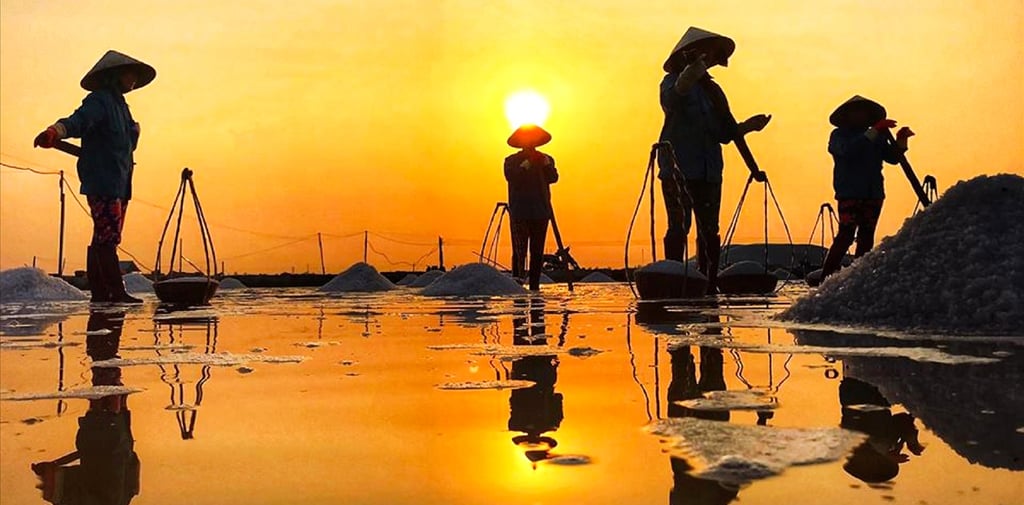
For the international ethnographer, the chemist, and the seeker of profound human-elemental harmony, the Traditional Salt Fields (Ruộng Muối)—the vast, flat, geometrically precise expanses of dark earth and shallow water along Việt Nam's central coast—present a mesmerizing, austere spectacle. This ancient practice of salt making is far more than a simple chemical process of evaporation; it is the nation’s purest, most demanding ritual of sustained labor, a continuous, painstaking covenant forged directly with the relentless power of the sun (Thần Mặt Trời) and the immense resource of the sea. The salt field civilization is defined by a philosophical dedication to patience, disciplined effort, and profound humility—a recognition that the ultimate, most indispensable commodity can only be harvested through quiet, methodical cooperation with the most powerful forces of nature.
As specialists in Vietnamese heritage and profound cultural analysis at Vietnam Charm, we embark on an essential, detailed exploration to decode this elemental architecture of labor. We will meticulously analyze the historical mandate that required the salt worker's isolation and self-reliance, the philosophical mandate that enshrines disciplined patience as the supreme virtue, the technical genius of the shallow-pan system (ruộng phơi) and the chạt process, and the profound way this silent, white landscape articulates the core national values of enduring self-reliance, collective discipline, and the spiritual beauty of simple, essential survival. Understanding the Salt Field culture is essential to grasping the emotional weight, the austere elegance, and the core resilience of the coastal Vietnamese heartland.
1. The Elemental Contract: The Sun, The Sea, and the Philosophy of Waiting
The entire existence, structure, and economic viability of the traditional salt field are governed by a singular, non-negotiable Elemental Contract: the absolute reliance on the Sun and the Sea. This reliance necessitates a profound philosophy of waiting and disciplined patience that dictates the salt worker's psychological state.
The salt worker (diêm dân) is, first and foremost, a scientist of the atmosphere and the tide. Their success is entirely contingent upon their ability to read the sun's intensity, the wind's direction, and the moon's effect on the tides with ancient, intuitive accuracy. The process of salt making cannot be rushed, coerced, or mechanized beyond a certain point; it requires the diêm dân to submit to the slow, relentless, natural rhythm of the elements. This necessity instills a profound, inherited patience—a recognition that the ultimate reward comes only through disciplined non-action and sustained observation.
The Sea (Biển) is the primary source of all life and wealth, providing the raw material (nước biển). The Sun (Mặt Trời) is the absolute engine of the entire enterprise, providing the necessary heat for evaporation. The salt field itself is the sacred, transitional space—the purified altar where the water of the sea is sacrificed to the heat of the sun, and the crystalline residue (hạt muối) is born. The psychological demand of this contract is immense: it requires the worker to be perpetually vigilant yet passively accepting, transforming their labor into a continuous, high-stakes spiritual meditation on the unyielding power of nature. The white harvest is not taken; it is received as a divine gift.
2. The Architectural Geometry: The Ruộng Phơi and the Art of Controlled Flow
The traditional salt field is a masterpiece of austere, functional architectural geometry—a complex, meticulous spatial arrangement designed for the absolute control of water flow, evaporation rate, and labor efficiency. The design is technology as disciplined spatial organization.
The salt field (ruộng muối) is not a natural marsh; it is a precisely engineered network of interconnecting, shallow, geometrically perfect pans and channels. The system is designed to maximize the two critical variables: surface area and material absorption.
The Ruộng Phơi (Evaporation Pans): These are the final, shallow, flat pans, often lined with dark clay or specialized sand (ruộng phơi cát). The dark color is crucial; it maximizes the absorption of solar heat, accelerating the evaporation process. The extreme flatness ensures the thin sheet of brine is evenly exposed to the sun.
The Channels (Kênh): An intricate network of small channels is used to manage the precise flow of brine—water is pumped from the sea into the initial, larger reservoirs, and then slowly and methodically channeled through sequential pans, increasing the salt concentration (độ mặn) at each stage before reaching the final crystallization beds.
The genius lies in the simplicity of the tools used to manage this complexity. The diêm dân relies on the thanh gạt (scraper) and the thanh cào (rake)—simple, wooden instruments used to meticulously scrape, collect, and move the crystallized salt from the dark earth. This entire architectural geometry ensures that the vast, open space of the coast is converted into a highly efficient, human-scale factory of crystallization, relying entirely on the discipline of the human hand to manage the flow of the primal elements.
3. The Technical Genius: Phơi Cát and the Purity of the Brine
The specific technical genius of many Vietnamese salt field traditions lies in the innovative sand-bed method (phơi cát) and the meticulous process of brine concentration (chạt), which ensures the high purity and quality of the final white harvest. This technicality is rooted in inherited ancestral knowledge.
The Phơi Cát Method: Unlike direct evaporation ponds, which expose seawater directly to the sun, the sand-bed method utilizes a layer of specialized clay or sand (cát) spread across the evaporation pans. This sand acts as a natural heat absorber and crystallizer. Seawater is poured onto the sand, allowed to evaporate slightly, and then the salt-impregnated sand is collected, piled into mounds, and filtered. The high concentration of salt is trapped within the sand particles.
The Chạt (Brine Filtration): The collected, salty sand is then placed into a filter bed (chạt), a simple, wooden or clay container lined with filtering material. More seawater is poured over this sand mound. As the water percolates through the highly concentrated sand, it leeches out the salt, creating an extremely dense, dark, and highly purified brine solution (nước chạt). This highly concentrated brine, not the raw seawater, is then poured into the final, small crystallization pans. This dual-stage filtering process is the technical secret that maximizes both the speed of crystallization and the purity of the final product, transforming a simple commodity into a masterpiece of local hydro-chemistry.
This knowledge is not written in textbooks; it is tacit, inherited knowledge—a sacred tradition passed down through the labor of the family, emphasizing that the mastery of the craft is inseparable from the deep intimacy with the local soil and tidal patterns.
4. The Sociological Rhythm: Discipline, Collectivism, and the Silent Labor
The traditional salt field enforces a unique, unrelenting sociological rhythm on the diêm dân community, demanding extreme personal discipline, synchronized labor, and a fierce, quiet collectivism.
Salt work is characterized by its unforgiving temporal demands. The most crucial stages—preparing the beds, managing the flow of the chạt, and collecting the final crystalline harvest—must be conducted with absolute precision, often beginning before dawn or extending into the heat of the midday sun to capture the optimal solar energy. This necessity mandates a disciplined, synchronized labor rhythm where individual action is always subservient to the collective task and the unforgiving schedule set by the elements. The entire community operates as a single, cohesive unit, moving in rhythm with the sun and the flow of water.
The sociological bond is fierce. The livelihood is built on mutual reliance and quiet endurance. The labor is physically punishing, often performed under relentless heat, yet the diêm dân possess a shared, deep sense of pride and humility—pride in their essential contribution to the national economy and humility before the immense forces they utilize. The aesthetic of the worker—bent over the flat, white expanse, their faces shielded by the wide-brimmed nón lá—is the ultimate visual metaphor for disciplined perseverance and the profound dignity found in honest, elemental work. The seemingly silent, isolated labor is, in fact, a continuous act of collective survival.
5. Conclusion: The Permanent Testament to Elemental Harmony
The Traditional Salt Field Culture is the ultimate, enduring, and hauntingly beautiful testament to the Vietnamese spirit's capacity for elemental harmony, profound patience, and self-reliant ingenuity. It is a vast, austere architecture that transforms the necessity of labor into a profound spiritual ritual. By analyzing the elemental contract with the Sun and Sea, the functional geometry of the ruộng phơi systems, the technical genius of the sand-bed filtration, and the sociological rhythm of disciplined, collective labor, the observer gains access to a core, luminous truth: the white harvest is far more than a commodity. It is the permanent, unwavering declaration of elemental mastery—a powerful, quiet assertion that asserts the cultural value of disciplined patience, resourcefulness, and the belief that the purest, most essential forms of wealth are achieved through humble, profound, and constant cooperation with the immense, life-giving forces of the natural world.
We are on social media
Vietnam Charm belongs to Vietpearl Travel., JSC
Contact:
Email: info@vietnamcharm.top
© 2026. by Vietnam Charm. All rights reserved
Travel license number: 01-827/2020
Refund Policy