Giảm giá hấp dẫn cho tour du lịch!


THE ZEN PLATE: VIETNAMESE VEGETARIAN CUISINE — WHERE SPIRITUALITY MEETS RESOURCEFULNESS AND FLAVOR COMPLEXITY
More than diet: exploring Ẩm Thực Chay as a profound culinary expression of Buddhist compassion, analyzing the resourceful genius of plant-based substitution, and its spiritual role as a powerful, purifying ritual of clarity, empathy, and health.
LOCAL EXPERIENCESVIETNAMESE CULTUREGASTRONOMY & TRADITION
Tobin Nguyen
11/6/20255 phút đọc
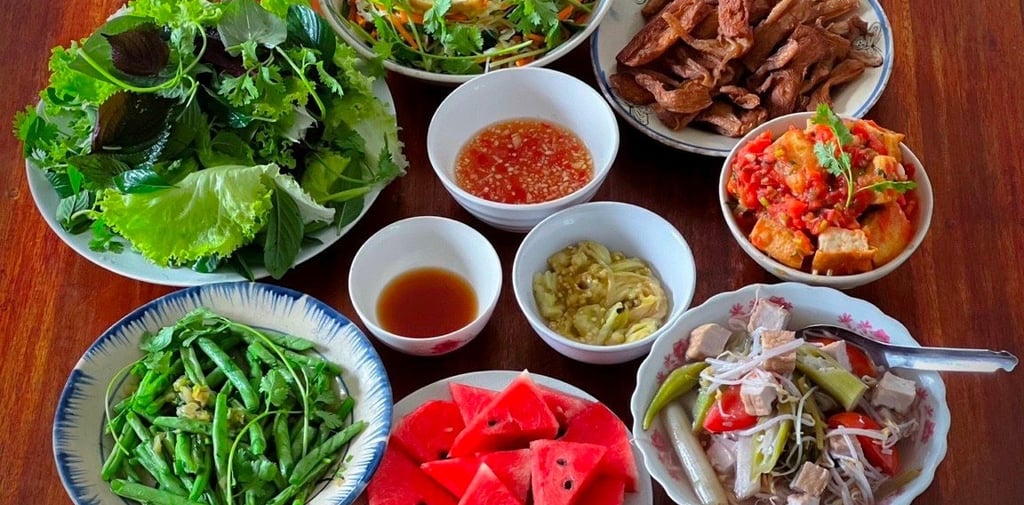
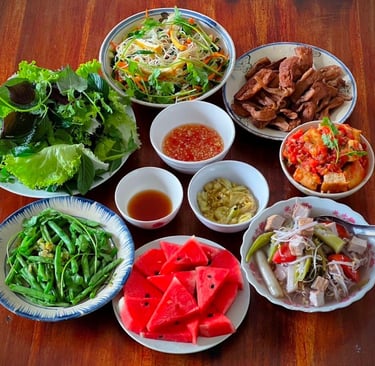
For the international diner, the vegetarian options (món chay) found throughout Việt Nam—from simple temple kitchens to vibrant street stalls—are often a surprising revelation. This cuisine is not merely an afterthought or a modern dietary trend; it is a deeply rooted, historically significant culinary tradition mandated by the pervasive influence of Buddhism. Vietnamese vegetarian cuisine is not defined by what it lacks, but by its resourceful genius—its ability to transform humble grains, roots, and vegetables into dishes of immense textural complexity, savory depth, and visual artistry. It functions as a powerful, purifying ritual that cleanses the body and the spirit.
As specialists in Vietnamese heritage and profound cultural analysis at Vietnam Charm, we embark on an essential, detailed exploration to decode this spiritual gastronomy. We will meticulously analyze the historical mandate of Buddhist compassion that governs the cuisine, the culinary science of plant-based substitution and savory creation, the aesthetic philosophy of simplicity and freshness, and the profound role Ẩm Thực Chay plays as a purifying ritual that connects the individual to both spiritual clarity and holistic health. Understanding Vietnamese vegetarianism is essential to grasping the core cultural value of empathy and the enduring link between food and faith.
1. The Spiritual Mandate: Buddhism, Compassion, and the Cycle of Life
The foundation of Vietnamese vegetarian cuisine is the non-negotiable historical and spiritual mandate of Buddhism. This culinary practice is a direct, active expression of the Buddhist core principle of Ahimsa (non-violence) and the profound cultural value of lòng từ bi (compassion).
Buddhism, which arrived in Việt Nam early and became deeply integrated with indigenous folk beliefs, introduced the concept that all sentient beings are interconnected in the cycle of reincarnation. Therefore, consuming meat, which involves taking a life, interrupts this spiritual cycle and accumulates negative karma. The decision to eat chay (vegetarian) is thus a conscious ethical choice—an act of proactive kindness, empathy, and spiritual purification. It is a commitment to cleansing the self of negative influences and cultivating a spirit of peaceful co-existence with all life forms.
The practice is often cyclical and ritualistic, reflecting its spiritual purpose. Many devout practitioners adhere to a vegetarian diet on specific Buddhist holy days, particularly the first and fifteenth days of the Lunar month (ngày rằm và mùng một). This periodic adherence to món chay acts as a recurring, intentional purification ritual, serving as a spiritual reset that brings clarity, discipline, and merit to the practitioner. For monks, nuns, and those dedicated to long-term spiritual refinement, the vegetarian diet is an absolute, perpetual commitment—a continuous, silent affirmation of their chosen path. The cuisine is thus elevated from dietary choice to a spiritual discipline.
2. The Culinary Genius: Resourcefulness, Texture, and the Art of Substitution
Vietnamese vegetarian cuisine is defined by its extraordinary resourceful genius—its ability to utilize humble, plant-based ingredients to mimic the savory depth and textural complexity traditionally associated with meat-based cooking. This is the alchemy of Ẩm Thực Chay.
The primary challenge of vegetarian cuisine is replicating umami and protein texture. Vietnamese cooks mastered this by heavily utilizing fermented soy products (such as tương or soy sauce) and specific root vegetables and fungi to create savory complexity. The absence of traditional nước mắm (fish sauce) is addressed by relying on the deep, earthy flavor extracted from slow-simmered vegetable broths (nước dùng chay), often built on shiitake mushrooms, carrots, daikon radish, and rock sugar. The resulting broth is clean, subtle, and profoundly complex, demanding a level of precision equal to that of a traditional Phở broth.
The aesthetic of textural substitution is equally remarkable. Vegetarian chefs use ingredients like đậu phụ (tofu), nấm (mushrooms), and khoai môn (taro), meticulously preparing them to mimic the shape, color, and chewiness of meat. For example, dried nấm hương (shiitake mushrooms) are often expertly seasoned and fried to resemble slices of pork or chicken, allowing the diner to engage with familiar, comforting shapes and textures without violating the ethical mandate. This artistry ensures that the cuisine remains deeply satisfying, fulfilling the aesthetic and sensory expectations of the traditional Vietnamese palate while adhering strictly to the non-meat rule. This resourceful ingenuity is a direct reflection of the nation’s enduring cultural value of tính sáng tạo (creative adaptability) under constraint.
3. The Aesthetic Philosophy: Simplicity, Wholeness, and the Five Elements
The aesthetic of Ẩm Thực Chay is governed by a philosophy of simplicity, purity, and the pursuit of wholeness—a visual and philosophical commitment to displaying the natural beauty of the plant world.
The cuisine is a vibrant, visual affirmation of the Ngũ Hành (Five Elements) and the balance they represent. A traditional mâm cỗ chay (vegetarian banquet) will utilize the five colors—Green (Wood), Red (Fire), Yellow (Earth), White (Metal), and Black/Brown (Water)—to ensure the dish is balanced visually, nutritionally, and cosmologically. The deep colors and unique shapes of the raw vegetables are celebrated, often presented in intricate carvings or symmetrical arrangements that demonstrate the cook's reverence for the material. The focus is on the inherent beauty and nutritional integrity of the plant itself.
Furthermore, the cuisine is intimately linked to the concept of holistic health and purification. Eating chay is seen as beneficial not only for the spirit but for the physical body, promoting digestive health, clarity of mind, and physical lightness—a form of edible meditation. This dual focus on spiritual and physical purity reinforces the idea that true health is achieved only through the harmonious balance between the inner and outer self. The experience is one of disciplined, gentle restoration.
4. The Social and Geographical Presence: Temple Kitchens and Urban Havens
The accessibility and quality of vegetarian cuisine are structurally supported by two key pillars: the ubiquitous Buddhist Pagodas (Chùa) and the vibrant urban market specialized in món chay.
The traditional temple kitchen (nhà bếp chùa) is the original and purest source of Ẩm Thực Chay. Here, the cuisine is prepared by monks, nuns, and dedicated lay followers, often in immense quantities to feed the community during festivals or holy days. The food prepared at the Chùa is imbued with spiritual merit and simplicity, designed to be deeply nourishing and spiritually cleansing. Receiving a meal at the temple is an act of spiritual grace.
The widespread popularity of vegetarianism has also created specialized urban havens. In major cities, restaurants dedicated entirely to món chay thrive, ranging from simple street stalls to elegant dining establishments. These locations are frequented not only by devout Buddhists but by urban dwellers seeking a temporary escape from the sensory overload of meat-heavy street food. The specialized chay market ensures that the ingredients required for complex vegetarian substitutions (like dried tofu skins, specialized mushrooms, and flavor concentrates) are readily available, further cementing the cuisine's integral role in the urban food landscape.
5. Conclusion: The Purifying Ritual of Empathy
Vietnamese Vegetarian Cuisine is a profound, eloquent testament to the nation’s deep-seated ethical and spiritual foundation. It transforms the limitations of a non-violent diet into a source of extraordinary culinary creativity, textural genius, and profound sensory satisfaction. By decoding the historical mandate of Buddhist compassion, the scientific ingenuity of plant-based substitution, the aesthetic commitment to balance, and the spiritual necessity of purification, the observer gains access to a core truth: Ẩm Thực Chay is far more than a meal. It is a powerful, continuous purifying ritual—an act of active empathy that cleanses the body, clears the mind, and firmly asserts the belief that the path to spiritual merit and physical health is paved with kindness, ingenuity, and the humble perfection of the vegetable garden.
We are on social media
Vietnam Charm belongs to Vietpearl Travel., JSC
Contact:
Email: info@vietnamcharm.top
© 2026. by Vietnam Charm. All rights reserved
Travel license number: 01-827/2020
Refund Policy