Giảm giá hấp dẫn cho tour du lịch!



THUNG NẮNG: THE RAW, UNPOLISHED SOUL OF THE LIMESTONE KINGDOM
A tale of two shadows: One is the famous, crowded path of its neighbors, the other is the golden, sun-drenched silence of a valley that time forgot. Discover why "Sunshine Valley" is the ultimate escape for those who find Tam Cốc too loud and Tràng An too manicured.
NINH BINHLOCAL EXPERIENCES
Tobin Nguyen
1/23/20263 phút đọc
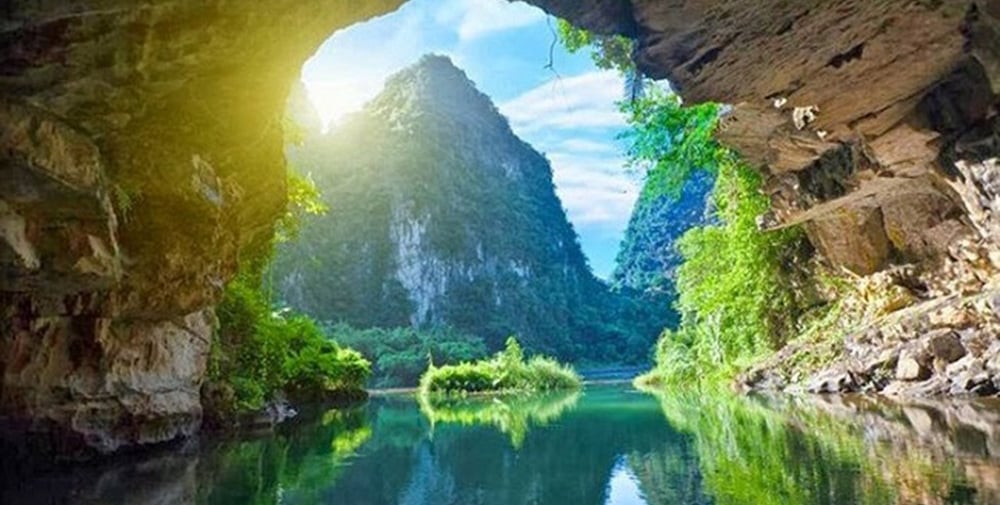
If Tam Cốc is a polished opera and Tràng An is a cinematic masterpiece, then Thung Nắng (Sunshine Valley) is a raw, acoustic folk song. Located just a few kilometers away from the bustling wharves of its famous cousins, Thung Nắng exists in a different dimension of time. There are no rows of souvenir shops here, no aggressive photographers, and often, no other boats on the water. It is a place where the sunlight doesn't just fall; it seems to be captured and held by the yellow-green reeds and the shallow, crystal-clear river. For the "Insider," Thung Nắng is the antidote to "over-tourism"—a journey back to what Ninh Bình felt like twenty years ago.
1. The Light of the "Sun-Drenched" Valley
The name "Thung Nắng" literally translates to "Sunshine Valley," and it earns this title the moment your sampan leaves the small, quiet dock. Unlike the deep, shaded canyons of other routes, this valley is wide and open, allowing the sun to hit the water at an angle that turns the river into a shimmering sheet of silver.
As a journalist, I’ve found that most "scenic" spots rely on a specific viewpoint, but Thung Nắng is a sensory experience that changes every hundred meters. The water is so shallow and clear that you can see the "forest" of aquatic grass swaying beneath you, and the silence is so thick that you can hear the clicking of dragonflies’ wings. It is a "Visual Slap" of absolute brightness—a place where the limestone karsts don't feel like walls, but like ancient guardians basking in the heat.
2. Navigating the "But" Cave: A Portal to the Wild
The highlight of the boat journey is passing through Hang Bụt (The Fairy or Buddha Cave). At nearly 500 meters long, it is one of the more substantial tunnels in the region, but it feels different from the military-like caves of Tràng An. Inside, the ceiling is a chaotic masterpiece of stalactites, and because there are so few boats, the echoes of the water dripping from the roof are hauntingly clear.
Emerging from the darkness of Hang Bụt is like stepping into a "Lost World." The valley opens up into a hidden basin surrounded by vertical cliffs that have no walking paths and no roads. This is the heart of the "Dual Heritage" in its most primal form—a landscape that has remained virtually unchanged for millennia. You aren't just a tourist here; you are an explorer navigating a secret vein of the earth.
3. The Temple in the Reeds: Thung Nắng Temple
Deep within the valley, accessible only by water, sits the small and humble Thung Nắng Temple. It isn't as grand as Bái Đính or as famous as Thái Vi, but its isolation gives it a power that the larger temples lack. Dedicated to the spirits of the mountains and the water, it is a place where the local rowers stop to offer a few sticks of incense and a prayer for safety.
The temple is surrounded by vast fields of reeds that grow taller than a man. When the wind moves through them, it creates a sound like whispering voices—the "Voices in the Reeds" that the locals believe are the spirits of the valley. Standing in the quiet courtyard of this temple, with nothing but the sun on your face and the sound of the marsh, you realize that the most profound spiritual experiences in Ninh Bình aren't found in the golden halls, but in these quiet, forgotten corners of the limestone kingdom.
4. The Rhythms of the Marsh: A Bird-Watcher's Dream
Because Thung Nắng sees so few visitors, it has become a sanctuary for the region's wildlife. If you move quietly, you will see white herons, kingfishers, and rare storks hunting in the shallows.
The rowers here—mostly locals from the nearby Dam Khe village—row with a slow, deliberate rhythm. They don't rush the tour because they know that the value of Thung Nắng is in the lingering. They might point out a hidden grotto where they used to hide during the floods or a specific plant used in traditional medicine. This is "Slow Travel" at its most authentic—a chance to connect with the land through the eyes of people who have never left it.
The Journalist's Epilogue:
Thung Nắng is the place where you go to find the sun after you’ve spent too much time in the shadows of the famous sites. It is a reminder that beauty doesn't always need a crowd to be valid, and that sometimes, the best way to see a place is to go where the light is brightest and the voices are few.
Next time you find yourself overwhelmed by the lines at the Tam Cốc wharf, turn your bike toward the Sunshine Valley. Chase the light through the reeds and find the silence that the rest of the world has forgotten.
We are on social media
Vietnam Charm belongs to Vietpearl Travel., JSC
Contact:
Email: info@vietnamcharm.top
© 2026. by Vietnam Charm. All rights reserved
Travel license number: 01-827/2020
Refund Policy