Giảm giá hấp dẫn cho tour du lịch!


UNESCO INTANGIBLE HERITAGE: Bài Chòi Art of Central Việt Nam — Decoding the Ritual of Play, Theatrical Humor, and Community Dialogue
The stage of the village square: exploring Bài Chòi as a unique folk performance where the drama of chance meets the lyrical poetry and spontaneous wit of Central Vietnamese culture, binding communities through laughter and song.
WORLD HERITAGESHORE EXCURSION
Tobin Nguyen
11/6/20256 phút đọc
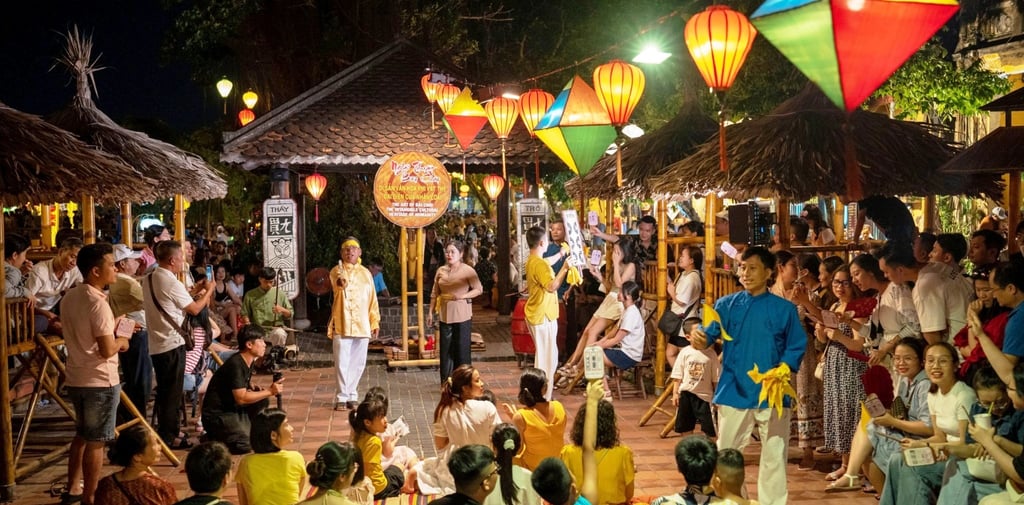
For the cultural observer, the traveler, and the devoted enthusiast of folk theater, Nghệ thuật Bài Chòi Trung Bộ (Bài Chòi Art of Central Việt Nam) offers an immediate, vibrant, and utterly unique immersion into the social and artistic soul of the region stretching from Quảng Bình to Khánh Hòa. Recognized by UNESCO as a Masterpiece of the Oral and Intangible Heritage of Humanity in 2017, Bài Chòi is a singular cultural phenomenon—a sophisticated fusion of a lively folk game, lyrical theater, and communal ritual—that transforms the village square into a democratic stage. It is an art form that captures the resilient, witty, and deeply communal spirit of a region often defined by a challenging geography. To witness Bài Chòi is to participate in a collective celebration where the drama of chance meets the lyrical power of the human voice.
As specialists in Vietnamese heritage and deep cultural analysis at Vietnam Charm, we embark on an essential, detailed exploration to decode this theatrical blend of performance and play. Chúng tôi sẽ meticulously phân tích cấu trúc trò chơi làm nền tảng cho nghệ thuật, vai trò sân khấu hóa của các chòi tre, kỹ thuật lời ca đối đáp và ngẫu hứng, và ý nghĩa sâu sắc của Bài Chòi trong việc củng cố tinh thần cộng đồng và bảo tồn bản sắc văn hóa miền Trung Việt Nam. Understanding Bài Chòi is essential to grasping the emotional vitality and intellectual agility prized in the Central Vietnamese psyche.
I. The Philosophical Foundation: Play as Ritual and Dialogue
Bài Chòi originated centuries ago as a popular form of entertainment during the Lunar New Year (Tết) and Spring festivals, transforming the act of communal gathering into a structured, rhythmic celebration. Its genius lies in its dual nature: it is simultaneously a game of chance and a theatrical performance.
1. The Synthesis of Game and Art
The name Bài Chòi itself reflects this synthesis. Bài refers to the playing cards used in the game, and Chòi refers to the elevated bamboo watchtowers where the performers sit. This art form elevates a simple folk game into a profound communal experience.
The Democratic Principle: Unlike court arts, Bài Chòi is inherently democratic and participatory. Every member of the community—regardless of age or status—can participate either by buying a card or by simply being present in the square. This inclusivity reinforces social equality and communal harmony.
Suspense and Laughter: The structure of the game provides essential suspense, while the satirical and humorous nature of the songs sung by the Anh/Chị Hiệu (The Caller) provides catharsis and laughter. This balance between tension and release is the core emotional engine of the performance.
2. The Cosmology of the Game
The cards used in Bài Chòi are not random; they are a stylized version of the Chinese chess pieces or traditional dominoes, but with local names and images drawn from agrarian life (such as "Ông Ầm," "Tứ Cẳng," or "Nhất Nọc"). The call to each card is thus not merely an announcement, but a lyrical invocation of a character, an event, or a philosophical thought relevant to the village, turning the game itself into a small reflection of the human condition.
II. The Architecture of Performance: The Stage of Bamboo
The physical structure of the Bài Chòi game is its most visually defining characteristic, transforming the village square into a unique, temporary theater.
1. The Chòi (Watchtowers) and The Stage
A typical set-up involves nine to eleven elevated bamboo watchtowers (Chòi) erected in a semi-circle around a central communal area. The central area houses the main Chòi Cái (Main Tower), where the game manager and the key performer, the Anh/Chị Hiệu, sits.
The Spatial Dynamic: The elevated chòi places the participants (who buy the cards) literally above the crowd, creating a dynamic sense of excitement and prestige. The spatial arrangement focuses all attention on the central Anh/Chị Hiệu, who controls both the ritual and the artistic flow.
The Audience as Participants: The audience, seated around the square, becomes an active participant, cheering their friends in the chòi, and responding to the Anh/Chị Hiệu's humorous calls. The atmosphere is one of collective, shared anticipation.
2. The Central Role of the Anh/Chị Hiệu (The Caller)
The Anh/Chị Hiệu is the undisputed heart of the Bài Chòi performance. This role is a masterful synthesis of a ritual conductor, a lyricist, and a comedian.
The Ritual Call: The Anh/Chị Hiệu draws a wooden card stick from the Ống Hậu (Card Tube). Before announcing the card's name, they do not simply call it out; they sing a melodic verse (Hò) that lyrically describes, alludes to, or humorously personifies the card's name. This transition—from drawing a stick to singing a lyrical riddle—is the artistic magic of Bài Chòi.
Spontaneous Dialogue: The Anh/Chị Hiệu must possess immense witty spontaneity (ngẫu hứng hài hước). They use the interval between card draws to engage in impromptu, satirical dialogue with the audience or the participants in the chòi, often commenting on local gossip, social issues, or the eccentricities of daily life. This impromptu social commentary grounds the ritual in the immediate reality of the community.
III. The Lyrical Mastery: Melody, Rhythm, and Wit
The music of Bài Chòi is a unique blend of formal lyrical structures and flexible, impromptu performance, deeply rooted in the folk singing traditions of the Central region.
1. The Hò and the Làn Điệu (Melodic Structure)
The singing is characterized by the Hò—a style of lyrical chant common in Central Việt Nam, known for its clear, high-pitched voice designed to carry over distance. Bài Chòi utilizes a limited, distinct set of Làn Điệu (Melodies), known for their powerful rhythmic drive and adaptability.
Adaptability: The key is the ability to adapt the fixed melodic structure to entirely new, improvised lyrics that correspond to the card drawn. This requires both rigorous memory of the melodies and immediate poetic wit to create the lyrical riddle on the spot.
Rhythmic Power: The melodies are often accompanied by simple percussion (like drums or castanets), giving the performance a strong, infectious rhythmic drive that is essential for maintaining the festive energy of the game.
2. The Poetry of the People (Thơ Ca Dân Gian)
The lyrics sung by the Anh/Chị Hiệu are a vital archive of Central Vietnamese folk poetry and idiom.
Metaphor and Satire: The verses are rich in metaphor, often using images of the sea, the central mountain range, and the simple lives of farmers and fishermen. Crucially, the verses are often satirical and humorous, serving as a community tool to gently critique social foibles or celebrate local heroes. The best Anh/Chị Hiệu can bring the entire square to simultaneous laughter and lyrical appreciation.
IV. The Preservation Imperative: Sustaining the Spirit of Play
The preservation of Bài Chòi faces challenges related to modernization, but its inherent popularity and adaptability offer a strong foundation for continuity.
1. The Threat of E-Media
The primary threat is the displacement of traditional communal leisure by electronic media and other forms of entertainment. As the rhythm of village life changes, the necessary time and space for building the chòi and gathering for a full-day performance diminishes. Furthermore, the specialized skill of the Anh/Chị Hiệu is hard to transfer. The art demands a deep, lived knowledge of local idioms, proverbs, and social dynamics—knowledge that is not easily taught in a classroom.
2. UNESCO Revival and Adaptive Performance
The UNESCO designation provided critical validation and spurred extensive efforts to revitalize the art form:
Documentation: Comprehensive efforts have documented the core melodic structures, the rules of the game, and the vast repertoire of lyrical verses associated with each card.
Adaptation and Education: Emphasis has been placed on integrating Bài Chòi into community cultural centers and local schools. The art form is being successfully adapted into a purely theatrical performance (Bài Chòi Sân Khấu)—a condensed stage version—which preserves the costumes, music, and lyrical wit, even if the element of the game is removed. This adaptation ensures the artistry remains accessible to modern, broader audiences.
Community Pride: The recognition has significantly boosted local pride, reinforcing the value of the art form as a unique cultural marker of the Central region.
V. Conclusion: The Joyful Dialogue of the Central Coast
Nghệ thuật Bài Chòi Trung Bộ is a powerful testament to the Central Vietnamese genius for fusing popular entertainment with profound artistic skill. It is an art form that transforms the drama of chance into a lyrical celebration of community, wit, and resilience. By analyzing its physical architecture, the spontaneity of the Anh/Chị Hiệu, and the lyrical richness of its songs, we understand how Bài Chòi serves as a vital social lubricant and a dynamic archive of local culture. This UNESCO INTANGIBLE HERITAGE is an enduring reminder that the most joyful and effective forms of human expression are often those that bring us together in collective play and shared, spontaneous laughter.
We are on social media
Vietnam Charm belongs to Vietpearl Travel., JSC
Contact:
Email: info@vietnamcharm.top
© 2026. by Vietnam Charm. All rights reserved
Travel license number: 01-827/2020
Refund Policy