Giảm giá hấp dẫn cho tour du lịch!



UNESCO INTANGIBLE HERITAGE: Ca Trù, The Ancient Chamber Music — Decoding the Complex Structure, Poetic Mastery, and Intellectual Soul of Vietnamese Song
The elite sound of the scholar's hall: exploring Ca Trù as Việt Nam's most complex vocal art form, where subtle rhythmic structure, meticulous percussion, and poignant poetry convey a profound, contemplative elegance.
WORLD HERITAGESHORE EXCURSION
Tobin Nguyen
11/9/20255 phút đọc
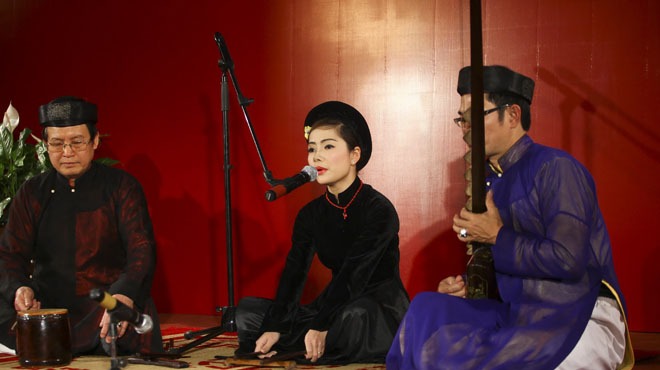
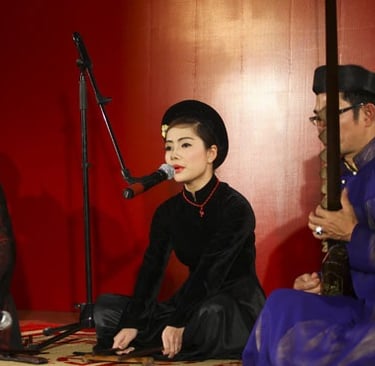
For the cultural historian and the dedicated musicologist, Ca Trù (also known as Hát Ả Đào) stands as one of the most intellectually demanding, structurally complex, and aesthetically refined art forms in Việt Nam. Recognized by UNESCO as a Masterpiece of the Oral and Intangible Heritage of Humanity in 2009, Ca Trù is far removed from the communal energy of folk singing or the solemnity of court music. Instead, it is an intimate, aristocratic, and often contemplative chamber music tradition—a direct dialogue between the performer, the instruments, and an elite audience of scholars and connoisseurs. To fully appreciate Ca Trù is to understand the sophisticated intellectual life and profound melancholy that characterized Northern Vietnamese society from the 15th to the 20th centuries.
As specialists in Vietnamese heritage and profound cultural analysis at Vietnam Charm, we embark on an essential, detailed exploration to decode this ancient, cerebral musical tradition. We will meticulously analyze the minimalist structure of the ensemble, the profound rhythmic complexity that governs the performance, the historical shift of the music from ritual to scholarly entertainment, and the enduring challenges of preserving an art form dependent on elite connoisseurship. Understanding Ca Trù is essential to grasping the height of aesthetic refinement in traditional Vietnamese performing arts.
I. The Philosophical and Historical Context: From Ritual to Contemplation
Ca Trù has a complex, multi-layered history, originating not as entertainment, but often as a structured, sacred performance tied to rituals and social hierarchy.
1. The Historical Roots: Ritual, Court, and Intellectualism
Ca Trù's origins are diverse, blending ritualistic singing from communal gatherings with the refinement of court and scholarly life:
Sacred Origins: Early forms of Ca Trù were associated with singing in communal houses (Đình) and temples, often performed by professional female singers (Ả Đào) to honor local deities and promote social harmony.
The Rise of the Scholar-Connoisseur: During the Lê Dynasty (15th century) and its subsequent revival under the Nguyễn Dynasty, Ca Trù became institutionalized in the scholar's hall (Phường Hát). It evolved into a highly esteemed form of entertainment for the educated elite, mandarins, and literary figures. The audience was not passive; they were expected to be active connoisseurs, possessing sufficient knowledge of poetry, rhythm, and musical theory to appreciate the performer's subtle virtuosity and improvisation. This requirement made Ca Trù a cultural marker of high intellectual status.
The Aesthetic of Melancholy: Ca Trù often deals with themes of introspection, the fleeting nature of life, the beauty of the natural world, and a profound, beautiful melancholy. The atmosphere is one of sophisticated, controlled emotion, encouraging deep contemplation rather than communal joy.
2. The Minimalism of the Ensemble (Phường Ca Trù)
The entire musical system relies on the profound interplay between three or four essential elements, reinforcing its nature as chamber music:
The Singer (Đào Nương): The female singer is the central figure, possessing an immense vocal range, breath control, and the theatrical skill necessary to convey the poetry. She both sings and uses the Phách (a wooden clapper/castanet) to keep the rhythm.
The Drummer (Trống Chầu): The male drummer is the most important musical figure and the ultimate judge. He uses a small, cylindrical drum (trống chầu) and provides subtle, highly technical rhythmic accents to punctuate the singer's performance. His rhythmic commentary (often a single, well-placed drum beat) is the traditional form of appreciation or critique.
The Lute Player (Đàn Đáy): The male lute player provides the melodic accompaniment using the distinctive Đàn Đáy—a three-stringed, long-necked lute with a unique trapezoidal body. The lute is responsible for setting the mood, key, and providing rhythmic guidance to the singer.
The Spectator-Scholar (Quan Viên): Often, a fourth figure, the scholar-spectator, adds to the minimal texture by tapping a small wooden block (tam thập lục) or simply listening actively.
This minimalist setup emphasizes the skill of each performer, leaving no room for error or sonic camouflage.
II. The Technical Mastery: Rhythmic Complexity and Vocal Virtuosity
The structural complexity of Ca Trù lies in its rigorous adherence to rhythm, meter, and a complex system of rhythmic phrasing (láy and hát nói).
1. The Rhythmic Code (Phách and Trống)
The fundamental challenge of Ca Trù is the rhythmic structure. Unlike Western music, which often adheres to fixed time signatures, Ca Trù is highly flexible but governed by strict rhythmic patterns dictated by the singer’s Phách and the drummer’s Trống Chầu.
The Phách: The singer uses the wooden clapper to mark the rhythmic structure. The complex rhythmic patterns created by the Phách are essential, establishing the subtle metrical pulse that the Đàn Đáy and the Trống Chầu must follow precisely.
The Trống Chầu (The Drummer's Commentary): The drummer's role is unique. He does not keep time continuously. Instead, he provides highly symbolic rhythmic accents—a precise strike (often on the rim or the center) to express agreement, encouragement, or criticism of the singer's performance. This rhythmic dialogue is known as Chấm Câu (Punctuation), and the audience watches the drummer's face to gauge the success of the performance. A perfect strike is known as a cái (the best, most appreciated beat).
2. The Hát Nói: Poetry and Improvisation
The most esteemed form of Ca Trù is the Hát Nói—a complex fusion of vocal art and poetic literature. Hát Nói is a narrative, poetic song structure that allows the singer and instrumentalists significant room for subtle improvisation within rigid rhythmic constraints.
Poetic Structure: The lyrics are typically classical Vietnamese poetry written in the Thất Lục Bát (seven-six-eight) meter. The singer must master the art of extending certain syllables and compressing others—a technique called láy—to fit the poetry into the specific, slow, formal melody while allowing the rhythm (marked by the Phách) to remain unwavering.
Vocal Virtuosity: The singer must possess extraordinary breath control and vocal projection to sustain the long, often melancholic notes, simultaneously manipulating the rhythmic structure with the Phách.
III. The Cultural Significance: Preserving the Elite Aesthetic
Ca Trù’s reliance on intellectual connoisseurship made it vulnerable to societal change, leading to its near-extinction but also highlighting its immense cultural value today.
1. The Period of Decline
The art form began a steep decline in the early 20th century. The rise of more accessible, popular entertainment (like Cải Lương—reformed opera) and the dismantling of the scholar-mandarin class (the primary patrons and connoisseurs) removed Ca Trù's economic and social context. Furthermore, the association of some performers with entertainment venues of dubious reputation damaged its prestige. By the mid-20th century, Ca Trù was nearly extinct.
2. UNESCO Revival and the Challenge of Context
UNESCO's designation was not given lightly; it recognized the extreme fragility and high artistic value of Ca Trù. The challenge of the revival is immense:
Recreating Connoisseurship: The art form requires not just trained performers, but trained audiences. Modern efforts focus on educating new audiences (both Vietnamese and foreign) on the history, rhythmic codes, and poetic structures to ensure the music is appreciated on its original intellectual terms, not simply as background noise.
Technical Transfer: The complex vocal and instrumental techniques were preserved by only a handful of aging masters (nghệ nhân). Revival efforts focused on intensive apprenticeship programs to transfer the delicate skills of the Đàn Đáy and the Phách to the younger generation before the knowledge vanished.
IV. Conclusion: The Elegance of Contemplation
Ca Trù is Việt Nam’s profound argument for the power of subtle, contemplative elegance over grand display. It is a chamber art form where profound intellectualism meets raw vocal virtuosity, all governed by a strict, complex rhythmic code. By analyzing its historical journey from sacred ritual to the scholar's hall, we understand its unique aesthetic—one that demands patience, knowledge, and active listening. This UNESCO INTANGIBLE HERITAGE is a powerful testament to the height of Vietnamese artistic refinement, ensuring that the melancholy, elegant sound of the Đàn Đáy and the precise tap of the Phách continue to offer a unique, intellectual pause in the modern world.
We are on social media
Vietnam Charm belongs to Vietpearl Travel., JSC
Contact:
Email: info@vietnamcharm.top
© 2026. by Vietnam Charm. All rights reserved
Travel license number: 01-827/2020
Refund Policy