Giảm giá hấp dẫn cho tour du lịch!



UNESCO INTANGIBLE HERITAGE: Nhã Nhạc, Vietnamese Court Music — Decoding the Imperial Symphony, Ritual, and the Aesthetics of Power
The sound of sovereignty: exploring how the refined music of the Nguyễn Dynasty codified political hierarchy, reflected cosmological order, and preserved the solemn dignity of Việt Nam’s last Imperial court.
WORLD HERITAGESHORE EXCURSION
Tobin Nguyen
11/10/20257 phút đọc
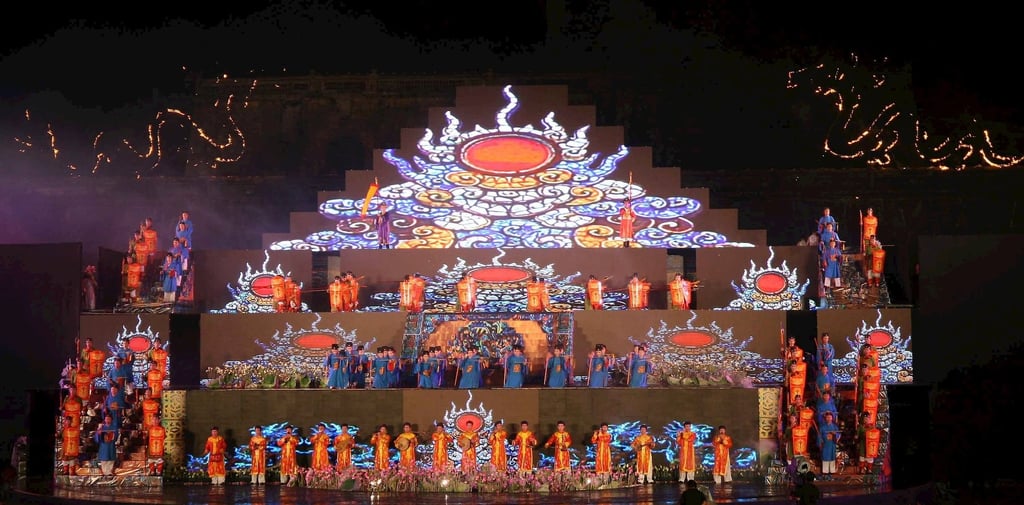
While the physical structure of the Huế Imperial Citadel (a UNESCO World Heritage Site) offers a visual map of the Nguyễn Dynasty’s political power, its profound spiritual and philosophical essence is best understood through its intricate, solemn soundscape: Nhã nhạc, Vietnamese Court Music. Recognized by UNESCO as a Masterpiece of the Oral and Intangible Heritage of Humanity in 2003, Nhã nhạc is far more than mere entertainment or historical artifact. It is a highly complex, meticulously codified system of ritual music and dance that served as the sonic architecture of the empire. To hear Nhã nhạc is to hear the very sound of sovereignty—a deliberate, solemn harmony designed to communicate the Emperor’s divine mandate, stabilize the state's hierarchy, and maintain cosmological balance between the human realm and the universe.
As specialists in Vietnamese heritage and cultural analysis at Vietnam Charm, we embark on an essential, detailed exploration to decode this imperial symphony. We will meticulously analyze the philosophical function of the music in governance, the aesthetic principles that strictly governed its composition and performance, the complex hierarchy of musical instruments, and the profound role it played in preserving the memory and dignity of a powerful yet ultimately vanished court. Understanding Nhã nhạc is essential to grasping the complete, refined sophistication and political discipline that defined the Huế Imperial culture.
I. The Philosophical Foundation: Music as Governance and Cosmic Order
Nhã nhạc, translating profoundly to "Elegant Music," is not a unique Vietnamese invention but is rooted deeply in the classical East Asian Confucian tradition that governed political thought for centuries. In this enduring philosophy, music was never an art form dedicated to pleasure alone; it was recognized as a fundamental tool of governance and an indispensable component for maintaining harmony between the human world and the universe.
1. The Mandate for Political and Cosmic Harmony
The primary function of Nhã nhạc was not enjoyment, but strictly ritual (Lễ). The music’s measured tempo, precise rhythm, and formalized structure were intended to directly reflect the orderly, harmonious governance of the Emperor. The belief was profound: if the music played was pure, solemn, and orderly, it symbolized a peaceful, stable state and secured the Emperor’s Mandate of Heaven. Conversely, any perceived disharmony, speed, or emotional excess in the music could be interpreted as an ominous sign of political instability or impending cosmic imbalance.
The music was integral to all three major categories of court ritual: Đại Lễ (Great Rituals, such as coronations or the supreme sacrifice to the Ancestors); Thường Lễ (Regular Rituals, such as official court receptions or diplomatic greetings); and Tiểu Lễ (Minor Rituals, accompanying imperial daily life or specific seasonal events). Every single court event, no matter how small, demanded a specific, codified piece of music played by a specific, designated ensemble.
2. The Influence of the Triều Nguyễn (Nguyễn Dynasty)
While court music traditions existed in Việt Nam for centuries prior, it was the Nguyễn Dynasty (1802–1945)—who established their capital in Huế—that meticulously solidified and perfected the comprehensive system of Nhã nhạc that exists today. The Nguyễn emperors established strict, detailed rules defining the exact instruments to be used, the specific size of the orchestras, the official performance locations, and the required repertoire, transforming the musical tradition into a formalized, highly regulated state institution. The music became the sonic signature of the dynasty’s centralized power.
II. The Architecture of Sound: Orchestration and Political Hierarchy
Nhã nhạc is characterized by its complex, hierarchical orchestration. The size and precise composition of the musical ensemble were strictly dictated by the rank of the person being honored and the solemnity of the ritual being performed, visually and acoustically reinforcing the court's rigid hierarchy.
1. The Great Orchestras: Đại Nhạc and Tiểu Nhạc
The Nguyễn court maintained a formal, practical separation between its primary ceremonial orchestras:
Đại Nhạc (Great Music): This massive orchestra was reserved exclusively for the most solemn, grandest occasions, such as the crucial sacrifice to Heaven and Earth (Nam Giao), coronations, or major New Year’s ceremonies. This ensemble was large, featuring a predominant use of powerful wind and percussion instruments (drums, gongs, cymbals, massive horns) to create a powerful, imposing, and symbolic sonic presence. Its deep, resonant sound was deliberately designed to be heard far beyond the palace walls, reaching the public and the spiritual realms.
Tiểu Nhạc (Small Music): This smaller, more refined ensemble was used for less formal but still significant ceremonies, such as imperial banquets, welcoming lower-ranking foreign envoys, or the quiet processions within the confines of the Forbidden Purple City. This ensemble emphasized sensitive string and less bombastic wind instruments, creating a softer, more intimate, and highly nuanced sound, suitable for smaller, more private settings.
2. The Hierarchy of Instruments
The numerous instruments utilized in Nhã nhạc carried inherent symbolic and structural value. They were divided into several families, each contributing a specific texture to the "sonic architecture":
Percussion (The Rhythm of Order): Instruments like drums (trống), bells (chuông), gongs (chiêng), and the wooden clapper (phách). Percussion sets the strict, measured rhythm (phách) that governs the slow, formal tempo of the piece, fundamentally symbolizing the immutable, controlled order of the state and the universe.
Winds (The Voice of the Heavens): Instruments like flutes (sáo), oboes (kèn), and large trumpets (đào, hải loa). Wind instruments often carry the main melody and provide the sustained tonal quality, representing the Emperor's connection to the spiritual or celestial realm.
Strings (The Melodic Soul): Instruments like two-string fiddles (đàn nhị), zithers (đàn tranh), and lutes (đàn tỳ bà). String instruments provide the delicate, intricate emotional texture, creating the subtle nuances and grace characteristic of refined court aesthetics.
The precise blending of these elements—the solemn rhythm of the percussion, the melodic grace of the strings, and the stately projection of the winds—is the true sonic architecture of Nhã nhạc.
III. The Aesthetic and Performance: Code, Costume, and Theatrical Symbolism
The performance of Nhã nhạc was never confined to sound alone; it was an integrated spectacle of music, elaborate, choreographed dance (vũ khúc), and highly symbolic costume, transforming the entire performance into a complex ritualistic code.
1. The Code of Motion (Vũ Khúc)
Court dance (Vũ Khúc) was highly stylized, slow, and meticulously controlled. These dances were profoundly abstract and symbolic, performed by groups of rigorously trained dancers, often young women from the palace.
Symbolic Narratives: The dances often visually portrayed cosmological events (like the movement of the planets), allegories of loyalty, the celebration of political power, or the orderly movement of the seasons. Famous examples include the Lân Mẫu Xuất Lân Nhi (Mother and Children Unicorn Dance, symbolizing fertility and peace) or the complex Bát Dật (the eight-row dance, reflecting the highest level of formality and hierarchy inherited from Chinese courts).
Precision Over Passion: The central aesthetic principle was absolute, unwavering precision and flawless symmetry. There was no room, whatsoever, for improvisation or uncontrolled emotional expression. The dancers' movements were synchronized down to the millimeter, deliberate, and directly reflected the state's controlled, hierarchical order and discipline.
2. Costume, Color, and Visual Weight
The costumes worn by both the musicians and the dancers were extraordinarily elaborate, strictly defined by rank, and rich in imperial color (yellow, red, blue, green). The specific colors and patterns reflected their status within the court hierarchy and the precise ritual being performed. The use of shimmering, heavy silk, intricate embroidery, and gold thread emphasized the immense wealth and solemn dignity of the ruling family. The overall visual spectacle added necessary weight and grandeur to the sonic experience.
IV. The Post-Imperial Preservation: From Palace to Public Memory
Following the historic abdication of Emperor Bảo Đại in 1945 and the subsequent collapse of the Nguyễn Dynasty, the tradition of Nhã nhạc faced an existential crisis. Its function—to serve the rituals of the monarchy—had officially vanished, leaving the art form without its context.
1. The Period of Decline and Exile
For decades, the art form suffered immense decline and neglect. Many highly skilled musicians and dancers scattered, and the complex repertoire, the precise performance protocols, and the dance codes were nearly lost or forgotten. Some dedicated musicians carried the knowledge into exile or preserved it privately in isolation, often forced to adapt the music for more popular forms to ensure its economic survival, risking the integrity of the classical form.
2. The UNESCO Revival and Public Legacy
The critical turning point came with the international effort to catalog and protect intangible cultural heritage. UNESCO's recognition of Nhã nhạc in 2003 was a fundamental intervention:
Global Validation: The designation validated Nhã nhạc not merely as a piece of local history, but as an irreplaceable treasure of universal human heritage, spurring intense national efforts for its formal revival and rigorous reconstruction.
Reconstruction of the Repertoire: Scholars and the few remaining elderly musicians worked tirelessly for years to reconstruct the elaborate repertoire, the proper use of the traditional instruments, and the lost dance codes, drawing on archival records and fragile personal memories.
The Public Stage: Nhã nhạc successfully transitioned from a forbidden, exclusive palace art to a public cultural asset. Today, regular performances are held in Huế, allowing the general public and international visitors to directly experience the "sound of sovereignty"—a sound that now symbolizes profound cultural resilience, historical depth, and national memory, rather than political power.
V. Conclusion: The Sonic Architecture of the State and the Art of Resilience
Nhã nhạc, Vietnamese Court Music, is a profound cultural artifact that serves as the enduring sonic memory of the Nguyễn Dynasty. It is a masterpiece of complex, subtle engineering, where every beat, every melody, and every synchronized motion was deliberately codified to reflect cosmic harmony and political authority. By analyzing its restrained aesthetics, its hierarchical orchestration, and its vital role in the Imperial City’s ritual life, we gain a unique appreciation for the sophistication and discipline of Huế's court culture. This UNESCO INTANGIBLE HERITAGE proves that the most enduring forms of culture and power are often expressed not through physical walls, but through the delicate, precise, and utterly unforgettable harmony of sound that time cannot entirely erase.
We are on social media
Vietnam Charm belongs to Vietpearl Travel., JSC
Contact:
Email: info@vietnamcharm.top
© 2026. by Vietnam Charm. All rights reserved
Travel license number: 01-827/2020
Refund Policy