Giảm giá hấp dẫn cho tour du lịch!


UNESCO INTANGIBLE HERITAGE: Quan Họ Bắc Ninh Folk Songs — Decoding the Ritual, Poetic Language, and Social Harmony of Northern Vietnamese Ballads
The dialogue of love and courtesy: exploring Quan Họ as a sophisticated social ritual where musical exchange codifies community bonds, gender roles, and the elegant, ancient spirit of the Red River Delta.
WORLD HERITAGESHORE EXCURSION
Tobin Nguyen
11/8/20256 phút đọc
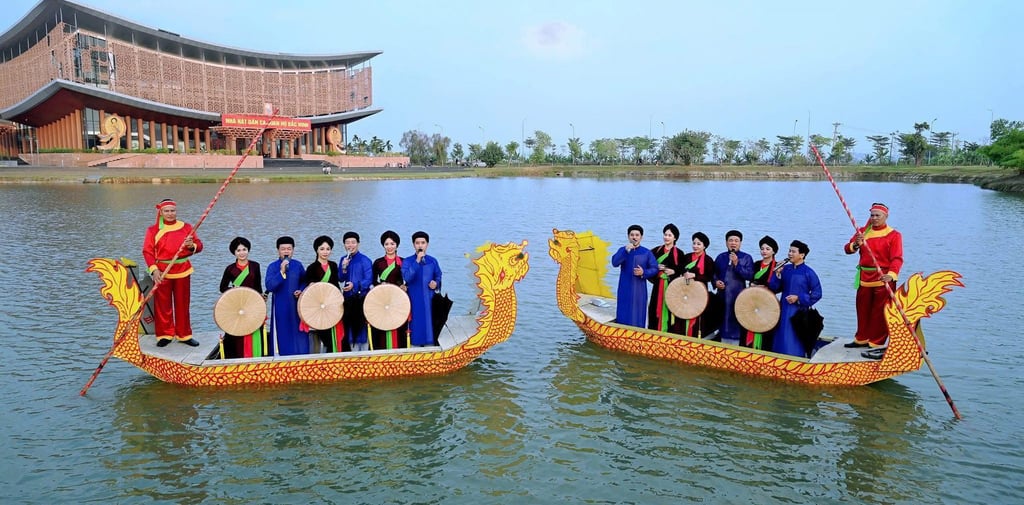
For the cultural observer and the ethnomusicologist, Quan Họ Bắc Ninh Folk Songs (Dân ca Quan Họ Bắc Ninh) offer a fascinating window into the complex social aesthetics of the Northern Vietnamese people. Recognized by UNESCO as a Masterpiece of the Oral and Intangible Heritage of Humanity in 2009, Quan Họ is far more than simple folk singing; it is a highly formalized, ritualized cultural activity—a sophisticated "dialogue of courtesy"—that meticulously governs social relationships, courtship, and community bonding in the villages of the Bắc Ninh region. To witness a performance is to witness a living, elegant code of conduct expressed through meticulously crafted poetry and melody.
As specialists in Vietnamese heritage and profound cultural analysis at Vietnam Charm, we embark on an essential, detailed exploration to decode this ancient, lyrical tradition. We will meticulously analyze the social function of the singing ritual, the complex poetic structure of the lyrics, the unique art of call-and-response (hát đối đáp), and the profound role Quan Họ plays in preserving the sophisticated, elegant spirit of the Red River Delta’s agrarian communities. Understanding Quan Họ is essential to grasping the aesthetic refinement and deep-seated social harmony prized in traditional Northern culture.
I. The Philosophical Foundation: Music as a Social Code and Ritual
Quan Họ originated centuries ago as a form of ritual singing performed primarily during communal festivals, temple visits, and spring gatherings. Its enduring, primary function is not entertainment, but the maintenance of a sophisticated social contract based on absolute respect, courtesy, and elegant exchange.
The Principle of Kết Nghĩa and Ritual Kinship
The entire Quan Họ practice is rigidly structured around the concept of Kết Nghĩa or Kết Chạ (sworn brotherhood/sisterhood). The singers organize themselves into highly formalized, non-romantic pairs or groups (bọn) of two to five singers. The male singers are known as the Liền Anh (Sworn Brothers), typically representing one village. The female singers are known as the Liền Chị (Sworn Sisters), typically representing a neighboring, rival village. When two such groups meet, they enter a ritual kinship where the Liền Anh and Liền Chị address each other with fixed, respectful familial terms, strictly adhering to an elegant code of courtesy that prohibits any form of vulgarity or crudeness. This ritual establishes a permanent, formalized, non-romantic "musical marriage" between the two villages, promoting peace, facilitating trade, and ensuring social stability that transcends simple geographical boundaries. The core function is to build strong, enduring community ties through the shared experience of art.
The Ritual of Hát Hội (Festival Singing)
Quan Họ singing is inextricably linked to the numerous Hội (festivals) that take place immediately after the Lunar New Year (Tết) in the Bắc Ninh region. The singing takes place in specific, ritually designated, traditional locations such as hillsides, in communal halls (Đình), and, most famously, on small wooden boats drifting gently on the village pond or river. The choice of location reflects the fluidity, openness, and natural beauty of the exchange. The singing acts as the emotional and social climax of the entire spring festival calendar, providing a structured, safe outlet for social interaction.
II. The Architecture of Sound: The Art of Hát Đối Đáp (Call-and-Response)
The technical mastery of Quan Họ lies in its unique, intricate structure of Hát Đối Đáp (Call-and-Response Singing), a highly demanding system built on rigorous memorization, quick improvisation, and lyrical symmetry. The entire exchange is conducted without interruption.
The Rigid Four-Part Performance Structure
A typical Quan Họ exchange follows a rigid four-part sequence, meticulously designed to ensure perfect symmetry and demonstrate the skill and memory of both the leading and responding groups. The exchange begins with Hát Ra (The Challenge), where the Liền Anh or Liền Chị initiates the exchange, singing a song, often one of the core, well-known melodies, posing a metaphorical challenge or an emotional question. The complexity is that the responding group must then perform Hát Đối (The Reply). They must immediately reply with a completely different song that utilizes the same core melody, the same tempo, and the same rhythm structure, but with entirely new, appropriate lyrics that provide the required answer or elegantly continue the narrative metaphor. This requirement—same music, different lyrics—is the ultimate mark of high skill, memory, and lyrical brilliance. Next is Hát Chuyển (The Variation), where the first group sings a variation of the original melody, subtly altering the rhythm to gently lead the dialogue further. The final stage is Hát Giã (The Farewell), often the most emotional part. Both groups sing traditional farewell songs, expressing profound longing, reluctance to part, and the essential promise to meet and sing again, reinforcing the permanent nature of their musical kinship.
The Subtlety of the Lyrical Code
The language of Quan Họ is deliberately highly poetic, metaphorical, and elliptical. The songs rarely speak of love, longing, or social matters directly; instead, they employ complex metaphors drawn heavily from agrarian life, nature, and daily rituals—such as weaving, silk production, planting rice, or the ritual of sharing a quid of betel nut. The complexity of the metaphor and the quickness of the improvised reply showcase the exceptional intellectual and emotional agility required of the singers. The exchange is a battle of wits disguised as a serenade.
III. The Aesthetic of Harmony: Unaccompanied Vocals and Timelessness
Quan Họ is distinct from many folk traditions because it is performed almost entirely a cappella (unaccompanied). This stylistic choice is intentional and profound, placing the focus entirely on the purity of the human voice, the subtlety of the harmony, and the absolute clarity of the lyrical exchange.
The Specialized Vocal Technique
The vocal technique is highly specialized, demanding immense training over years to achieve the ideal tone, which is traditionally described using four key aesthetic qualities: Vang (Resonance), the clear, powerful projection of the voice; Rền (Vibrato/Tremolo), a subtle, continuous wavering tone that adds profound depth; Nẩy (Bouncing), a precise, small-scale breaking of the tone to emphasize certain words or syllables; and Ngân (Sustained/Echo), the ability to hold and prolong a clear, unwavering final note, often used for powerful dramatic effect. The harmony is equally unique. The two female Liền Chị singers will often sing in parallel intervals (fourths or fifths), creating a beautiful, slightly melancholic sound that is the acoustic signature of the tradition.
Costume and Ritual Dress
The visual aspect of Quan Họ is as important as the vocal technique, emphasizing formality and respect. The singers wear the elegant, traditional Northern Vietnamese costume. The Liền Chị wear the iconic four-part dress (áo tứ thân), dark silk trousers, and the distinctive flat scarf (khăn mỏ quạ) over their conical hat. The Liền Anh wear long silk robes (áo the) and a small, dark turban (khăn xếp). This formal, beautiful attire is not merely historical dress; it emphasizes the ritualistic importance of the exchange. The singers are not just performers; they are visual representatives of their respective villages and the long, elegant tradition they embody.
IV. Challenges and Preservation: The Resilience of the Code
The preservation of Quan Họ faces immense modern challenges. The rigid social structure and the inherent complexity of the art form are under severe threat from rapid urbanization, industrialization, and the decline of traditional agrarian festivals.
The Threat of Modernity and Loss of Context
As the original agrarian communities transform into sprawling urban centers, the traditional context for the singing (the communal festival, the quiet village pond) diminishes. When the ritual context is lost, the cultural meaning and urgency of the singing decline significantly. The technical demands of Hát Đối Đáp—the complex feat of memorization of hundreds of melodies and the subtle art of lyrical improvisation—are immense, requiring years of committed apprenticeship, a commitment difficult to sustain for modern youth. Furthermore, when performed for commercial tourism, the rigorous, slow, four-part structure is often abandoned in favor of simplified, faster, single-song performances, fundamentally corrupting the ritualistic core of the art form's integrity.
UNESCO Revival and Knowledge Transfer
The UNESCO designation was a critical lifeline, validating the global cultural value and spurring intense national efforts to save the tradition. Efforts have focused on documenting the vast repertoire (estimated at over 400 original songs) and the subtle vocal techniques. Focus has now shifted to encouraging community-based education and finding new, appropriate cultural contexts—such as school programs and regulated, subsidized cultural performances—that respect the ritualistic integrity of the art form while ensuring its continuity for new generations.
V. Conclusion: The Lyrical Heart of the Delta and the Power of Protocol
Quan Họ Bắc Ninh Folk Songs are a profound and delicate human achievement. They are far more than beautiful melodies; they are a complex, lyrical code where the sophisticated exchange of songs serves as a ritualized method of building community, codifying courtship, and demonstrating courtesy and respect. The elegant precision of the Hát Đối Đáp and the purity of the unaccompanied vocal harmony reflect the deepest aesthetic values of the Red River Delta—a quiet, sophisticated spirit that seeks harmony in social life and profound beauty in the precision of art. This UNESCO INTANGIBLE HERITAGE is a powerful testament to the resilience of cultural traditions, proving that the most enduring social bonds are those sealed not by law or commerce, but by the sweet, elegant harmony of the human voice.
We are on social media
Vietnam Charm belongs to Vietpearl Travel., JSC
Contact:
Email: info@vietnamcharm.top
© 2026. by Vietnam Charm. All rights reserved
Travel license number: 01-827/2020
Refund Policy