Giảm giá hấp dẫn cho tour du lịch!


UNESCO INTANGIBLE HERITAGE: The Cultural Space of the Gong in the Central Highlands — Decoding the Sacred Sound, Ritual, and Community
The sound of the mountains and the spirit world: exploring how the immense resonance of the gongs defines the social calendar, ecological relationship, and spiritual life of the Central Highlands ethnic groups.
WORLD HERITAGESHORE EXCURSION
Tobin Nguyen
11/2/20257 phút đọc
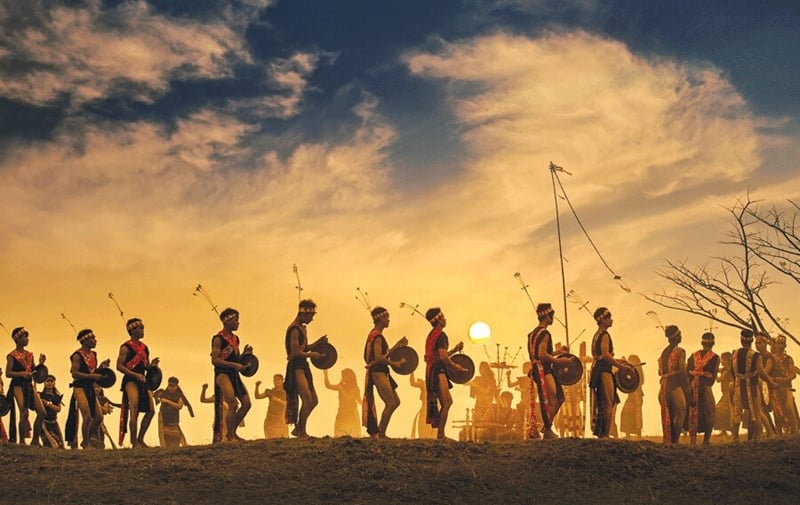
For the international ethnographer, the cultural historian, and the serious student of musicology, the Cultural Space of the Gong in the Central Highlands of Việt Nam (Không gian văn hóa Cồng Chiêng Tây Nguyên) is one of the world's most compelling and intricate acoustic phenomena. Recognized by UNESCO as a Masterpiece of the Oral and Intangible Heritage of Humanity in 2008, this designation honors not a collection of musical instruments, but an entire "cultural space"—a vast, intricate, and profound system of rituals, beliefs, customs, and community bonds that are fundamentally and entirely defined by the sound of the gongs. To hear the gongs played traditionally is to hear the very soul of the mountains; it is the sacred language through which the dozens of ethnic groups in the Central Highlands communicate with the Earth, the ancestors, the powerful spirits, and each other.
As specialists in Vietnamese heritage and profound cultural analysis at Vietnam Charm, we embark on an essential, detailed exploration to decode this immersive, spiritual soundscape. We will meticulously analyze the spiritual theology that assigns a divine, living essence to the instruments, the social function of the music in governing community life and resolving conflicts, the complex musical structures of the ensembles, and the enduring challenges of preserving this unique, ancient culture in the relentless face of modernization. Understanding the Gong Culture is essential to understanding the deep, spiritual connection between the mountain communities and their natural environment.
I. The Philosophical Foundation: Gongs as Divine Voices and Social Contracts
In the cosmological worldview of the diverse ethnic minority groups in the Central Highlands (including the Ê Đê, Gia Rai, Ba Na, M’Nông, and Cơ Ho), the gongs (cồng chiêng) are far more than simple musical instruments. They are viewed as sacred objects imbued with tangible spiritual power, serving as the direct, indispensable intermediaries between the human realm and the spirit world.
The Gong as a Living Entity and Spiritual Conduit
The core theology of the Central Highlands dictates that every single gong possesses a soul (thần). This soul is believed to reside within the bronze and to grow in power over time. The deeper the antiquity of the gong, the more rituals it has participated in, and the more powerful its spiritual essence is believed to be. The gong's immense, resonant sound is thus interpreted as the voice of the spirit world, capable of summoning revered ancestors, appeasing or placating malevolent spirits, communicating directly with the powerful gods (Yàng), and announcing prosperity or warning of crisis to the village.
Because of this profound spiritual significance, gongs are immensely valuable assets, often used not as mere instruments, but as communal wealth and even as an essential form of currency in major social transactions. They are required for dowries, the purchase of precious goods, or the procurement of animals (especially buffaloes) for major communal sacrifices. The ultimate, most irreversible sign of a village’s prestige and collective wealth is the quality, number, and age of its gong sets. The gongs are rarely played for secular pleasure, strictly reserved for the rituals and ceremonies tied to the communal and spiritual calendar, thus reinforcing their sacred, non-commercial status.
The Resolution of Social Conflict
Beyond ritual, the gongs play a critical role in maintaining social order. During major community disputes or conflicts between families, the sound of the gongs is often used as a final, non-verbal affirmation of the community’s consensus. When played during certain resolution ceremonies, the overwhelming, unifying sound symbolizes the collective will and finality of the decision, binding the community to the resolution under the watchful ears of the ancestors and the spirits. The gongs act as the sonic guarantor of the social contract.
II. The Architecture of Sound: Hierarchy, Interlocking Music, and Fabrication
The music of the gongs is not created by simple unison; it is produced by a complex, decentralized, and highly demanding technique of interlocking parts, demonstrating an advanced, unique musical structure that perfectly mirrors the interdependent social structure.
1. Material, Fabrication, and Tuning
The term Cồng Chiêng refers to two types of bronze instruments, differentiated by their shape and resulting acoustic function:
Chiêng (Gongs with Boss/Knob): These have a raised central knob and are meticulously tuned to produce specific, discrete, identifiable notes. They usually carry the melodic core of the ensemble.
Cồng (Gongs without Boss): These are flat-faced and produce a wider range of diffused, sustained, textural, and rhythmic sounds. They usually serve the essential rhythmic and harmonic foundation.
A full, traditional set can comprise 9, 11, or 13 gongs, each carefully tuned to a distinct note within a specific cultural scale, often pentatonic (five-note) or hexatonic (six-note). The size of the ensemble and the age of the individual gongs reflect the wealth and influence of the specific ethnic group or village. The fabrication itself is a lost art; the bronze must be sourced and meticulously shaped and hammered in a traditional, fire-based process, and the final tuning is achieved by highly respected master artisans using generational knowledge of subtle hammering techniques.
2. The Unique Interlocking Structure: The Collective Melody
The most fascinating, defining aspect of the music is the interlocking structure (interlocking or hoà thanh) of the performance, a brilliant musical device:
One Musician = One Note (The Individual Role): Each individual musician is strictly responsible for striking only one or two specific notes within the entire musical piece. They do not play a melody by themselves.
The Melody is Communal (The Collective Result): The full, complex melody and rich, dynamic harmony are only achieved when all 9 to 13 musicians strike their individual notes in a precise, rapid, and interlocking succession. No single musician ever carries the complete tune; the melody is a pure product of the collective, demanding extreme, continuous coordination, mutual listening, and absolute trust among all participants. This structure perfectly and deliberately symbolizes the collective, interdependent nature of the Central Highlands village life, where survival hinges on synchronized action.
III. The Cultural Calendar: The Sound of the Ritual Year
The gong culture provides the deep, resonant sonic framework for the entire agricultural, spiritual, and social calendar of the Central Highlands. The music is fundamentally inseparable from the specific life-cycle and agrarian rituals of the community.
1. Life Cycle Rituals and Spiritual Transitions
The gongs accompany all critical personal and social transitions, ensuring the spiritual transition is properly mediated:
Births and Rites of Passage: Gongs announce the arrival of new life to the spirit world and accompany the complex ceremonies marking the formal transition from childhood to adulthood.
Weddings and Communal Bonds: The music played during weddings is celebratory, but also highly ritualistic, formalizing the union between two families and ensuring the prosperity and spiritual protection of the new couple.
Funerals and the Journey to the Spirit World: This is the most profound ritual. The gongs accompany the deceased continuously, often for days, their sound acting as a crucial, consistent guide for the soul on its long journey to the spirit world and offering both comfort and finality to the living community.
2. The Agricultural and Communal Calendar
The most significant and imposing rituals are directly tied to the land and the agricultural cycle:
Lễ Cúng Đất (The Land Worship Ceremony): Gongs are essential for placating the earth spirits before the planting season begins, asking for essential fertility, rain, and a successful harvest.
Lễ Ăn Trâu (The Buffalo Sacrifice Ceremony): This is the largest, most complex, and most visually dramatic ceremony. It accompanies the sacrifice of a water buffalo to the Yàng (Gods) to thank them for the harvest, to resolve a major communal crisis, or to initiate a new longhouse. The intensity and duration of the gong performance during this ritual are immense, often lasting days and nights, reflecting the ultimate gravity and importance of the event to the entire village's fate.
The sound of the gongs is the guaranteed sonic presence that reaffirms the community's relationship with its environment, its spiritual obligations, and the continuity of its traditional ecological knowledge.
IV. Challenges and Preservation: The Resilience of the Sound
The preservation of the Gong Culture faces immense and complex challenges, driven by geopolitical, economic, and cultural shifts, making UNESCO's designation and subsequent efforts critically important.
1. The Threat of Modernization and Economic Pressure
Loss of Function and Knowledge: Economic modernization and the influence of new belief systems have severely weakened the traditional spiritual and political function of the gongs. When the traditional, mandatory rituals diminish, the demand for the complex music and the specialized skill required to play it inevitably decline among the youth.
Economic Depletion: Ancient gongs, due to their bronze composition, are highly susceptible to being illegally sold for scrap metal. The high material cost and difficulty of creating new, properly tuned bronze gongs using traditional methods make their replacement extremely difficult, leading to a permanent depletion of the cultural resource.
Inaccurate Adaptation: When gongs are played for commercial tourism, the sacred, slow, ritualistic structure is often abandoned or simplified in favor of fast, loud, and generic versions, fundamentally corrupting the music's spiritual meaning, complexity, and unique structure.
2. Preservation and Educational Efforts
UNESCO's designation brought necessary global attention and critical conservation funding. Preservation efforts now focus intensely on:
Knowledge Transfer: Meticulously documenting the intricate musical scores, the precise tuning processes, and the detailed ritual protocols, and actively transferring this complex musical and spiritual knowledge to younger generations within the Central Highlands communities.
Material Restoration: Establishing local workshops to repair, tune, and replace damaged or lost gongs, ensuring the material and acoustic continuity of the ensembles.
Cultural Pride: The recognition has significantly revived local cultural pride, encouraging communities to maintain their practices as a source of global prestige and local identity, strengthening the vital social bond that the complex music creates.
V. Conclusion: The Grand Harmony of the Central Highlands
The Cultural Space of the Gong in the Central Highlands is a profound human and spiritual achievement. It is not just music; it is a complex, holistic system where sound, spirituality, agriculture, and social structure are interwoven into a grand, enduring harmony. The immense, resonant sound of the gongs defines the deepest reality of the mountains, symbolizing the collective spirit, the ancestral wisdom, and the unbreakable bond between the people and the land. This UNESCO INTANGIBLE HERITAGE is a powerful testament to the resilience of cultural traditions and a crucial reminder that the most profound forms of human expression are often found not in the complexity of technology, but in the simplicity, discipline, and communal precision of sound.
We are on social media
Vietnam Charm belongs to Vietpearl Travel., JSC
Contact:
Email: info@vietnamcharm.top
© 2026. by Vietnam Charm. All rights reserved
Travel license number: 01-827/2020
Refund Policy