Giảm giá hấp dẫn cho tour du lịch!


UNESCO INTANGIBLE HERITAGE: Traditional Tug-of-War Rituals — Decoding the Community Bond, Agrarian Faith, and the Philosophy of Collective Strength
The sacred pull for prosperity: exploring the Tug-of-War ritual as a profound, collective expression where the physical contest binds communities, assures a successful harvest, and reaffirms the social contract of mutual reliance.
WORLD HERITAGESHORE EXCURSION
Tobin Nguyen
11/6/20255 phút đọc
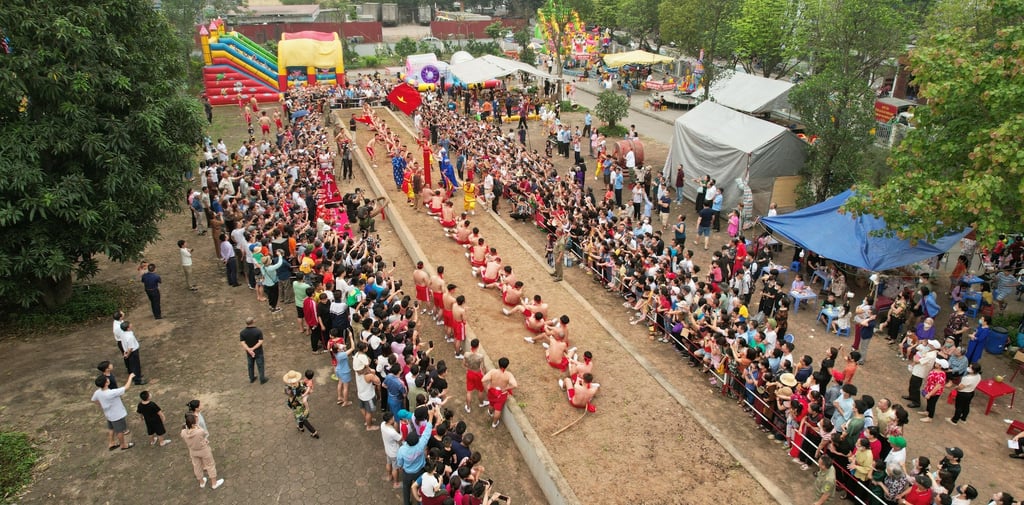
For the cultural historian, the ethnographer, and the observer of collective human spirit, the Traditional Tug-of-War Games and Rituals (Nghi lễ Kéo co truyền thống) offer an immediate, visceral understanding of community cohesion. Recognized by UNESCO as a Masterpiece of the Oral and Intangible Heritage of Humanity in 2015 (as a joint heritage with Korea, the Philippines, and Cambodia), this practice transcends simple sport. In Việt Nam, particularly in the rice-growing communities of the Red River Delta, Tug-of-War is a highly formalized, essential agrarian ritual—a living, physical prayer for favorable weather, bountiful rain, and abundant harvests. To participate in or witness the ritual is to experience the raw, collective strength of the community affirming its social contract and its reliance on mutual effort.
As specialists in Vietnamese heritage and profound cultural analysis at Vietnam Charm, we embark on an essential, detailed exploration to decode this communal rite. We will meticulously analyze the sacred, ritualistic function of the contest, the sociological role it plays in dissolving hierarchical differences, the unique symbolism embedded in the ropes and the performance, and the profound way this ancient practice preserves the agrarian soul and collective memory of the Vietnamese people. Understanding the Tug-of-War ritual is essential to grasping the core value of unity and shared fate in traditional Vietnamese society.
I. The Philosophical Foundation: Community, Water, and Shared Fate
The origin of the Tug-of-War ritual is deeply rooted in the agrarian civilization of the Red River Delta, where the control of water—for irrigation and flood prevention—is a matter of life and death. The contest is a physical dramatization of the struggle against the elements and the reliance on collective action.
1. The Ritual of Cầu Mùa (Praying for Harvest)
The core function of the ritual is Cầu Mùa (Praying for Harvest), particularly for rain and fertility. The contest is traditionally held immediately after the Lunar New Year (Tết), marking the start of the farming cycle and reinforcing the hope for prosperity.
The Symbolism of Rain: The act of pulling and dragging the rope along the ground often symbolizes the dragging of the clouds for rain or the pulling of the spirits to influence weather patterns. The physical exertion and the communal noise are believed to be essential to attracting the attention of the celestial powers (Yàng).
The Ritual of the Rope: The contest is usually held near a sacred communal place, like the Đình (Communal House) or a local temple. The rope itself is often symbolically treated as a sacred entity, sometimes decorated with leaves or red cloth, or even made to resemble a dragon or a snake, linking the physical act to ancient myths of water deities.
2. The Dissolution of Hierarchy
The communal nature of the ritual provides a crucial social safety valve. In the intense, hierarchical structure of traditional village society, the Tug-of-War is one of the rare moments where social differences are symbolically dissolved.
Collective Effort Over Rank: During the contest, the collective goal of winning the spiritual blessing (represented by the physical victory) overrides individual age, wealth, or official status. A successful pull requires the synchronized effort of every single participant, affirming the village's dependence on mutual effort and the principle of equality during the critical moments of ritual.
II. The Architecture of the Contest: The Rules of the Ritual
The contest is not a simple freestyle game; it is governed by precise, ancient rules and ceremonial structures that transform the sport into a codified ritual.
1. The Division and the Sacred Center
The competition usually divides the community into two opposing teams, often representing a physical or symbolic duality within the village:
Geographical Division: Teams may represent the "East Village" versus the "West Village" or the "Upper Hamlet" versus the "Lower Hamlet," emphasizing local, geographical identity.
Symbolic Division: Teams may represent symbolic forces like "Men versus Women" or "Married versus Unmarried," embodying the cosmic struggle between Âm (Yin) and Dương (Yang). The victory of one side often carries a specific symbolic prediction for the coming year's harvest or the village's fertility.
The Center Mark: The center of the rope is placed over a sacred center line (often marked with incense or a flag), symbolizing the balance point of the community's fate. The pull must be fierce, yet the start must be perfectly synchronized, dictated by a ceremonial signal.
2. The Performance of the Crowd
The participants are not the only performers; the entire crowd is integral to the ritual. The noise, the chanting, and the rhythmic cheers serve a functional purpose:
Spiritual Energy: The loud, continuous chanting and cheering are believed to generate intense spiritual energy (khí) and enthusiasm (sức mạnh) necessary to influence the outcome, both physical and spiritual.
Synchronic Rhythms: Specific drum beats or rhythmic chants are often used to guide the pull, ensuring that the physical exertion of the team is synchronized into a single, powerful, unified force. The unity of the rhythm is the unity of the community.
III. The Symbolic Materials: Ropes, Drums, and Local Identity
The materials used in the contest are often imbued with local and spiritual significance, ensuring the ritual remains profoundly tied to the specific land and traditions of the community.
1. The Sacred Rope (Dây Kéo Co)
The rope itself is the central, sacred object. It is rarely a standardized, industrial rope.
Material and Symbolism: In many communities, the rope is traditionally made from bamboo, rattan, or specific local vines (e.g., in the Lạng Sơn province). The natural material reinforces the ritual's direct link to the land and the forest. The long, winding shape of the rope often symbolizes the Dragon, the ultimate water deity, or the essential, winding canal that brings water to the fields.
Longevity: The preservation of the natural, local rope material ensures the continuation of the specific tradition, resisting the trend of modern, synthetic substitutes.
2. The Contextual Diversity
The UNESCO recognition specifically emphasizes the contextual diversity of the ritual across different regions, recognizing that the core meaning remains constant even as the performance changes:
Tục Kéo Song (Vĩnh Phúc): Using bamboo poles instead of ropes, reinforcing the link to the local bamboo forests.
Hội Gióng (Hà Nội): While not exclusively Tug-of-War, the performance of martial arts and physical games reaffirms the historical strength and military preparedness of the early Vietnamese state, a spirit echoed in the physical demand of Tug-of-War.
IV. The Preservation Imperative: Sustaining the Collective Memory
The preservation of the traditional Tug-of-War ritual faces the challenge of maintaining its ritualistic sincerity in a world that often views it merely as a competitive sport.
1. The Threat of Commodification
When removed from its original context (the communal house, the spring festival), the ritual risks becoming a simplistic, purely physical competition. The loss of the specific chants, the symbolic meaning of the rope, and the initial purification ceremonies means the game loses its spiritual function—its role as a sacred prayer for rain and fertility. Preservation efforts must prioritize the ritual integrity over the competitive result.
2. UNESCO and the Affirmation of Unity
The UNESCO designation provided critical validation, recognizing the Tug-of-War ritual as a powerful expression of shared human heritage across Asia. This recognition helped affirm its value not just as an ancient game, but as an active mechanism for social cohesion and knowledge transfer. Local communities are encouraged to maintain the full, complex ritual, ensuring that the younger generation understands the deep symbolism behind the physical pull—that their strength is not just for sport, but for the collective future and the harvest. The continuity of the ritual reaffirms the collective memory of shared struggle and shared triumph.
V. Conclusion: The Unwavering Strength of the Collective
The Traditional Tug-of-War Rituals are a profound, essential testament to the agrarian soul and the social philosophy of the Vietnamese people. This ancient ritual transforms a simple physical contest into a sacred, symbolic drama where the collective body of the community physically enacts its dependence on mutual effort. By analyzing the ritual of Cầu Mùa, the symbolic meaning of the rope, and the beautiful dissolution of hierarchy during the pull, we understand how this ritual serves as the ultimate reaffirmation of social solidarity and shared fate. This UNESCO INTANGIBLE HERITAGE is a powerful, unwavering reminder that the most profound forms of human strength are found not in individual achievement, but in the synchronized, powerful pull of the collective towards a single, shared goal.
We are on social media
Vietnam Charm belongs to Vietpearl Travel., JSC
Contact:
Email: info@vietnamcharm.top
© 2026. by Vietnam Charm. All rights reserved
Travel license number: 01-827/2020
Refund Policy