Giảm giá hấp dẫn cho tour du lịch!


UNESCO INTANGIBLE HERITAGE: Xoan Singing of Phú Thọ — Decoding the Ancient Ritual, Ancestral Devotion, and the Origins of Vietnamese Performance
The voice of the founding kings: exploring Xoan singing as a sacred, ancient performance tradition where lyrics and dance enact prayers for prosperity, fertility, and the spiritual continuation of the Hùng Kings’ legacy.
WORLD HERITAGESHORE EXCURSION
Tobin Nguyen
11/10/20255 phút đọc
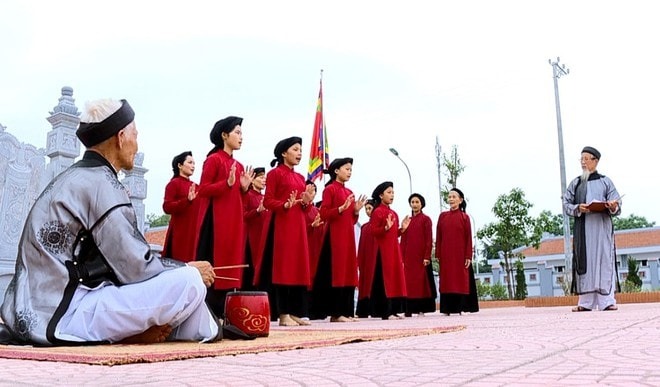
For ethnologists, historians, and devotees of ritual performance, Xoan Singing (Hát Xoan) of Phú Thọ province is a living connection to Việt Nam's foundational past. Recognized by UNESCO as a Masterpiece of the Oral and Intangible Heritage of Humanity in 2011, Xoan is not merely a regional folk song; it is a highly formalized, sacred performance tradition—a living cultural artifact—whose origins are inextricably linked to the legends and worship of the Hùng Kings, the mythical founders of the Vietnamese nation (Văn Lang). To witness Hát Xoan is to observe an ancient ritual being enacted, where every song, every gesture, and every step of the dance is a deliberate prayer for communal harmony, prosperity, and spiritual blessing.
As specialists in Vietnamese heritage and profound cultural analysis at Vietnam Charm, we embark on an essential, detailed exploration to decode this ancient, ceremonial art. We will meticulously analyze the historical and sacred function of the songs, the structural progression of the performance, the unique aesthetics that distinguish it from other folk forms, and the profound role Xoan plays in preserving the historical memory and spiritual continuity of the nation's origins. Understanding Hát Xoan is essential to grasping the deepest layers of Vietnamese communal and ancestral devotion.
I. The Sacred Origin: Music for the Hùng Kings and Ancestors
Hát Xoan's unique value lies in its direct association with the Tín ngưỡng thờ cúng Hùng Vương (Worship of the Hùng Kings), which is itself a separate UNESCO Intangible Heritage. The genesis of Hát Xoan is rooted in ancient court rituals and local village ceremonies designed to communicate with the deities and the founding ancestors.
1. The Context of the Ceremony: Spring and Fertility
Hát Xoan is traditionally performed during the Xuân Hội (Spring Festivals), immediately following the Lunar New Year (Tết), and particularly during the annual Hùng King Temple Festival. The timing is crucial: Spring symbolizes rebirth, fertility, and the start of the agricultural cycle. The songs and dances are therefore imbued with themes of abundance, successful harvest, and the continuity of the lineage.
The Mythological Tie: Legend attributes the creation of Hát Xoan to the Hùng Kings themselves, or to a talented general who created the dances to teach the villagers prayers for good weather and successful farming. This mythological origin reinforces the sacred, national importance of the art form.
The Sacred Spaces: The performances traditionally take place only within specific, ritually designated spaces: the Đình (Communal House), which is the heart of the village's spiritual and political life, and the Đền Thờ (Temple), where the spirits of ancestors are revered. The setting transforms the performance into a religious rite.
2. The Phường Xoan (The Xoan Guilds)
The performance tradition is maintained by highly specialized, structured guilds called Phường Xoan. These guilds, comprising both male singers (Kép) and female dancers/singers (Đào), are based in specific, historically recognized villages in Phú Thọ.
Hereditary Knowledge: Membership in the Phường Xoan is often hereditary, ensuring that the ancient songs, complex melodies, and sacred rituals are passed down faithfully through specific family lines. This dedication preserves the integrity and continuity of the ritual across centuries.
The Ritual Circuit: The guilds traditionally perform a specific circuit (hành trình) of villages during the Spring, moving from one communal house to the next, performing the required ritual songs for each community's protection and blessing.
II. The Structural Rigor: The Three-Part Performance and Giao Trình
Hát Xoan is characterized by a precise, structural progression known as Giao Trình (The Ritual Sequence). A full, traditional performance is divided into three distinct, indispensable parts, each serving a separate ritual and artistic function.
1. The Ritual Opening (Phần Nghi Thức)
The performance begins with a solemn, ritualistic section dedicated to inviting and honoring the deities, the local guardian spirits, and the ancestors of the village. The songs here are highly formal and rigid, serving as prayers and invocations. The music is slow, solemn, and focused entirely on the sacred nature of the communal house.
2. The Artistic Core (Phần Hát Lề Lối)
This is the central, structural body of the performance, consisting of 14 core musical pieces known as 14 Quán Cách. These 14 pieces form the heart of the musical repertoire and are performed in a fixed, unchanging sequence. The Quán Cách cover themes ranging from cosmology (the creation of the world) to historical praise and ethical teaching. The performance here transitions to include simple, structured dance motions. The rigor of the 14 Quán Cách ensures the preservation of the art form’s ancient musical structure.
3. The Communal Climax (Phần Hát Hội)
The final section breaks from the solemn ritual and invites interaction with the wider village community. This part is lively, engaging, and often includes the younger, unmarried members of the village.
Hát Giao Duyên (Courtship Singing): This involves improvisational singing where the Xoan singers exchange playful, metaphor-laden songs with the young men and women of the village, serving as a structured, appropriate venue for courtship and social interaction.
The Dance of the Gongs: The dances and songs in this section become more energetic, emphasizing themes of community, fertility, and joy, successfully blending the sacred ritual with the practical social needs of the village.
III. The Aesthetics of Sacred Motion and Voice
Hát Xoan utilizes a unique, simple aesthetic that prioritizes clarity, purity, and spiritual communication over overwhelming display or instrumental complexity.
1. The Unadorned Voice and Rhythmic Simplicity
The music of Hát Xoan is predominantly vocal and relies on simple, powerful percussion (often a small drum) for rhythm. The complexity lies in the subtle shifting of the rhythm and the purity of the singers' voices. The vocal technique is clear, high-pitched, and designed for projection within the communal house space, ensuring the prayers are heard by the spirits. The rhythm often mimics the simple, essential motions of ancient agriculture.
2. The Symbolic Dance (Múa)
The dances are not complex choreography; they are simple, direct, and highly symbolic motions. The movements of the arms, hands, and feet often mimic the planting of rice, the motion of the waves, or the orderly movement of celestial bodies, reinforcing the cosmological and agrarian themes of the songs. The symbolic simplicity ensures that the message—the prayer for peace and prosperity—remains the focus, not the technical difficulty of the performance.
IV. The Preservation Imperative: Guarding Ancient Knowledge
Hát Xoan faced a profound crisis in the late 20th century, reaching a point of extreme fragility where only a handful of elderly masters held the complete, traditional knowledge.
1. The Threat of Disconnection
The art form suffered decline due to the intense social changes following the conflicts of the 20th century, the shift away from communal house rituals, and the rise of mass media. The hereditary nature of the guilds meant that if a few masters died without successfully transferring the vast repertoire (which includes specific songs and dances for dozens of villages), the knowledge would be permanently lost.
2. UNESCO Intervention and Knowledge Transfer
The UNESCO recognition spurred an intense, focused national effort to save the tradition from the brink of extinction. The strategy focused on two crucial areas:
Documentation and Digital Archiving: Meticulously documenting the complete repertoire, including the specific melodic structures and ritual movements, before the last masters passed away.
Revitalization Programs: Establishing formal, subsidized training programs to teach Hát Xoan to younger generations, breaking the traditional, rigid hereditary rule to ensure a wider pool of performers. The focus was shifted to reviving the traditional festivals and creating new, appropriate performance contexts to give the music a renewed social function.
V. Conclusion: The Voice of Ancient Việt Nam
Hát Xoan is a profound cultural achievement, serving as a powerful, living archive of ancient Vietnamese thought, ritual, and performance structure. It is far more than folk music; it is a sacred, structured dialogue between the living community and its spiritual origins, demanding simplicity, purity of voice, and precision of motion. By analyzing its direct link to the Hùng Kings and its structural progression from solemn prayer to communal joy, we understand its profound role as a cornerstone of the nation’s identity. This UNESCO INTANGIBLE HERITAGE is a powerful testament to the resilience of spiritual and artistic tradition, ensuring that the voice of ancient Việt Nam continues to echo from the sacred communal houses of Phú Thọ.
We are on social media
Vietnam Charm belongs to Vietpearl Travel., JSC
Contact:
Email: info@vietnamcharm.top
© 2026. by Vietnam Charm. All rights reserved
Travel license number: 01-827/2020
Refund Policy