Giảm giá hấp dẫn cho tour du lịch!


WHERE DIVERSE BELIEFS CONVERGE — EXPLORING THE ICONIC ARCHITECTURE, BOLD SYNCRETISM, AND THE ASPIRATION FOR UNIVERSAL SPIRITUAL UNITY.
More than a religion: exploring Đạo Cao Đài (Caodaism) as Việt Nam’s ultimate audacious spiritual project, analyzing its profound, unyielding syncretic architecture that unifies all prophets and doctrines, its function as a radical declaration of cosmic tolerance, and its embodiment of spiritual optimism and the disciplined pursuit of global human harmony.
VIETNAMESE CULTURETHE COSMIC TOLERANCELOCAL EXPERIENCES
Tobin Nguyen
11/8/20256 phút đọc
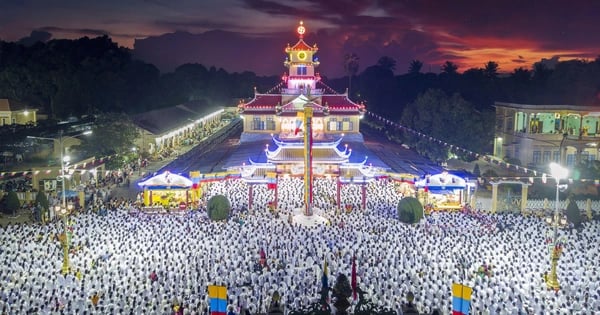
For the international theologian, the architectural critic, and the seeker of profound, contemporary spiritual innovation, Đạo Cao Đài (The Great Way of the Third Amnesty) is not a relic of the past; it is the nation’s most explicit, modern, and structurally ambitious philosophical response to global religious conflict. Founded in Southern Việt Nam in the 1920s, Caodaism asserts an ultimate, radical truth: all world religions are merely different paths leading to the same, singular, ultimate God (Đức Cao Đài), and humanity's salvation requires the immediate, decisive unification of all divine teachings. The entire faith is a breathtaking act of spiritual engineering, transforming the chaotic history of human faith into a cohesive, aesthetically overwhelming system that compels its followers to view the cosmos through a lens of absolute, unwavering inclusion.
As specialists in Vietnamese heritage and profound cultural analysis at Vietnam Charm, we embark on an essential, detailed exploration to decode this flowing, vibrant philosophy. We will meticulously analyze the historical mandate that required the "Third Revelation" in a time of global strife, the structural genius of its Tam Kỳ Phổ Độ (Third Amnesty) doctrine, the architectural audacity of the Tòa Thánh (Holy See) as the physical embodiment of religious unity, and the profound way this faith articulates the core national values of cosmic tolerance, disciplined moral cultivation, and the optimistic, unyielding search for universal peace. Understanding Caodaism is essential to grasping the audacious, synthesizing spirit that anchors modern Vietnamese religious pluralism.
1. The Historical Mandate: The Third Revelation and the Crisis of Faith
The genesis of Caodaism is rooted in a clear historical and spiritual mandate: the necessity for a final, comprehensive revelation—the Tam Kỳ Phổ Độ (The Third Amnesty)—to save humanity from the existential crisis caused by the fragmentation and hostility of previous, incomplete religious systems.
The Failure of Two Eras: Caodaism views the history of human faith as two sequential, failed revelations: the First Amnesty (which included ancient Indian and Chinese teachings) and the Second Amnesty (which included Judaism, Christianity, Islam, and the subsequent Asian faiths). These two Eras were necessary but ultimately failed to prevent war, suffering, and doctrinal division because their teachings were too localized, too esoteric, or too rigidly exclusive. The 20th century's unparalleled violence (World War I and the subsequent colonial conflicts) served as the tragic, undeniable proof that the fragmented religious approach had failed.
The Mandate for Synthesis: The Third Amnesty was proclaimed as the final, definitive solution. Its mandate was to take the purest, most ethical teachings from every major world prophet—Jesus, Buddha, Confucius, Lao Tzu, Mohammed, Moses, and even key figures like Victor Hugo—and unify them under the banner of the single, singular, unnameable God, Đức Cao Đài (The Highest Tower/Being). This was a direct, radical response to the geopolitical and spiritual chaos of the early 20th century, asserting that the only way to achieve global peace was through spiritual unification, not conversion. The faith thus became a covenant of urgent, radical inclusion.
2. The Architectural Audacity: The Holy See and the Physicalization of Syncretism
The most striking, tangible manifestation of Caodaism's philosophy is the architectural audacity of its Tòa Thánh Tây Ninh (Holy See), which functions as the physical, breathtaking embodiment of its universal syncretic vision. The building itself is the ultimate sermon.
Fusion of Forms: The Tòa Thánh is intentionally designed as an overwhelming fusion of the world's sacred architecture—it integrates the twin towers of a European Cathedral, the tiered roof and dragon motifs of an Asian Temple/Pagoda, the minaret-like spires of an Islamic Mosque, and the open hall plan of a Buddhist Shrine. The vibrant colors (primarily Red, Yellow, Blue—symbolizing the three main Asian schools: Confucianism, Buddhism, Taoism) assert an immediate, visual truth: all paths meet here. The structure denies the rigidity of any single tradition by embracing the aesthetic power of all.
The Thiên Nhãn (Divine Eye): The supreme, non-negotiable symbol anchoring the entire architectural and spiritual space is the Thiên Nhãn (Divine Eye), placed prominently at the highest altar and throughout the temple. The Divine Eye is the iconographic representation of Đức Cao Đài—the single, all-seeing, omnipresent God who guides the universe. The eye is often depicted within a triangle, emanating light, and is a deliberate rejection of human form for the divine, asserting that God is a universal, conscious energy that transcends the culturally specific images of human prophets. The eye is the constant, silent command for vigilance and moral accountability.
The Interior Hierarchy: The interior is structured to reflect the spiritual hierarchy. The massive central hall features rows of columns adorned with coiling dragons, reminiscent of a Confucian court, leading to the ultimate altar. The specific steps and levels where the clergy (who are dressed in robes reflecting the colors of the three main Asian paths—Yellow for Buddhism, Blue for Taoism, Red for Confucianism) kneel during the formal worship ritual physically map the spiritual chain of command, ensuring the disciplined order of the cosmos is maintained even in the sacred space.
3. The Structural Genius: Doctrine, The Three Teachings, and Moral Discipline
The formal doctrine of Caodaism demonstrates a profound structural genius in its effort to synthesize the philosophical and ethical cores of the world's disparate systems into a single, cohesive, and easily accessible framework for moral living.
The Tam Giáo (Three Great Teachings): Caodaism successfully synthesizes the moral ethics of the three main East Asian paths:
Khổng Giáo (Confucianism): Provides the framework for social ethics, hierarchy, duty (Lễ), and disciplined civil conduct. It dictates the disciplined organization of the clergy and the structured reverence for the ancestors.
Đạo Giáo (Taoism): Provides the framework for spiritual refinement, mastery of energy (Khí Công), and the practice of longevity (Dưỡng Sinh) through communion with nature and the pursuit of simplicity.
Phật Giáo (Buddhism): Provides the framework for metaphysics, reincarnation, karma (Nghiệp), and the ethical imperative of compassion (Từ Bi) and Non-Violence.
The Moral Mandate: The synthesized moral code is clear, demanding, and practical. It requires disciplined spiritual cultivation, including regular prayer, strict adherence to the Ngũ Giới (Five Buddhist Precepts) (no killing, lying, stealing, adultery, or excessive consumption), and, most visibly, strict vegetarianism (ăn chay) for at least ten days each month (with high-level devotees adhering to perpetual vegetarianism). This demanding moral structure ensures that the faith is not merely intellectual; it is a disciplined, continuous act of living ethics.
4. The Sociological Role: Community, Discipline, and the Locus of Hope
Caodaism fulfills a critical sociological role for its immense community of followers, transforming its radical philosophy into an accessible, structured system that provides discipline, communal identity, and a profound locus of hope and spiritual stability.
The Discipline of Ritual: The daily and cyclical rituals of the faith—the formal, synchronized prayer sessions held four times a day at the Holy See and local temples—are moments of intense collective discipline and spiritual focus. The synchronized bowing, kneeling, and chanting enforce a profound sense of đoàn kết (unity) and individual submission to the collective cosmic rhythm. This daily discipline provides an essential anchor of stability for its followers in a rapidly changing world, transforming daily life into an act of continuous worship.
Community and Support: Caodaism established a strong, cohesive network of Tổ Đình (Local Temples) that serve as vital centers for communal support, mutual aid, and social cohesion. The temples act as decentralized social hubs where followers find emotional support, practical assistance, and a powerful sense of belonging, reinforcing the moral mandate of compassion within the community itself. The shared, audacious vision of global peace provides an uplifting, optimistic purpose that transcends the immediate difficulties of daily life.
5. Conclusion: The Permanent Testament to Cosmic Inclusion
Đạo Cao Đài (Caodaism) is the ultimate, enduring, and radical testament to the Vietnamese spirit's capacity for cosmic synthesis, audacious vision, and profound spiritual inclusion. It is a modern philosophical project that transformed global religious fragmentation into an intricate, colorful blueprint for peace. By analyzing the historical mandate that required the "Third Revelation" to heal the crisis of faith, the architectural audacity of the Tòa Thánh as the physical melting pot of global aesthetics, the structural genius of its Tam Giáo moral synthesis, and the sociological role of its disciplined communal worship, the observer gains access to a core, luminous truth: Caodaism is far more than a religion. It is the permanent, unwavering declaration of absolute cosmic tolerance—a powerful, fierce assertion that asserts the cultural value of disciplined self-cultivation, radical inclusion, and the belief that the ultimate, most resilient form of spiritual power is found in the unification of all human hearts under the gaze of the singular, all-seeing Divine Eye.
We are on social media
Vietnam Charm belongs to Vietpearl Travel., JSC
Contact:
Email: info@vietnamcharm.top
© 2026. by Vietnam Charm. All rights reserved
Travel license number: 01-827/2020
Refund Policy