Giảm giá hấp dẫn cho tour du lịch!


WHERE LANDSCAPE MEETS LEGACY — EXPLORING HÀ GIANG’S GEOPOLITICAL GRANDEUR, VERTICAL VILLAGES, AND THE UNYIELDING RESILIENCE ALONG THE LÔ RIVER.
More than scenery: exploring the Hà Giang Loop (specifically its remote trekking segments in Đồng Văn, Mèo Vạc, and Mã Pí Lèng) as Việt Nam’s ultimate geopolitical and spiritual frontier, analyzing the profound journey through limestone aridity, the unyielding resilience of the indigenous people, and the awe of its vertical, world-defining canyons.
VIETNAMESE CULTUREVIETNAM'S VERTICAL SOULLOCAL EXPERIENCES
Tobin Nguyen
11/8/20255 phút đọc
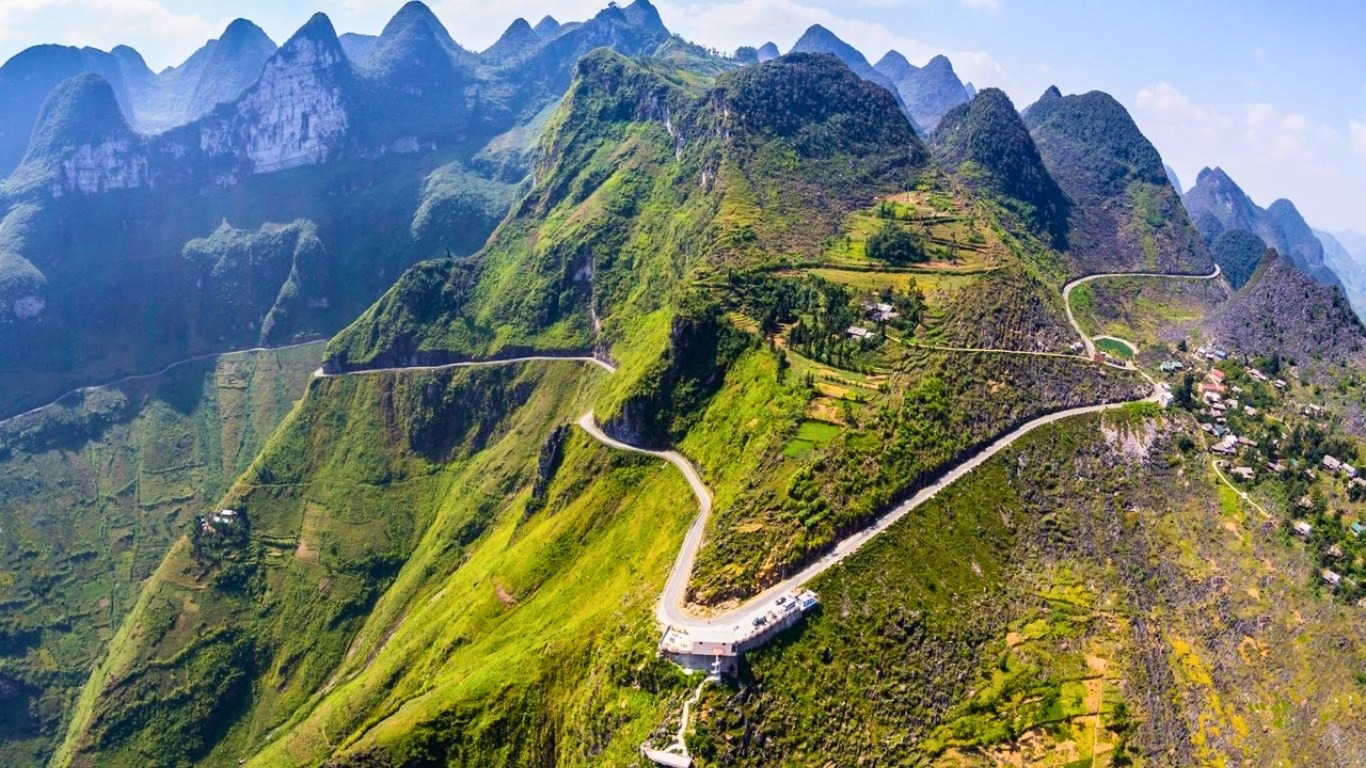
For the international adventurer, the geopolitical observer, and the seeker of the nation’s rawest, most exposed edge, Hà Giang—a majestic, often brutally beautiful mountainous province bordering China—is not merely a destination. It is the nation’s sacred, unmoving, and most demanding final frontier—a vast, sprawling testament to the resilience of human life carved into the unforgiving, sharp architecture of the Đồng Văn Karst Plateau Geopark. The experience of trekking here asserts an ultimate, non-negotiable truth: survival is an art form, endurance is a daily ritual, and the sheer scale of the landscape compels an immediate, humbling respect for the ancestral spirit of the Earth. The sheer verticality of its canyons and the tenacity of its people transform the journey into a profound, high-stakes dialogue with sovereignty and solitude.
As specialists in Vietnamese vertical exploration at Vietnam Charm, we invite the global adventurer on an essential, detailed journey to decode this profound, vertical epic. We will meticulously analyze the geological mandate that sculpted the plateau and dictated the struggle of the local H'Mong and Lô Lô peoples, the spiritual geometry of the remote, high-altitude Lô River and Mã Pí Lèng Canyon, the sociological resilience embedded in the ancient traditions of the stone villages, and the profound way this frontier articulates the core national values of unyielding perseverance, geopolitical vigilance, and the fierce, quiet pride of self-reliance. Understanding Hà Giang is essential to grasping the emotional depth and the unshakeable spirit that defines Việt Nam’s edge.
1. The Geological Mandate: Karst, Aridity, and the Architecture of Solitude
The unique aesthetic and the profound difficulty of trekking in Hà Giang are defined by a clear geological mandate: the relentless, sharp, and seemingly barren architecture of the Karst Limestone Plateau. This environment dictates an uncompromising philosophy of solitude and hardship.
The Sea of Stone: The plateau, recognized by UNESCO, is a geological marvel—an ancient seabed uplifted and eroded into a sprawling, mesmerizing sea of gray, jagged stone. The terrain is defined by its aridity and porosity; water drains quickly through the limestone fissures, making agriculture incredibly difficult and mandating a continuous, generations-long struggle for survival. The landscape forces the trekking experience to be one of constant, disciplined negotiation with sharp, uneven ground and relentless, exposed sun. The terrain itself is an active filter, permitting only the most resilient life forms—human and botanical—to exist.
The Stone Sentinel: This sheer, uncompromising geology transforms the landscape into a natural, unassailable fortress. The towering, sharp peaks and deep valleys historically served as the ultimate geopolitical sentinel, guarding the northern border. Trekking through the valleys and peaks gives the immediate, visceral sense of walking through a historical, unyielding defense structure. The stone asserts a primal truth: the land itself is the nation's most formidable barrier, eternally challenging both those who would invade and those who would simply live there.
2. The Sociological Resilience: Stone Houses, Maize, and the H'Mong Covenant
The most inspiring, human element of the Hà Giang trek is the encounter with the extraordinary sociological resilience of the indigenous communities, particularly the H'Mong people, whose entire way of life is a direct, ingenious, and profound covenant with the harsh limestone environment.
The Stone Houses (Nhà Trình Tường): The traditional stone houses are architectural masterpieces of necessity and defense. Built from the abundant, broken-down local stone, the thick, compacted earth walls provide essential protection against the bitter winter cold and the intense summer heat. These structures are the visible, tangible proof of the community's self-reliant discipline—a commitment to utilizing the most difficult, readily available material to create enduring domestic stability. The stone house is the family's unmoving spiritual anchor in the fluid, vertical chaos of the mountains.
The Vertical Agriculture: Trekking reveals the genius of their agriculture: the meticulous, heartbreaking labor of clearing stones and creating tiny, often vertical patches of arable land (ruộng) used primarily to grow Maize (corn)—the essential, enduring staple that survives where rice cannot. This persistent, generations-long effort to coax life and sustenance from the stubborn, arid rock is the ultimate, living lesson in patience, humility, and the unyielding Vietnamese will to survive. The encounter with the villages transforms the trek from a physical journey into a pilgrimage of human fortitude.
3. The Spiritual Geometry: Mã Pí Lèng and the Flow of the Lô River
The emotional and spiritual climax of the Hà Giang trek is the ascent and confrontation with the sublime Mã Pí Lèng Canyon and the deep, flowing presence of the Sông Nho Quế (Nho Quế River), which together form the spiritual geometry of the region.
The Vertical Awe of the Canyon: The Mã Pí Lèng Pass is renowned as one of the four greatest passes in Việt Nam, offering views into a canyon of staggering, humbling verticality. The immense, sheer limestone walls plunging hundreds of meters to the river below compel an immediate, overwhelming sense of awe and human insignificance. This sublime scale forces the trekker to confront the primal power of the Earth's forces. The view is a powerful antidote to urban ego, demanding a profound sense of spiritual stillness (tĩnh tâm).
The Sacred River: The Sông Nho Quế, which carved the canyon and flows into the larger Sông Lô (Lô River), is the ultimate fluid, life-giving anchor in the arid stone landscape. The sight of the emerald, deep water winding through the gray chasm is a powerful symbol of resilience and continuity—the river eternally flows, defying the fixed, sharp resistance of the rock. The river is the spiritual guarantee that life and energy are perpetual, even in the harshest environment. Trekking down to its banks is a ritualistic journey from the rigid, fixed world of the stone to the fluid, continuous world of the water.
4. The Geopolitical Crucible: Borderlands, Vigilance, and the Memory of the Wall
Trekking in the remote peaks of Hà Giang transforms the experience into a journey through a geopolitical crucible, physically engaging with the long, shared history of the Northern borderlands.
The trails often skirt the visible border demarcation lines and pass through villages that have historically served as guardians of the frontier. This constant, subtle presence of the border imbues the entire trek with a unique spiritual vigilance and patriotic gravity. The trekking experience is a non-verbal covenant with the generations of local people who endured conflict, surveillance, and isolation to maintain the nation's territorial integrity. The high mountains and deep passes are not just scenic; they are a permanent, unyielding archive of national sovereignty.
The encounter with the people here—who speak multiple languages, utilize the same stone as their ancestors, and maintain an intense, quiet dignity—is the ultimate lesson in the resilience of identity. They embody the profound truth that culture and identity are ultimately stronger than fixed political lines, persisting through generations of geopolitical pressure and change.
5. Conclusion: The Permanent Testament to Vertical Fortitude
Hà Giang is the ultimate, enduring, and visually magnificent testament to the Vietnamese spirit's capacity for vertical solitude, fierce self-reliance, and geopolitical vigilance. It is a landscape that transforms jagged stone into the nation's spiritual spine. By analyzing the geological mandate that sculpted the arid Karst, the sociological resilience embedded in the stone houses and vertical maize fields, the spiritual geometry of the Mã Pí Lèng Canyon and the flowing Lô River, and the patriotic gravity of the borderlands, the observer gains access to a core, luminous truth: Hà Giang is far more than an adventure. It is the permanent, unwavering declaration of vertical fortitude—a powerful, fierce assertion that asserts the cultural value of unyielding perseverance, pragmatic self-reliance, and the belief that the nation's deepest, most resilient soul is found in the quiet, arduous, and beautiful path carved through the mountain's heart.
We are on social media
Vietnam Charm belongs to Vietpearl Travel., JSC
Contact:
Email: info@vietnamcharm.top
© 2026. by Vietnam Charm. All rights reserved
Travel license number: 01-827/2020
Refund Policy