Giảm giá hấp dẫn cho tour du lịch!

WHERE PROSPERITY MEETS DEVOTION — EXPLORING HOW VIETNAM’S WEALTH GODS SHAPE COMMERCE, FORTUNE, AND THE SACRED RHYTHM OF DAILY LIFE.
More than a figurine: exploring Tín Ngưỡng Thờ Thần Tài (Worship of the Wealth Gods) as Việt Nam’s ultimate spiritual guarantee for ambition, analyzing the profound, necessary duality of Thần Tài and Ông Địa, its function as the sacred engine of entrepreneurship, and its embodiment of spiritual pragmatism and the disciplined pursuit of material prosperity.
VIETNAMESE CULTURETHE COSMIC TOLERANCELOCAL EXPERIENCES
Tobin Nguyen
11/8/20257 phút đọc
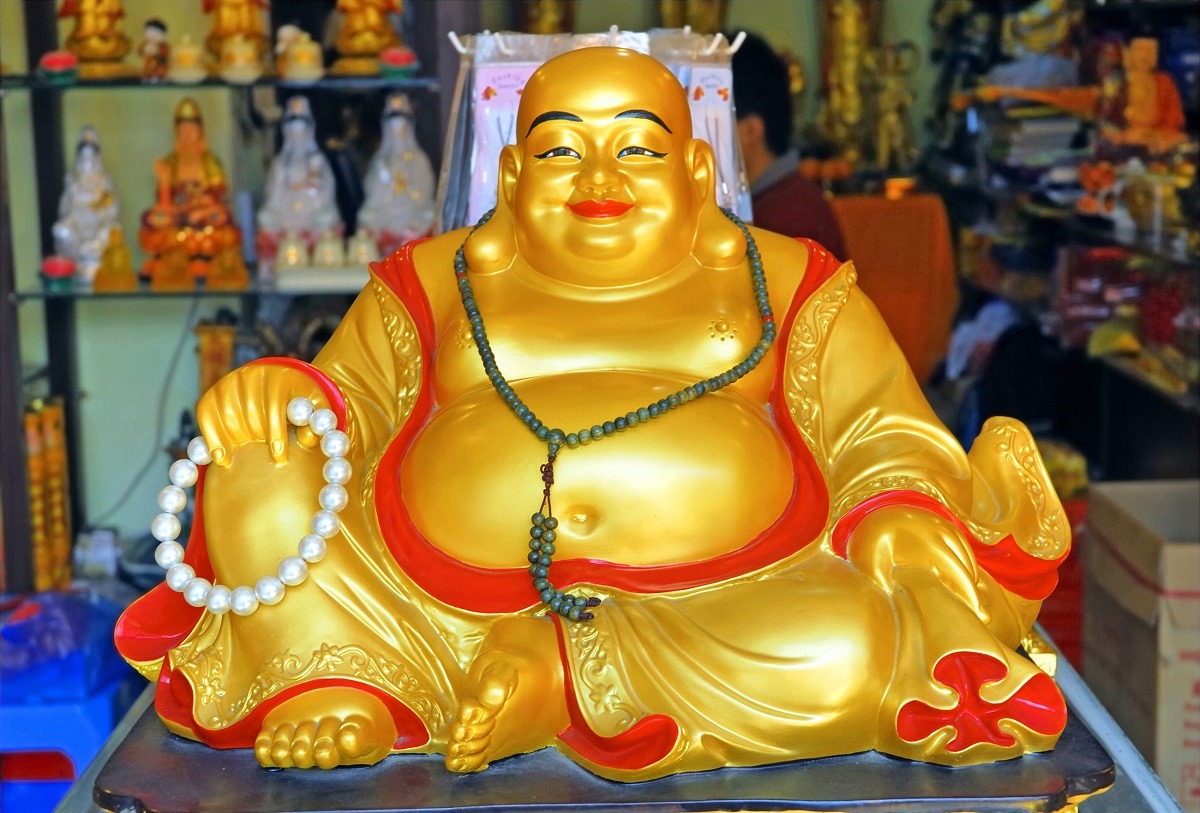
For the international economist, the urban sociologist, and the seeker of the nation's most dynamic spiritual pulse, the sight of the small, vibrant, floor-level altar dedicated to Thần Tài (God of Wealth) and Ông Địa (Earth God) is not a decorative curiosity. It is the nation’s most explicit, continuous, and personal spiritual contract with ambition—a profound, daily ritual asserting that the relentless energy of modern commerce is not secular, but is perpetually overseen, judged, and blessed by the divine. This belief asserts an ultimate, non-negotiable truth: material success is a joint venture between human diligence and spiritual favor, and the spiritual guarantee for prosperity must be secured through disciplined devotion and continuous, active piety. The shrine, humble and essential, transforms the chaotic marketplace into a sacred, manageable arena of spiritual opportunity.
As specialists in Vietnamese heritage and profound cultural analysis at Vietnam Charm, we embark on an essential, detailed exploration to decode this flowing, vibrant philosophy. We will meticulously analyze the historical mandate that required a spiritual anchor for the intense risks of commerce, the cosmic duality of Thần Tài (Heaven) and Ông Địa (Earth) as co-guarantors of fortune, the architecture of immediacy that dictates the low, threshold-centric altar, and the profound way this practice articulates the core national values of spiritual pragmatism, entrepreneurial resilience, and the disciplined pursuit of moral prosperity. Understanding the Worship of the Wealth Gods is essential to grasping the emotional heart and the unyielding, ambitious spirit that anchors Vietnamese economic vitality.
1. The Historical Mandate: Commerce, Risk, and the Spiritual Guarantee
The genesis and the absolute ubiquity of Thần Tài Worship are rooted in a clear historical and economic mandate: the necessity of finding a spiritual anchor and a guarantor of fortune for the intensely risky, chaotic, and often unpredictable world of decentralized, fluid commerce and entrepreneurship.
In an agrarian economy rapidly evolving into a market-driven society, the risk associated with business ventures—trade, travel, investment—was immense, often capable of bankrupting a family overnight. The traditional moral structures (Confucianism) provided ethical guidance but offered no spiritual guarantee of financial outcome. The Thần Tài belief system emerged as the perfect, pragmatic solution: it offered the individual entrepreneur a direct, personal covenant with fortune, asserting that by performing the disciplined, correct rituals, they could mitigate the chaos of luck and secure divine intervention. This belief transformed the act of trading from a blind gamble into a controlled, spiritually informed endeavor.
The rapid, deep adoption of this ritual, particularly among tiểu thương (small business owners), market vendors, and urban shopkeepers, cemented its role as the sacred engine of commerce. The shrine is placed directly at the point of transaction, serving as a continuous, visible reminder that the moral behavior and disciplined effort of the shop owner are perpetually being observed by the spiritual arbiters of wealth. The entire spiritual framework sanctions and consecrates ambition and material aspiration, transforming the pursuit of profit from a potential vice into a disciplined, spiritually guided duty.
2. The Cosmic Duality: Thần Tài and Ông Địa as Co-Guarantors of Fortune
The philosophical and spiritual power of the altar is rooted in its non-negotiable cosmic duality: the seamless, essential partnership between Thần Tài (The God of Wealth) and Ông Địa (The Earth God), who together govern all necessary layers of prosperity.
Thần Tài (Heavenly Fortune): The figure of Thần Tài—often depicted with a serene, wise demeanor, sometimes holding a gold ingot or a fan—represents Thiên Tài (Heavenly Fortune). He is the arbiter of macro, large-scale wealth, opportunity, and the flow of capital and luck from the external, cosmic realm. Worship of Thần Tài is the plea for the may mắn (luck/good fortune) required for the big break—the successful contract, the timely influx of external wealth, and the grand opportunity that transcends mere daily effort. He governs the potential and the external flow of riches.
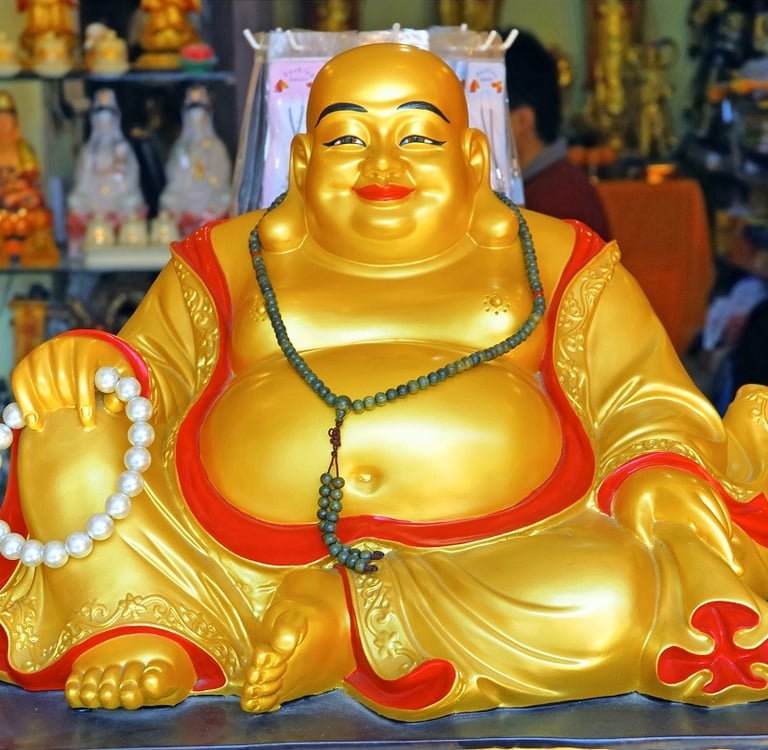
Ông Địa (Earthly Prosperity): The figure of Ông Địa (often depicted with a joyful, plump, and somewhat relaxed demeanor) represents Địa Lợi (Earthly/Local Prosperity). He is the original Thổ Thần (Earth Spirit), the guardian of the specific parcel of land upon which the business rests. His role is to guarantee internal stability, structural integrity, continuous livelihood, and the safety of the premises and the assets. He governs the foundation, the local stability, and the steady, continuous flow of internal prosperity.
The combined presence of the two gods asserts a profound truth: Sustainable prosperity requires both Heaven's favor and Earth's stability. The grand opportunity (Thần Tài) must be anchored to a safe, stable, and morally sound foundation (Ông Địa). The worship is thus a holistic, two-front spiritual strategy that seeks external fortune while guaranteeing internal resilience.
3. The Architecture of Immediacy: The Low Altar and the Threshold
The structural genius of the Thần Tài Altar is its architecture of immediacy—the deliberate, non-negotiable placement of the shrine on the floor or a low platform near the main entrance/threshold of the business. This placement is a core mandate of the belief system.
The Threshold (Ngưỡng Cửa): The altar is placed at the ngưỡng cửa (threshold/doorway)—the crucial, liminal space where wealth, customers, and Khí (energy) flow into the business, and where money and goods flow out. This placement is strategic, asserting that the gods must be the first to witness and bless every transaction and the final arbiters of the flow of fortune. The shrine is a spiritual toll booth, ensuring that the movement of capital is sanctioned and protected.
The Low Altar: The requirement for the altar to be low (accessible at eye-level when standing, or below the sightline of the main ancestral altar) is a crucial code of humility and accessibility. Unlike the lofty, silent Ancestral Altar, the Thần Tài shrine is placed at the level of the immediate, daily hustle, symbolizing the gods' direct, active involvement in the practical, mundane, and often chaotic reality of commerce. The shrine's small scale and close proximity to the floor also enforce a physical humility on the worshipper, requiring them to stoop, kneel, and enter a position of respectful submission when performing the daily ritual.
The altar is a complex, compact world: featuring the statues, the five miniature cups of rice wine (rượu), the tray of fruit and flowers, the small bowl of water, and often a tiny frog or toad (symbolizing the guardian of wealth). The entire architecture is a vibrant, personalized, and visually insistent declaration that this space is consecrated for the purpose of making money under divine guidance.
4. The Ritual of Fidelity: The Dawn Offering and Spiritual Accounting
The enduring strength of Thần Tài Worship lies in its disciplined, non-negotiable ritual of fidelity—the daily, often twice-daily, offering that transforms the business owner's routine into a continuous act of spiritual accounting and gratitude.
The Dawn Ritual (Cúng Sáng): The most crucial ritual is the early morning offering, often performed before the first customer arrives. The offering involves lighting incense (hương), refreshing the nước (water) and rượu (rice wine) in the miniature cups, and presenting fresh hoa quả (fruit). This ritual is the daily renewal of the covenant. It is the moment the entrepreneur offers their first thoughts and first dedication of energy to the gods, seeking their blessing and guidance for the day's commercial activities. The lighting of the incense is the direct, fragrant communication channel to the divine.
The Principle of Reciprocity: The offerings are not blind pleas; they are acts of reciprocity and spiritual responsibility. The gods grant the fortune, and the owner repays this favor through disciplined devotion, cleanliness, and offerings of gratitude. The cleanliness of the shrine—its perpetual maintenance, dusting, and fresh flowers—is the visible, external measure of the owner's sincerity and moral order. A neglected shrine signals a spiritual and ethical lapse that is believed to inevitably lead to a collapse in fortune. The ritual is thus a disciplined mechanism for self-governance—a constant, daily reminder to the entrepreneur to maintain both spiritual and business order.
5. The Sociological Code: Merit, Luck, and the Ethics of the Marketplace
Thần Tài Worship functions under a complex sociological code that subtly integrates the pursuit of may mắn (luck) with the philosophical demand for đạo đức (moral conduct), linking business success to spiritual integrity.
Luck as Earned Merit: While the worship is dedicated to luck, the underlying TVM and Buddhist philosophy dictates that luck (may mắn) is often a reflection of accumulated phước đức (spiritual merit). Therefore, the honest entrepreneur understands that the rituals alone are insufficient; the fortune granted by Thần Tài must be grounded in ethical conduct, fair dealing, and compassionate treatment of customers, employees, and the wider community. Giving back, being honest in pricing, and treating vendors fairly are acts of Tạo Phước that fundamentally sustain the flow of fortune. The gods are the arbiters who ensure that the system rewards the morally disciplined.
The Code of the Nén Hương (Incense Stick): The single, fragrant incense stick lit daily is the ultimate, non-verbal expression of the spiritual contract. It is the entrepreneur's pledge of fidelity, honesty, and hopeful ambition. The smoke rising from the stick carries the entrepreneur's intent to the heavens, transforming the mundane act of opening a shop into a profound, high-stakes spiritual profession. The market is thus consecrated as a place where spiritual pragmatism and ethical responsibility must perpetually coexist.
6. Conclusion: The Permanent Anchor of Entrepreneurial Spirit
Tín Ngưỡng Thờ Thần Tài (The Worship of the Wealth Gods) is the ultimate, enduring, and essential testament to the Vietnamese spirit's profound capacity for spiritual pragmatism, fierce ambition, and disciplined piety. It is a philosophy that transforms the chaotic urban marketplace into a consecrated arena of spiritual opportunity. By analyzing the historical mandate that required a spiritual guarantee for commerce, the cosmic duality of Thần Tài and Ông Địa as co-guarantors of fortune, the architecture of immediacy that consecrates the low, floor-level altar, and the non-negotiable daily ritual of fidelity, the observer gains access to a core, luminous truth: this worship is far more than superstition. It is the permanent, unwavering anchor of the entrepreneurial soul—a powerful, visible assertion that asserts the cultural value of disciplined self-cultivation, continuous ambition, and the belief that the purest, most resilient form of prosperity is achieved through the harmonious, daily, and disciplined covenant between human effort and divine favor.
We are on social media
Vietnam Charm belongs to Vietpearl Travel., JSC
Contact:
Email: info@vietnamcharm.top
© 2026. by Vietnam Charm. All rights reserved
Travel license number: 01-827/2020
Refund Policy