Giảm giá hấp dẫn cho tour du lịch!



WORLD HERITAGE SITE: Ha Long Bay — The Dragon's Breath, Decoding a Geological Masterpiece and the Philosophy of Limestone Silence
More than a scenic wonder, this is Việt Nam's iconic flooded karst labyrinth: exploring Ha Long Bay's dramatic geology, unique marine ecology, and the profound sense of tranquility delivered by its ancient, silent peaks.
SHORE EXCURSIONWORLD HERITAGE
Tobin Nguyen
11/1/20257 phút đọc
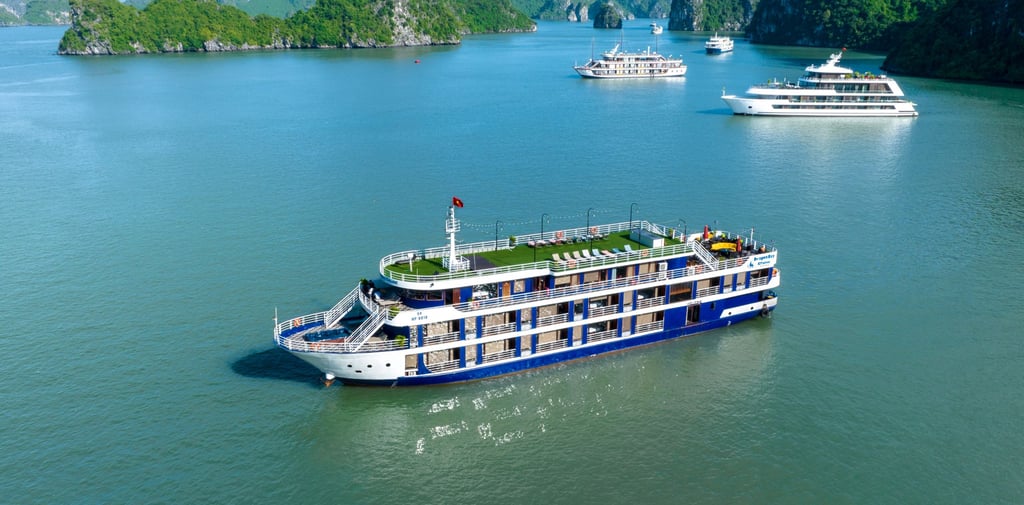
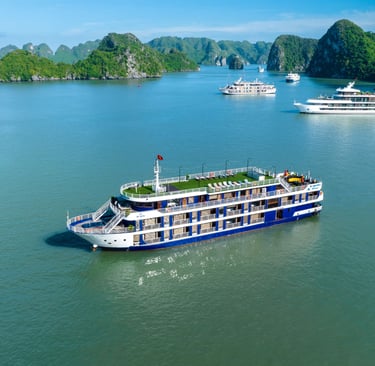
For millions across the globe, Ha Long Bay (Vịnh Hạ Long) stands as the quintessential, defining image of Việt Nam—a breathtaking, otherworldly landscape where thousands of towering pillars of ancient limestone rise dramatically and majestically from the emerald-green waters of the Gulf of Tonkin. Recognized twice by UNESCO (1994 and 2000) for its outstanding universal geological and aesthetic value, Ha Long is far more than a mere collection of scenic islands; it is a profound testament to the colossal power of geological time, relentless climatic forces, and essential ecological adaptation. To cruise through this bay is to enter a meditative, fluid labyrinth, where the profound silence of the stone peaks forces an immediate contemplation of deep history, powerful myth, and nature’s immense, slow artistry.
As specialists at Vietnam Charm, we embark on an essential, detailed exploration to decode this geological masterpiece. We will meticulously analyze the unique formation of its karst landscape, the compelling Vietnamese mythology that imbues the landscape with a spiritual soul, the intricacies of its resilient marine ecology, and the essential travel strategies required to experience the unique philosophy of silence and slowness that defines this flooded realm. Understanding Ha Long Bay requires looking far beyond the water’s surface and appreciating the immense, silent depth of its origins.
I. The Geological Masterpiece: The Birth of a Flooded Karst
The most fundamental and scientifically crucial truth about Ha Long Bay is that it is a flooded karst landscape. This simple geological term underpins the entire, extraordinary visual drama of the Bay, explaining the formation of every single peak and cavern.
1. The Genesis of the Karsts: A 300-Million-Year History
The formation of the Bay is a slow, multi-stage process spanning geological epochs:
The Limestone Foundation (300 Million Years): The bedrock foundation of Ha Long Bay consists of thick, massive layers of limestone that were formed over 300 million years ago from marine sediment—ancient shells, coral, and calcium deposits—deposited at the bottom of a prehistoric ocean during the Paleozoic and Mesozoic eras. This rock is primarily composed of calcium carbonate, the essential ingredient necessary for the karst formation process.
Tectonic Uplift and Folding (Millions of Years): Subsequent massive tectonic activity (crustal plate movement) slowly uplifted and folded this massive limestone block, raising it from the seabed and exposing it to air and fresh water. This monumental uplift created a mountainous landscape that was riddled with natural fissures and vertical cracks.
Karstification (The Etching Process): Over millions of subsequent years, the definitive process of karstification took place. Rainwater, which is naturally slightly acidic due to dissolved carbon dioxide, slowly seeped into the limestone through the fissures. This acidic water chemically dissolved the calcium carbonate, systematically widening the cracks, forming complex cave systems, deep sinkholes, and broad valleys. This process essentially etched the softer parts of the mountains away, leaving only the harder, more resistant vertical cores standing.
The Flooding (The Final Act): The final, defining act of transformation occurred over the last 10,000 years, driven by massive post-glacial global sea-level rises. The deep valleys, sinkholes, and eroded landscapes were gradually inundated and flooded by the rising waters of the Gulf of Tonkin, leaving only the steep, resistant cores—the thousands of towering mounds, pinnacles, and monolithic islands—visible above the waterline. This dramatic event created the signature 'pinnacle karst' landscape known globally as Ha Long.
The result is a landscape of staggering density: over 1,600 islands and islets, most entirely uninhabited, creating an intricate, flowing maze of water and stone. This slow, deliberate process of erosion and flooding is the first, essential lesson in Ha Long's grandeur and longevity.
II. The Mythological Soul: The Legend of the Mother Dragon
In the Vietnamese consciousness, Ha Long Bay is fundamentally more than just geology; it is a sacred space steeped in powerful national myth, imbuing the silent stone peaks with a deep, protective, and enduring soul. The name Hạ Long itself translates poetically and powerfully to "Descending Dragon."
1. Myth as Historical Identity and Protection
The most enduring and pervasive legend speaks of a time when the ancient Vietnamese people were facing existential threats from Northern invaders advancing by sea. The Jade Emperor, witnessing the struggle, sent a family of Dragons—a Mother Dragon (Rồng Mẹ) and her children—to aid the defenders. As the Dragons descended to the Bay, they executed a strategic maneuver: they spat out vast quantities of jewels and jade—which instantly transformed upon hitting the water into the thousands of limestone islands and karsts. These new formations instantly created an impenetrable, vast, and chaotic defensive wall that shattered the invaders' fleet, securing and protecting the nascent nation.
The Philosophical Meaning: This myth is profoundly important to Vietnamese identity. It asserts that the very geography of Việt Nam was intentionally created by divine, protective forces to ensure the nation's survival and sovereignty. The islands are not random geological features; they are protective jewels, imbuing the silent landscape with a deep, persistent sense of security and patriotic pride. When you observe the islands, you are symbolically looking at the frozen remnants of a divine, nation-saving battle.
Naming the Peaks: This mythological narrative explains the poetic, descriptive, and often anthropomorphic names given to many of the Bay’s most famous peaks: Hòn Gà Chọi (Fighting Cocks Islet), Đầu Người (Human Head Islet), and Hòn Lư Hương (Incense Burner Islet)—names that reflect the imaginative, narrative spirit of the Vietnamese people and their desire to anthropomorphize nature.
III. The Ecology of the Labyrinth: Survival and Adaptation
The unique topography of Ha Long Bay—the singular combination of high, vertical limestone peaks, deep, enclosed lagoons, and shallow coastal waters—creates a highly specialized, complex marine ecosystem demanding specific forms of survival and adaptation from its inhabitants.
1. The Marine Ecosystem and Biodiversity
The ecological structure of the Bay is layered, adapting to the available surface and water conditions:
Limestone Flora (Vertical Survival): The verticality of the peaks and the intense erosion severely limits soil development. Plants that manage to survive are often highly specialized, endemic species, clinging tenaciously to the crevices and utilizing limited atmospheric moisture and nutrients. This specialized flora is highly endemic, meaning many species are found only within this specific, unique limestone environment.
Caves and Caverns (Subterranean Life): The karst terrain is riddled with vast, complex cave systems (such as Sửng Sốt Cave and Thiên Cung Cave). These caves, formed over millions of years, are now essential subterranean habitats for bats, swallows, and unique, specialized insect life. The cave systems offer a secondary, crucial lesson in Ha Long's layered geological history.
Coastal and Marine Life: The enclosed nature of the Bay, highly sheltered from the powerful currents and forces of the open sea, creates calm, nutrient-rich, brackish waters. This specific environment supports high marine biodiversity, including unique, colorful coral reefs (found near the base of the karsts), large populations of fish, crustaceans, and mollusks. The local floating fishing villages are a living example of human life intimately interwoven and directly dependent on this specific marine resource.
IV. The Strategy of Silence: Experiencing Ha Long Bay
To truly appreciate the profound spiritual and natural essence of Ha Long Bay, the reflective traveler must consciously reject the speed and noise of urban life and embrace the philosophy of silence and slowness that the landscape inherently dictates. This deep immersion is best achieved through specialized, intimate excursions.
1. The Essential Experience: Kayaking Immersion
While the main tourist routes utilize large, often noisy motorboats, the most profound ecological and meditative experience is achieved through kayaking.
The Transition to Silence: Transferring from the larger boat to a small, non-motorized kayak is a crucial, essential ritual. It immediately strips away all mechanical noise, leaving only the intimate sounds of the water lapping gently against the stone and the gentle dip of the paddle.
Intimate Scale and Contemplation: The kayak allows access to the most secret, enclosed spaces—the hidden lagoons (known locally as hồ) that are entirely surrounded by limestone walls and accessible only through low, small archways in the cliffs. Once inside these natural, isolated enclosures, the feeling of quietude is absolute. The immense scale of the surrounding stone becomes simultaneously overwhelming and deeply personal.
Ecological Observation: Kayaking allows for a close-up, silent observation of the marine life near the surface, the delicate flora clinging to the rock face, and the unique, distorted reflections of the peaks on the still water—details that are entirely missed when traveling at speed.
2. Optimizing the Cruise Experience for Tranquility
To maximize the feeling of isolation and tranquility, a traveler must prioritize structural elements of the tour:
Overnight Cruises are Mandatory: A 2-day/1-night or 3-day/2-night cruise is highly recommended. The daytime crowds are immense, but staying overnight allows the traveler to experience the Bay at dawn and dusk—the periods of greatest calm, when the light is softest, the air is coolest, and the peaks are shrouded in atmospheric, ethereal mist. This is the Bay’s spiritual hour.
Choosing the Vessel: Select smaller, high-quality vessels (often luxury junks). While they may be more expensive, they offer greater flexibility to anchor in quieter, more remote areas of the Bay, successfully avoiding the noise and congestion of the main tourism hubs.
The Cave Experience: The grand show caves (Sửng Sốt, Thiên Cung) are impressive geological spaces but are often incredibly crowded. Time spent here should be efficient. The true, profound lesson is found outside, on the water’s surface.
V. Conclusion: The Grandeur of Time and Stone
Ha Long Bay is Việt Nam’s profound meditation on time, scale, and geological resilience. It is a destination that demands and rewards patience—the patience to wait for the fog to lift, to watch the light change across the water, and, most powerfully, to listen to the profound silence of 300 million years of history concentrated in the stone. The flooded karst labyrinth, imbued with the ancient myth of the protective dragons, offers the reflective traveler an unparalleled opportunity to disconnect from the modern world and connect with nature’s immense, silent power. This unique experience, defined by the contrast between hard stone and fluid water, is the ultimate testament to Việt Nam’s natural and mythological grandeur, and a non-negotiable must-see on any serious travel itinerary.
We are on social media
Vietnam Charm belongs to Vietpearl Travel., JSC
Contact:
Email: info@vietnamcharm.top
© 2026. by Vietnam Charm. All rights reserved
Travel license number: 01-827/2020
Refund Policy