Giảm giá hấp dẫn cho tour du lịch!



WORLD HERITAGE SITE: Ho Citadel — The Unyielding Stone, A Study in Raw Power and Minimalist Engineering
An anomaly in Vietnamese architecture: decoding the Ho Citadel, a massive, unadorned stone fortress that represents a fleeting dynasty's centralized power and a profound commitment to minimalist, formidable defense.
WORLD HERITAGESHORE EXCURSION
Tobin Nguyen
11/8/20255 phút đọc
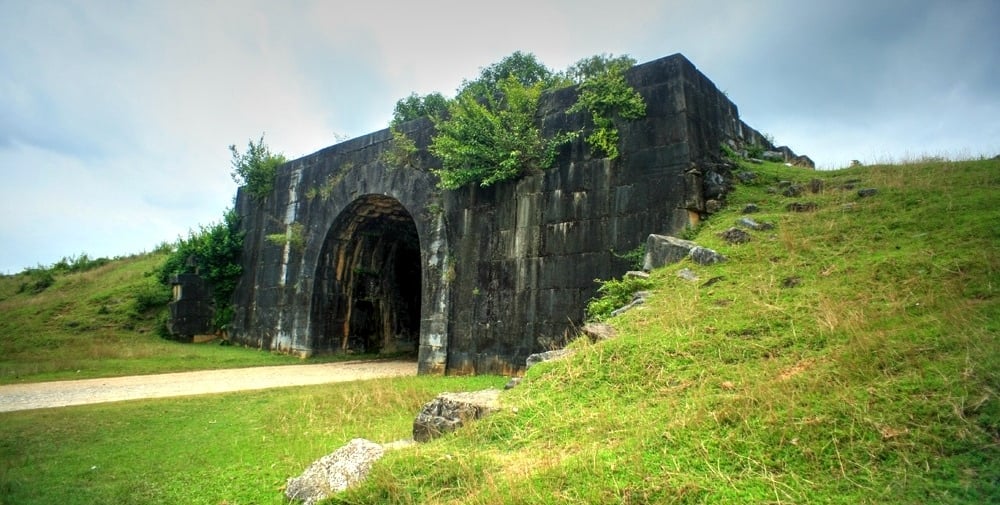
For students of East Asian military architecture, the Ho Citadel (Thành nhà Hồ) in Thanh Hóa province presents a fascinating, almost paradoxical anomaly. Recognized by UNESCO as a World Heritage Site in 2011, this structure stands in stark visual and philosophical contrast to the wooden, layered, Feng Shui-governed complexity of Thăng Long and Huế. The Ho Citadel is defined by one primary, undeniable characteristic: its use of massive, unadorned stone blocks. It is a colossal, stark, and austere fortress built quickly by the Hồ Dynasty (1400–1407), serving as a powerful, singular statement of centralized authority and absolute, immediate defense.
As specialists in Vietnamese heritage and historical military strategy at Vietnam Charm, we embark on an essential, detailed analysis to decode this monumental structure. We will meticulously examine the logistical challenge of its construction, the philosophical minimalism that governs its aesthetics, the historical context of the short-lived Hồ Dynasty, and the strategies required to grasp the depth of its enduring, raw power. Understanding the Ho Citadel is essential to understanding a pivotal, yet brief, moment in Việt Nam’s history defined by radical reform and military crisis.
I. The Crisis and the Imperative: The Hồ Dynasty’s Statement
The Ho Citadel was not built during a period of peace and prosperity; it was constructed out of urgent military and political necessity. Its timeline is short, its function singular.
1. The Political Context of Crisis
The Citadel was built in just three months in 1397 by Hồ Quý Ly, who was then the regent controlling the Trần Dynasty and would eventually usurp the throne in 1400, establishing the Hồ Dynasty. The construction was a direct response to two existential threats:
Internal Reform: Hồ Quý Ly was a radical reformer who sought to centralize power, implement controversial economic policies (like paper currency), and break away from the long-standing feudal traditions centered in Thăng Long. Moving the capital from the north to Thanh Hóa (his home base) was a crucial political statement of the new order.
External Military Threat: The primary driver was the growing, imminent military threat from the Ming Dynasty (China). The Citadel was designed as an immediate, formidable military defense structure, built to withstand the powerful siege warfare tactics of the era. Its speed and size reflect the desperate need for a new, secure capital.
2. The Logistical Challenge of the Stone
The most staggering aspect of the Citadel is the scale of the stone used. The walls were constructed using immense, precisely cut limestone blocks, some weighing up to 20 tons and measuring over 6 meters long. The entire complex—including the inner palaces and temples (which were built later, often using wood and tile)—was constructed on an astronomical scale.
The logistical challenge involved quarrying these massive blocks from the nearby mountains, transporting them several kilometers across difficult terrain, and erecting them with rudimentary 14th-century technology (mostly levers, ropes, and inclined planes). This massive mobilization of labor and resources reflects the absolute, immediate centralization of power under Hồ Quý Ly. The physical size of the stone blocks is itself a monument to the dynasty’s dictatorial authority.
II. The Architecture of Minimalist Power: Stone, Simplicity, and Scale
The Ho Citadel is an architectural anomaly. While contemporary Vietnamese structures like Thăng Long were characterized by layers of walls, wooden palaces, and meticulous Feng Shui, the Ho Citadel is defined by its austere, almost brutalist focus on raw scale and material permanence.
1. The Austerity of the Walls
The Citadel is almost square, with perimeter walls stretching approximately 870 meters by 880 meters. Its most defining feature is the method of construction:
Mortar-less Fortitude: The walls are constructed primarily using the massive stone blocks, fitted together tightly with an astonishing degree of precision. While a binding agent was used (a mixture of lime, molasses, and local components), the true strength of the walls comes from the immense weight and precise interlocking of the stone blocks themselves, minimizing the need for large amounts of mortar. This technique ensured rapid construction and superior resilience against siege weaponry.
Unadorned Surfaces: The walls lack the intricate reliefs, decorative tile work, and painted frescoes typical of the Lý and Lê Dynasties. The stone is left largely unadorned, reflecting a philosophy of functional minimalism. The aesthetic message is not one of refinement or harmony (like Huế) but one of raw, unyielding power and military fortitude. The beauty of the Citadel lies in its scale, its geometry, and the sheer effort required to move the stone.
2. The Four Majestic Gateways
The Citadel features only four gateways, perfectly aligned with the cardinal directions (North, South, East, West). The most imposing is the Nam Giao (South Gate), which stands today as the best-preserved example of the Citadel's engineering genius.
Arch Engineering: The gateways feature immense arched passages, designed to bear the colossal weight of the massive stone walls above. The structural integrity of these arches, which have withstood over 600 years of weather and conflict, is a testament to the advanced architectural understanding of the engineers.
Monumental Scale: The Nam Giao Gate, with its three arched entrances and its towering height, served as the ceremonial, symbolic entrance to the new capital, contrasting the austerity of the walls with a moment of controlled, imposing grandeur.
III. The Historical Paradox: Brief Reign and Enduring Stone
The most poignant aspect of the Ho Citadel is the dramatic contrast between the short, tumultuous reign of the Hồ Dynasty and the profound, physical endurance of its primary structure.
1. The Fleeting Power
The Hồ Dynasty lasted only seven years (1400–1407). Shortly after the Citadel was completed and the capital was officially moved, the Ming Chinese launched a massive invasion, defeating the Hồ forces and capturing Hồ Quý Ly. The dream of a centralized, powerful, reforming dynasty ended abruptly. The Citadel, built at enormous cost to withstand invasion, ultimately failed to save the dynasty that constructed it.
2. The Endurance of the Monument
Despite the political failure, the stone walls endured. The Ming invaders later occupied the structure, and it continued to serve military and administrative purposes for centuries. Unlike the wooden palaces of Thăng Long, which were often easily dismantled, the immense stone structure of the Ho Citadel proved too large and too logistically difficult to destroy, even when political capitals shifted elsewhere.
The Citadel thus stands today as a monument to historical paradox: a structure representing a fleeting, unsuccessful attempt at centralized power, yet achieving an eternal, enduring physical presence. The stones themselves outlived the politics that created them.
IV. Conservation and Legacy: A Challenge of Interpretation
Conserving the Ho Citadel requires specialized approaches, distinct from the restoration of wooden imperial complexes like Huế. The challenge lies in interpreting a history defined by raw material and military intent.
1. The Challenge of Stone Conservation
The sheer size and exposure of the stone blocks to the elements require complex conservation efforts. The stone is susceptible to micro-organism growth, weathering, and structural compromise due to internal micro-fractures. Restoration requires techniques that maintain the structural integrity without introducing modern materials that would compromise the stone’s original, rough-hewn appearance—preserving the aesthetic of its minimalist power.
2. Interpreting Minimalism
For visitors, the Ho Citadel requires a shift in perspective. It lacks the immediate decorative beauty of Mỹ Sơn or the intricate layering of Huế. Its grandeur must be interpreted through scale and historical context:
The Scale of Labor: The visitor must contemplate the sheer human labor involved in moving and placing twenty-ton stones without modern machinery, recognizing the centralized force needed to command such an effort.
The Philosophy of Defense: The stark, unadorned surfaces reflect a singular, focused intent: military defense. The beauty is found not in decoration, but in the functional perfection of the immense, interlocking stones.
V. Conclusion: The Unyielding Power of the Hồ Stone
The Ho Citadel is a unique and essential World Heritage Site, offering a powerful, tangible narrative of military strategy and political revolution in 15th-century Việt Nam. It is a profound study in raw power, where form follows function with unyielding severity. Defined by its massive, unadorned stone blocks, the Citadel’s endurance confirms that the most powerful historical statements are sometimes made not with intricate decoration or complex Feng Shui, but with raw, simple, unyielding material. The stone walls of the Hồ Dynasty may have failed to save the seven-year empire, but they successfully secured an eternal place in history.
We are on social media
Vietnam Charm belongs to Vietpearl Travel., JSC
Contact:
Email: info@vietnamcharm.top
© 2026. by Vietnam Charm. All rights reserved
Travel license number: 01-827/2020
Refund Policy