Giảm giá hấp dẫn cho tour du lịch!



WORLD HERITAGE SITE: Hoi An Ancient Town — The Amber Labyrinth of Trade, Lanterns, and Architectural Synthesis
More than a tourist town, Hoi An is a moving museum of cultural crossroads: decoding the unique synthesis of Japanese, Chinese, and Vietnamese architecture preserved in a timeless amber glow.
WORLD HERITAGESHORE EXCURSION
Tobin Nguyen
11/4/20256 phút đọc
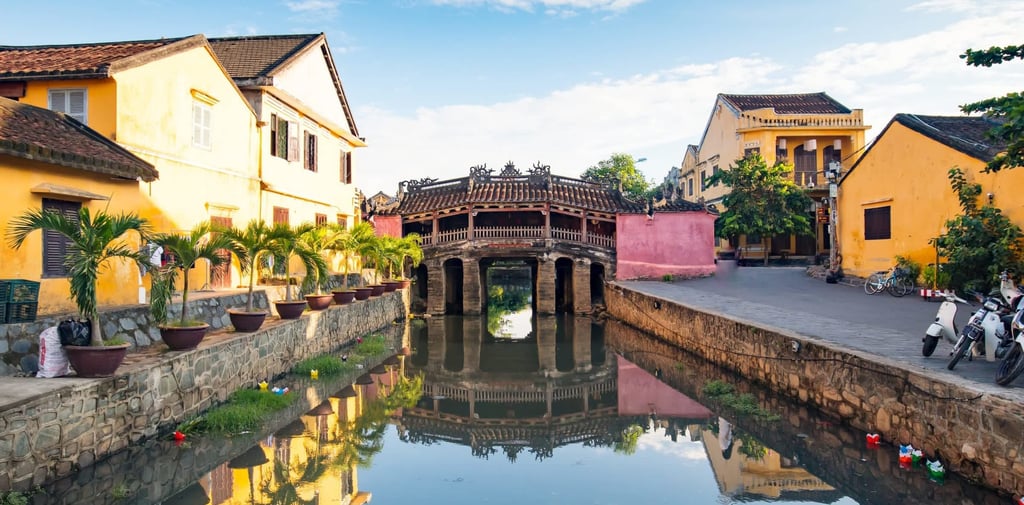
For countless travelers and historians of maritime Asia, Hội An Ancient Town (Phố Cổ Hội An) is recognized as the visual, commercial, and spiritual soul of Central Việt Nam—a serene, golden-hued tapestry of tile roofs, cobblestone streets, and glowing silk lanterns suspended over the tranquil Thu Bồn River. Recognized by UNESCO as a World Heritage Site in 1999, Hội An's profound and unique value lies not just in its undeniable aesthetic beauty, but in its status as one of the best-preserved, most complete examples of a 16th- to 17th-century Southeast Asian trading port. To walk its narrow lanes is to step into a deliberate, atmospheric historical pause, where the fierce currents of global trade, political upheaval, and diverse cultures converged and were miraculously preserved across centuries.
As specialists at Vietnam Charm, we embark on an essential, detailed exploration to decode this ancient, preserved mercantile center. We will meticulously analyze the crucial maritime history that brought Japanese and Chinese merchants to its banks, the unique architectural synthesis that defines the town’s aesthetic, the enduring cultural rituals that sustain its spirit, and the essential strategies required to experience the town's famed philosophy of slow living and gentle, captivating charm. Understanding Hội An is to grasp Việt Nam’s historical role as a vibrant crossroads of Asian commerce, spiritual belief, and global cultural exchange.
I. The Zenith and Decline: Hội An as the Global Crossroads
Hội An’s initial existence and subsequent zenith were entirely dependent on its unique geography—a strategic position slightly inland from the mouth of the Thu Bồn River, which once provided a safe, deep harbor ideal for large international vessels. During the 16th and 17th centuries, Hội An reached its zenith as a key stop on the global spice and silk routes, rivaling powerful ports across Asia like Malacca, Macau, and Batavia.
1. The Era of International Trade and Coexistence
Chinese and Japanese Influence: Hội An was home to thriving, distinct communities of foreign merchants, most notably the highly influential Chinese and the Japanese. The Chinese established distinct Assembly Halls (Hội Quán), which served as community centers, temples, and social institutions for various provincial groups (Fujian, Cantonese, etc.). The Japanese also established a vibrant quarter, concentrated on the west bank of the small canal, evidenced most famously by the Japanese Covered Bridge.
The Goods and the Exchange: The primary goods flowing through Hội An included silk, ceramics (from China and Việt Nam), spices, sugar, cinnamon, and regional hardwoods. This intense commercial activity fostered an environment of necessary cultural tolerance and exchange that is visibly reflected in the town's architecture and cuisine.
2. The Preservation Paradox
Hội An’s golden era began its slow, inevitable decline in the late 18th century. Two geographical and political factors were primarily responsible:
Geographical Obstruction: The continuous silting of the Thu Bồn River, driven by downstream sediment flow, gradually made the harbor too shallow and inaccessible for the large, deep-drafted European trading ships that emerged in the 18th century.
Political Shift: The political shift favored the development of Đà Nẵng (specifically Tiên Sa Port) as a preferred, naturally deeper harbor for Western powers.
Crucially, Hội An’s decline led directly to its preservation. As trade and capital shifted decisively to Đà Nẵng, the town was spared the pressures of modernization, industrialization, and urban rebuilding that ravaged other major historical ports. The physical town was essentially left untouched, creating the unique, intact time capsule we experience today, justifying its World Heritage status.
II. The Architectural Synthesis: A Testament to Tolerance and Fusion
Hội An’s unique UNESCO status is owed significantly to its distinctive architecture—a highly layered, complex synthesis that reflects the peaceful cohabitation, commercial ingenuity, and mutual influence of three distinct Asian cultures within a single block.
1. The Three-Layered Structure: Viet, Hoa, and Nhật
Vietnamese (The Core Structure): The dominant style remains the traditional Vietnamese timber-frame architecture, characterized by narrow, deep "tube houses" (designed to maximize precious street frontage while extending far back onto the property). These houses typically feature three primary structural compartments: the street-facing shop/storefront, the open central courtyard (providing crucial light and air in the tropical climate), and the rear living quarters or workshop.
Chinese (The Social Hubs): The Chinese influence is best seen in the elaborate Assembly Halls (Hội Quán) and the ornate merchant homes. These Halls are architectural showcases, featuring intricate wood carving (often depicting scenes from Chinese classics), vibrant porcelain friezes, and highly decorated courtyards designed for communal worship, social gatherings, and political consultation. They represent the immense wealth and organizational power of the overseas Chinese merchant communities.
Japanese (The Icon): The most famous single structure, and the undisputed icon of the town, is the Japanese Covered Bridge (Chùa Cầu). Built in the late 16th century, the bridge is unique for its architectural form—a covered wooden structure with a small pagoda temple at one end, connecting the former Japanese and Chinese quarters. The bridge is a powerful, elegant symbol of the town's multicultural past and its engineering ingenuity.
2. The Signature Yellow Hue and Functional Aesthetics
The vast majority of the ancient houses are painted in a distinctive, soft, saffron yellow hue. This color is functional as much as it is aesthetic:
Climate Resistance: The traditional plaster contains a resilient mix of lime and ground straw, which is highly resistant to the damp, corrosive effects of the monsoon climate. The yellow pigment, derived from natural dyes, adheres well.
Aesthetic and Symbolism: The yellow color, historically associated with royalty, prosperity, and the earth element in Việt Nam, also offers a cooling, reflective property in the intense Central Vietnamese sun. The yellow walls, framed by dark wood, cascading foliage, and vibrant flowers, create the luminous, amber glow that defines the town's famous, romantic atmosphere.
III. The Philosophy of Slow Living: Light, Water, and Rhythm
Hội An is famously one of the few places in Việt Nam where the overwhelming, omnipresent roar of the motorbike is deliberately subdued or prohibited within the core ancient zone. This is a town built for the foot, the bicycle, and the riverboat—reinforcing a conscious, deeply felt philosophy of slow, contemplative living.
1. The Rhythm of the Lanterns (Phố Lồng Đèn)
The town's signature aesthetic is its proliferation of hand-made silk lanterns. Traditionally crafted by local artisans, these lanterns fundamentally transform the town after dusk. On the night of the Full Moon, a highly revered ritual takes place: electric lights are deliberately dimmed or extinguished, and the town is illuminated solely by the gentle, mesmerizing glow of thousands of colorful lanterns. This ritual enhances the town's profound historical ambiance and reinforces the philosophy of slowing down, walking, and appreciating the ephemeral beauty of simplicity and light.
2. The Spiritual Artery: The Thu Bồn River
The Thu Bồn River remains the central artery of the town's spirit. In its prime, it was the essential highway of international commerce; today, it is the sacred stage for ritual and reflection. Visitors actively participate in the tradition of releasing small paper flower lanterns (hoa đăng) onto the river’s surface—a quiet, meditative act of sending wishes, hopes, and prayers downstream. The river, once the catalyst for the town's economic wealth, is now the gentle conduit for its spiritual and aesthetic expression.
IV. Experiencing the Labyrinth: Strategy for the Discerning Traveler
To fully appreciate the cultural soul of this UNESCO site, the traveler must employ a focused strategy that maximizes tranquility and minimizes the impact of the intense daytime tourist crowds.
1. Optimizing the Visit (The Golden Hours)
Early Morning Serenity: The true, authentic beauty of Hội An is found in the hours before 9:00 AM. This time offers cool air, soft light, and the chance to witness locals practicing Tai Chi or visiting the market, allowing an authentic, non-touristic glimpse into local life before the mass crowds arrive.
Evening Magic: The hours after 4:00 PM provide the essential, magical experience of the lit lanterns, the street food culture emerging, and the cooling river breeze. This is the time for photography and quiet exploration.
The Cultural Passport: Access to most historical houses, assembly halls, and museums requires a single, unified ticket (the Cultural Passport). Strategic travelers should prioritize a few key sites: the Fujian Assembly Hall (for its architectural complexity), the Tân Ký Old House (for its preserved merchant structure), and the Japanese Covered Bridge.
2. The Craft of Experience
Beyond mere sightseeing, dedicating time to an actual craft provides a lasting, tangible connection to the town's heritage:
Lantern Making: Participating in a lantern-making class offers a unique, hands-on opportunity to understand the artistry behind the town's signature symbol, transforming a souvenir into a personal memory.
Tailoring and Cuisine: Hội An is famous for its rapid tailoring services and its unique dishes like Cao Lầu (a local noodle dish found nowhere else) and Bánh Bao Bánh Vạc (White Rose Dumplings). These are experiences that connect the modern traveler with the town’s enduring commercial and culinary identity.
V. Conclusion: The Timeless Amber Glow and the Power of Pause
Hội An Ancient Town is a magnificent achievement of historical preservation and complex architectural synthesis. It stands as a profound testament to Việt Nam’s historical tolerance, its commercial ingenuity, and its deep reverence for the past. By merging the structural discipline of the Vietnamese tube house, the vibrant decoration of the Chinese assembly halls, and the unique engineering of the Japanese bridge, this Di sản Thế giới (World Heritage Site) offers a rare journey into a time when global cultures met peacefully on the banks of a single river. Its enduring amber glow is an essential invitation to every traveler to slow down, observe, and find enduring serenity in the rhythm of history.
We are on social media
Vietnam Charm belongs to Vietpearl Travel., JSC
Contact:
Email: info@vietnamcharm.top
© 2026. by Vietnam Charm. All rights reserved
Travel license number: 01-827/2020
Refund Policy