Giảm giá hấp dẫn cho tour du lịch!

WORLD HERITAGE SITE: Hue Imperial Citadel — Decoding the Imperial Axis, Rituals, and the Geography of Power
The serene core of Việt Nam’s last dynasty: exploring how Feng Shui governed the Citadel, the complex rituals of the Nguyễn court, and the enduring philosophical connection between the Emperor and the Cosmos.
WORLD HERITAGESHORE EXCURSION
Tobin Nguyen
11/2/20256 phút đọc
For the traveler seeking a profound encounter with Việt Nam’s imperial past, Huế is the necessary destination. Recognized by UNESCO as a World Heritage Site in 1993, the complex of monuments in Huế—centered around the majestic Citadel, the Imperial City (Hoàng Thành), and the scattered, solemn Imperial Tombs—is far more than a collection of historic buildings. It is a vast, meticulously organized geographical and philosophical blueprint of the Nguyễn Dynasty (1802–1945), Việt Nam’s last feudal ruling family. To walk through the Ngo Mon Gate is to enter a world governed by ritual, where every wall, every gate, and every axis was meticulously placed according to the ancient, exacting laws of Feng Shui (Phong Thủy) and cosmic order.
As specialists in Vietnamese heritage and sophisticated cultural exploration at Vietnam Charm, we embark on an essential, detailed analysis to decode this Imperial Axis. We will meticulously examine the guiding principles of its design, the complex rituals that defined court life, the profound difference between the public Citadel and the private tombs, and the strategies required to grasp the depth of its solemn, quiet grandeur. Understanding Huế is to understand how power, architecture, and spiritual belief coalesced into a complete civilization.
I. The Foundation: Feng Shui, Architecture, and Cosmic Order
The design of the Huế Citadel is perhaps the most complete and ambitious expression of traditional Vietnamese urban planning. Unlike Western fortifications built for purely defensive military purposes, the Huế Citadel was built to mirror and maintain harmony between the Emperor (representing humanity) and the Cosmos (Heaven and Earth).
1. The Guiding Principles: Sơn (Mountain) and Thủy (Water)
The positioning of the Citadel was strictly non-negotiable, guided by classical Feng Shui:
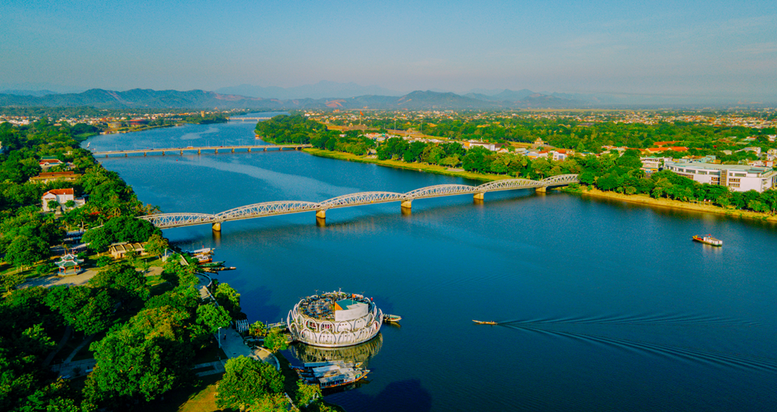
The Water Axis (Thủy): The main structure is situated strategically on the north bank of the Hương Giang (Perfume River). The River, flowing gently past, provides the necessary Thủy (Water/Fluidity) element, symbolizing wealth, prosperity, and energy flow (khí). The River was carefully used as the protective moat on the southeast side, providing essential balance.
The Mountain Screen (Sơn): To the south of the entire complex, Núi Ngự Bình (Ngự Bình Mountain) acts as the vital "screen wall" (Bình Phong). In Feng Shui, a screen wall protects the main structure from negative external energy and provides stability and permanence—the essential Sơn (Mountain/Stability) element. This natural formation was the backbone of the Citadel’s security.
The Cardinal Orientation: The entire Citadel and the Imperial City within it are aligned almost perfectly on a North-South axis, mirroring the path of the sun and emphasizing the Emperor’s role as the intermediary between Heaven and Earth, responsible for ensuring cosmic balance and order for the nation.
2. The Mandate of the Axes (Trục Thần Đạo)
The most important feature is the central, sacred axis known as the Trục Thần Đạo (Sacred Spirit Path). This single, imaginary line runs directly from the central flag tower, through the Ngo Mon Gate, through the Thai Hoa Palace, and deep into the Forbidden Purple City. This axis symbolizes the absolute, singular power of the Emperor and dictated the placement and alignment of all major ritual structures within the complex. It is the architectural representation of the imperial mandate.
II. The Imperial City (Hoàng Thành): A Stage for Ritual and Authority
Contained within the larger Citadel is the Hoàng Thành (Imperial City), the immediate seat of governance and the residence of the Imperial family. This area was not a home in the modern sense; it was a vast, meticulously maintained stage for political ritual and the performance of authority.
1. The Gate of Noon (Ngo Mon): The Performance of Hierarchy
The primary southern entrance is the Ngo Mon (Gate of Noon). This gate is the architectural climax of the outer Imperial City, renowned for its imposing structure and perfect symmetry:
The Five Gateways and Exclusion: The structure features five gateways. The central, largest gateway was exclusively reserved for the Emperor—no one else could pass through it. The two gates flanking it were for high-ranking mandarins and generals. The outer two arches were for soldiers and support staff. This physical segregation ensured that every entry was a constant, visual reaffirmation of the political and social hierarchy.
The Pavilion of the Five Phoenixes: Above the central gate sits the Lầu Ngũ Phụng (Pavilion of the Five Phoenixes), a beautiful tiered structure where the Emperor appeared on crucial occasions, such as proclaiming the lunar calendar or announcing the results of the national exams. This balcony served as the most visible, ceremonial link between the secluded Emperor and the public.
2. The Hall of Supreme Harmony (Điện Thái Hòa): Cosmic Power Made Manifest
Directly behind the Ngo Mon Gate is the Điện Thái Hòa (Hall of Supreme Harmony). This building is the physical, grand manifestation of the Emperor’s political and cosmological power:
The Throne and Ritual: This was the sacred space where the most solemn rituals took place—coronations, New Year’s celebrations, and receptions for foreign envoys. The Emperor's gilded throne sits on a high, imposing pedestal, emphasizing his isolation and elevation above all mortals. The number of pillars, the specific shade of yellow paint (reserved for the Emperor), and the precious materials used were all dictated by the precise cosmological requirements of the dynasty.
The Golden Pillars: The interior is lined with immense, lacquered pillars painted in vibrant red and gold and often inlaid with mother-of-pearl. These pillars illustrate the intricate wood craftsmanship and the symbolic use of color—yellow for the Emperor, red for the prosperity and power of the nation, and gold for divine status.
III. The Inner Sanctum: The Forbidden Purple City (Tử Cấm Thành)
At the very heart of the Imperial City lay the Tử Cấm Thành (Forbidden Purple City), an area strictly reserved for the Emperor and his most immediate family, concubines, and trusted eunuchs. It was the private, domestic core of the empire.
1. Privacy, Protocol, and Isolation
Absolute Seclusion: This area was the Emperor's private residence, study, and dining quarters, mirroring the political model of the Chinese Forbidden City. Access was severely restricted, reflecting the highly secluded, intensely ritualistic private life of the ruler. To be admitted was to hold extraordinary trust or political favor.
The Code of Conduct: Life here was governed not just by rigid law, but by an unwritten, unforgiving code of conduct. The smallest deviation in gesture, dress, or word could lead to severe punishment, reinforcing the sense that the entire structure was built around the principle of absolute, inescapable control over personal life.
Tragedy and Ruin: While much of the Forbidden Purple City was severely damaged and ruined during the conflicts of the 20th century (most notably the devastating Tết Offensive of 1968), the remaining foundations and reconstructed gates provide a haunting glimpse into the domestic life of the court—a life characterized by intense protocol, political intrigue, and profound personal isolation at the very peak of power.
IV. The Outer Realm: Imperial Tombs and Personal Philosophy
The Imperial Tombs (Lăng Tẩm) of the Nguyễn Emperors, deliberately scattered along the banks of the Perfume River outside the Citadel walls, form the essential counterbalance to the rigid uniformity of the Citadel. While the Citadel represented the Emperor's public, political, and ceremonial role, the Tombs represent the Emperor’s personal philosophy, aesthetic taste, and spiritual preparation for the afterlife.
1. Architecture as a Personality Statement
Each tomb is a unique masterpiece, meticulously designed and often built while the Emperor was still alive to enjoy it, reflecting his individual personality and political ideology:
Lăng Tự Đức: Reflects the Emperor's poetic, gentle, and introspective nature. It is less a tomb and more a harmonious landscape of winding lakes, elegant pavilions, and secluded courtyards designed for reading poetry, writing, and contemplation—a tomb designed for profound melancholy.
Lăng Minh Mạng: Embodies powerful Confucian symmetry and strict traditional Vietnamese principles. It is grand, imposing, and perfectly aligned on a single, unwavering central axis, reflecting the Emperor’s political strength and rigorous adherence to strict classical order.
Lăng Khải Định: A stunning, often controversial, departure from tradition. It is a highly theatrical blend of Vietnamese, French Art Nouveau, and Romanesque architecture, covered in intricate mosaic using imported porcelain and glass—a reflection of the Emperor's later exposure to Western culture and a final, dramatic statement of individuality.
2. The Final Feng Shui Act for Eternity
The placement of the Tombs was the final, most important act of Feng Shui planning. Unlike the Citadel, which faces the River for protection and energy, the tombs were meticulously positioned deep within the surrounding hills and dense forest, often utilizing a crescent-shaped lake, to achieve perfect seclusion and harness the best natural energy (khí) for the eternal rest of the Emperor. The geography here is specifically chosen for spiritual perpetuity and protection, not political dominance.
V. Conclusion: A Journey Through Time and Protocol
The Huế Imperial Citadel and its surrounding complexes are a monumental achievement of Vietnamese architecture, spiritual planning, and political performance. They offer the traveler a rare, profound opportunity to witness how an entire civilization was constructed around the rigid, beautiful, and demanding principles of cosmic harmony and political ritual. By meticulously preserving the Citadel, the Tombs, and the underlying geography, this Di sản Thế giới (World Heritage Site) allows us to connect not just with historical buildings, but with the subtle, compelling philosophy of a vanished imperial age, where every choice, from the alignment of a gate to the curvature of a roof, was imbued with profound, powerful spiritual meaning.
We are on social media
Vietnam Charm belongs to Vietpearl Travel., JSC
Contact:
Email: info@vietnamcharm.top
© 2026. by Vietnam Charm. All rights reserved
Travel license number: 01-827/2020
Refund Policy