Giảm giá hấp dẫn cho tour du lịch!



WORLD HERITAGE SITE: Phong Nha-Kẻ Bàng National Park — Exploring the Subterranean Cathedral and the Philosophy of the Hidden
The crown jewel of global karst: a profound journey into the oldest, most complex limestone landscape in Asia, where time is measured in millions of years and the world’s largest caves reveal Earth’s hidden majesty.
WORLD HERITAGESHORE EXCURSION
Tobin Nguyen
11/2/20256 phút đọc
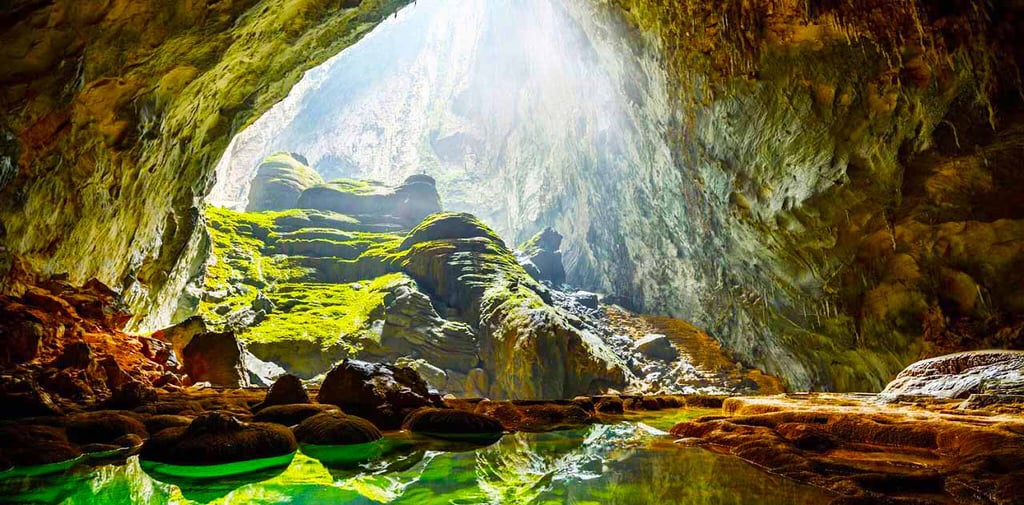
For geologists, adventurers, environmentalists, and those seeking the Earth's profound, hidden spectacles, Phong Nha-Kẻ Bàng National Park is an undeniable pilgrimage site. Recognized twice by UNESCO (2003 and 2015) for its outstanding universal geological, geomorphological, and ecological value, this park—nestled in the heart of Quảng Bình province—is far more than a simple national park. It is a vast, living, open-air laboratory and the undisputed crown jewel of global karst landscapes. To enter the restricted zones of Phong Nha is to embark on an unparalleled, multi-sensory journey into the Earth’s subterranean realm, where the sheer scale of the caverns challenges the imagination and the profound silence of the ancient stone inspires overwhelming awe.
As specialists at Vietnam Charm, we embark on an essential, detailed exploration to decode this monumental natural wonder. We will meticulously analyze the deep geological timescale that shaped its mountains and caves, the unique ecological specialization required for life in the perpetual darkness, the engineering challenges and existential rewards of exploring the world's largest cave systems, and the essential philosophy of respecting the hidden majesty that defines this subterranean cathedral. Understanding Phong Nha is to appreciate the immense, slow, and persistent power of water, time, and geological fate.
I. The Deep Time Scale: The Birth of Asia’s Oldest Karst
The most fundamental and scientifically intriguing truth about Phong Nha-Kẻ Bàng is its sheer age and the complexity of its geological formation. The park encompasses the oldest, most extensive, and most intricate karst landscape in Asia, with bedrock formations dating back an astonishing 400 million years (originating in the Paleozoic era). This longevity is the reason for its extreme development and complexity.
1. The Geological Chronicle: From Devonian Sea to Fortress
The formation sequence of the park is a grand, slow geological drama:
Ancient Sedimentation (The Devonian Period): Unlike later formations, the limestone foundation here originated during the Devonian and Carboniferous periods. This rock, a blend of pure limestone and sedimentary layers, was deposited at the bottom of a vast ocean, resulting in formations that are chemically purer and thus highly susceptible to dissolution.
Tectonic Compression and Orogeny: Over successive hundreds of millions of years, immense tectonic forces (the same forces that built the Himalayas) compressed, folded, and catastrophically uplifted this seabed. This event formed the towering, rugged mountains of the Trường Sơn Range that dominate the park today. Crucially, this immense pressure created deep-seated fault lines and vertical fracture systems, which were the predetermined pathways for the subsequent erosive power of water.
The Power of Water (Karstification and Speleology): For the last 20 million years, this exposed limestone massif has been subjected to relentless, slightly acidic rainwater erosion—the process of karstification. The water exploited the existing tectonic faults, dissolving the calcium carbonate and creating a vast, multi-level network of underground rivers, tunnels, and caverns that collectively stretch over 200 kilometers. The constant chemical interaction between water and stone is the core of its existence.
Cave Formation (The Phreatic and Vadose Zones): The caves were primarily formed in two phases: the Phreatic Zone, where the caves were entirely filled with water, allowing dissolution to occur in all directions; and the Vadose Zone, where the water table dropped, leaving air-filled passages to be decorated by dripping water, forming the immense stalactites and stalagmites we see today.
2. The Scale of the Hidden World: Sơn Đoòng's Majesty
The result of this slow, persistent process is a subterranean world of staggering, almost unimaginable scale. The area is home to hundreds of caves, including the globally unique Sơn Đoòng, confirmed as the world’s largest known cave. Sơn Đoòng's main chamber is so immense that it could easily contain a city block, a small ecosystem (complete with its own cloud system), and even house the length of a Boeing 747. Even the more accessible dry caves, like Thiên Đường Cave (Paradise Cave), possess chambers so vast and cathedral-like that they reinforce the human sense of smallness and the Earth's long, majestic time scale. The complexity here lies in the sheer volume of material removed by water over time.
II. The Subterranean Ecosystem: Life in the Dark and Geological Artistry
The unique environment within the Phong Nha caves—characterized by absolute darkness (aphotic conditions), high humidity, and stable, cool temperatures—has fostered a highly specialized and often endemic subterranean ecosystem alongside magnificent mineral artistry.
1. Adaptation to Darkness (Troglobites and Endemism)
Life forms found deep inside the caves are known as troglobites—species that have adapted entirely to life without light. Their evolutionary journey is a testament to natural selection under extreme conditions:
Loss of Sight and Compensation: Many aquatic and terrestrial species (such as certain fish, shrimp, spiders, and insects) are blind, as visual apparatus is energetically wasteful and unnecessary in total darkness. They compensate by developing hyper-sensitive senses of touch, hearing, and smell to navigate their environment.
Endemism and Isolation: Due to the severe geological isolation of each cave system, many troglobites found in Phong Nha are entirely unique to that specific location. This high degree of endemism makes the park a crucial site for global biodiversity and evolutionary study, highlighting the importance of conserving the delicate groundwater systems.
2. Geological Artistry and Mineral Pools
The magnificence of the caves is defined by the secondary mineral deposits formed by dripping water:
Stalactites and Stalagmites: These towering formations, which grow only a few centimeters per millennium, are the result of saturated water redepositing calcium carbonate. Their size and purity reflect the long, uninterrupted history of the cave environment.
Cave Pearls and Rimstone Dams: The presence of unique formations like cave pearls (perfectly rounded mineral formations) and rimstone dams (small, delicate walls built by mineral-rich water flowing over a lip) indicate complex, stable chemical and hydrological processes within the system.
III. The Traveler's Strategy: Exploration, Ethics, and Safety
To fully appreciate the majesty of Phong Nha-Kẻ Bàng, the traveler must adhere to a strategy that prioritizes environmental respect, ethical exploration, and absolute logistical safety.
1. Differentiating the Experience Levels (Responsible Exploration)
Choosing the correct cave experience is vital for safety and enjoyment:
Level 1: Accessible Majesty (Tourist Track): This includes the essential Phong Nha Cave (accessible entirely by guided boat, offering a gentle, fluid exploration along the river) and Thiên Đường Cave (Paradise Cave) (a massive dry cave where exploration is made safe via extensive wooden walkways and controlled lighting). These sites offer breathtaking views without requiring specialized gear.
Level 2: Serious Caving (Adventure Track): This includes multi-day, technical treks to massive caves like Sơn Đoòng or Hang Én. These require mandatory certified guides, specialized equipment (harnesses, lights), and adhere to the strictest environmental protocols, minimizing human impact on the fragile ecosystem.
The Ethics of Touch: Visitors must strictly adhere to the rule of never touching the formations. Oils from human hands kill the biological film necessary for growth and interrupt the geological process, emphasizing the immense responsibility of preserving this deep time scale for future generations.
2. The Logistical Imperative and Microclimates
The park's immense size and complexity require professional logistics. The climate within the park is intense:
Microclimates and Flooding: The massive underground river network means the caves are highly susceptible to sudden flooding, particularly during the Central Vietnam rainy season (September to November). Professional tour operators constantly monitor water levels and microclimates.
The Crucial Role of the Local Guide: Certified local guides are mandatory for the adventure tracks. They are not merely interpreters; they are trained in speleology, rope work, first aid, and, most importantly, possess crucial generational knowledge of local weather and river patterns, ensuring the safety of every expedition.
IV. From Battlefield to Sanctuary: The Human History
Phong Nha-Kẻ Bàng's history is not purely geological. The park was also a critical strategic and human location during the intense conflicts of the 20th century, adding a powerful, emotional layer to the geological awe.
1. The Ho Chi Minh Trail and Shelter
Sections of the legendary Ho Chi Minh Trail—the complex network of paths and roads used to transport troops and supplies—ran directly through the thick jungles and over the rugged mountains of the park. The vast caves, such as the famous Tám Cô Cave (Eight Ladies Cave) and others, were extensively used as secret hospitals, secure storage depots, and crucial shelters during intense bombing campaigns, particularly near the strategic Cổng Trời (Heaven's Gate) pass.
2. A Landscape of Resilience and Healing
The remarkable transformation of the park from a heavily contested, scarred zone to a pristine World Heritage Site is a powerful testament to national resilience and environmental recovery. The decision to rigorously protect this area after the war reflects a profound commitment to environmental stewardship. The lush jungle growth that now covers the mountains, concealing the old trails and bomb craters, represents the healing of the landscape, allowing nature's profound, silent beauty to once again take definitive precedence over human conflict and destruction. This layered history adds an essential, profound emotional depth to the geological awe experienced by the modern visitor.
V. Conclusion: The Power of Persistence and Scale
Phong Nha-Kẻ Bàng National Park is Việt Nam’s ultimate, powerful testament to the persistent, transformative power of water and time. It is a destination that demands patience—the patience required to comprehend the millions of years of geological time captured in a single, delicate stalagmite, and the patience required for safe, respectful, and ethical exploration. The sheer, overwhelming scale of its subterranean world, the unique life forms adapted to the perpetual darkness, and the profound silence within its chambers offer the reflective traveler an unparalleled opportunity to connect with the Earth’s hidden majesty and the resilience of human memory. This experience, transitioning from bright daylight to profound darkness, is the most powerful encounter with deep time and natural scale available in Việt Nam.
We are on social media
Vietnam Charm belongs to Vietpearl Travel., JSC
Contact:
Email: info@vietnamcharm.top
© 2026. by Vietnam Charm. All rights reserved
Travel license number: 01-827/2020
Refund Policy