Giảm giá hấp dẫn cho tour du lịch!

WORLD HERITAGE SITE: The Hanoi Meridian — From Forbidden City to Public Memory
The spiritual and political journey of the ancient Citadel: tracing the persistence of power through the symbolic architecture of Đoan Môn and Cột Cờ, and its ultimate transition from imperial core to democratic memory.
WORLD HERITAGESHORE EXCURSION
Tobin Nguyen
11/9/20256 phút đọc
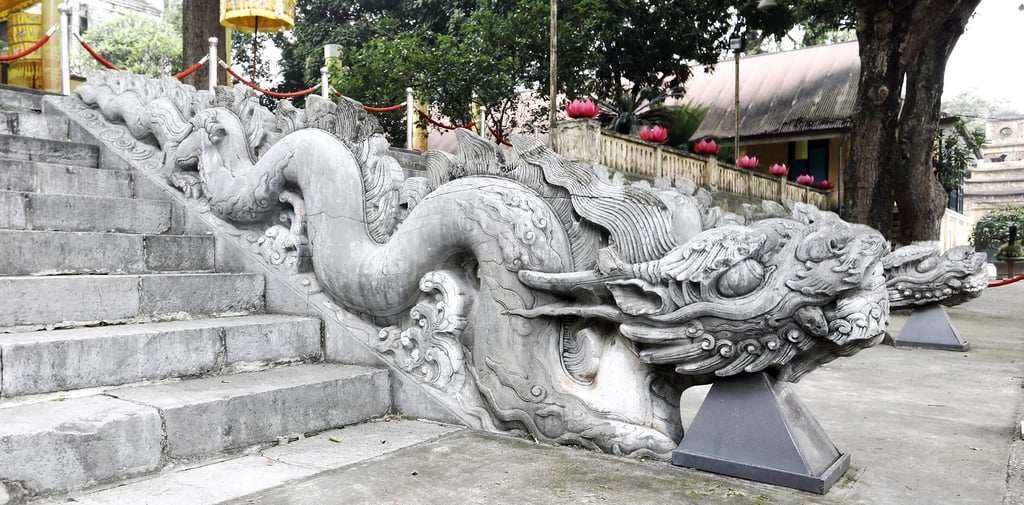
While the primary value of the Thăng Long Imperial Citadel (recognized by UNESCO in 2010) lies in its deep, multi-layered archaeological stratification—the thousand years of history buried beneath the ground—the profound emotional and political resonance of the site is embodied in its few surviving, iconic above-ground structures. These monuments—namely the majestic Đoan Môn (South Gate) and the towering Cột Cờ Hà Nội (Hanoi Flag Tower)—serve as the enduring, visible links to the Citadel's unbroken, thirteen-century history. The current site, often referred to as Thành cổ Hà Nội (The Ancient Hanoi Citadel), tells a compelling story of transformation: its shift from an exclusive, forbidden center of imperial power (Forbidden City) to a democratic, public space dedicated to national memory and cultural pilgrimage.
As specialists in Vietnamese heritage, political history, and urban cultural transition at Vietnam Charm, we embark on an essential, detailed analysis of this transformation. We will meticulously examine the architectural symbolism of the key structures, analyze the logistical and spiritual reasons for their survival, and decode the Citadel’s profound journey from the exclusive Axis Mundi of the Emperor to the shared Meridian of National Identity for the modern Vietnamese people. Understanding this transition is essential to grasping Hà Nội’s unique place as a city where history is not just preserved, but actively lives and evolves.
I. The Symbolic Core: Đoan Môn and the Threshold of Power
The Đoan Môn (South Gate) stands as the most impressive, best-preserved entrance structure of the Imperial Citadel. It is more than a gate; it is the ceremonial threshold that physically and symbolically separates the public, administrative outer areas from the highly sacred, forbidden inner palaces.
1. Architecture of Political Hierarchy
The construction of Đoan Môn in the early 19th century (under the Nguyễn Dynasty, which still maintained the structure as a secondary capital) adheres strictly to the classic imperial design philosophy, reflecting absolute hierarchy:
The Five Arches and the Imperial Path: The gate features five grand, arched doorways. This five-part division is directly symbolic of the Five Elements (Ngũ Hành) and the Five Cardinal Directions, reinforcing the Emperor’s role as the intermediary between the human and cosmic worlds. Crucially, the three central archways were reserved exclusively for the Emperor, his immediate entourage, and officials carrying imperial edicts. The Emperor himself would pass through the central, largest arch—the physical embodiment of the sacred Trục Thần Đạo (Sacred Spirit Path) that ran through the entire Citadel.
The Pavilion of Audience: The massive, tiered terrace above the arches was a highly symbolic space for ritual, used for official appearances and announcements. This balcony transformed the gate from a defensive barrier into a stage for the performance of sovereignty, allowing the Emperor or the ruling Viceroy to occasionally communicate with the highest-ranking mandarins and generals.
2. The Spiritual Logistical Survival
The survival of the Đoan Môn, while many of the original Lý and Lê Dynasty palaces behind it vanished, is a logistical and spiritual paradox. It survived because of its strategic utility and its political necessity. As an outward-facing structure, it remained essential to the continued administration of the city, even when the Nguyễn Dynasty abandoned Hà Nội as the primary capital. Furthermore, its imposing structure embodied the necessary continuation of the imperial mandate—the visible symbol that power, even when geographically relocated, still originated from a structured historical hierarchy.
II. The Enduring Axis Mundi: The Cột Cờ Hà Nội
While Đoan Môn represents the historical threshold of imperial power, the Cột Cờ Hà Nội (Hanoi Flag Tower) is the definitive, enduring Axis Mundi—the non-negotiable spiritual and political center of the modern city and nation.
1. Architecture of Military and National Sovereignty
The Flag Tower was built much later than the initial Citadel (1805–1812, under the Nguyễn Dynasty) for purely military observation and communication. Its design is structurally robust and visually striking:
Structure and Height: The tower is a towering brick structure, standing over 33 meters high. Its three concentric tiers (built on a square base, a symbol of Earth) support the cylindrical tower above (a symbol of Heaven), creating a fusion of geometric symbolism. Its spiral staircase leads to the very top—a command post offering unparalleled views of the surrounding city.
Purpose and Symbolism: Its original purpose was military signaling. However, its modern role is purely symbolic: it is the primary, constant locus of national sovereignty. The Vietnamese flag flying from the top is a constant, visible, non-negotiable reminder of the thousand-year history of independence and self-rule that originates from the very ground beneath the Citadel. It serves as a visual anchor connecting the past struggles for independence with the present reality of a unified nation.
2. The Journey from Military Post to Public Icon
For decades, the area surrounding the Flag Tower was restricted, serving as the headquarters for the Vietnamese military. Today, while adjacent areas remain controlled, the tower itself has become a public symbol of national pride, visited by thousands of citizens and travelers seeking to connect with the physical representation of the nation’s resilience. The Tower’s height transforms it from a mere historical monument into a living, vertical symbol of aspiration and enduring unity.
III. The Historical Trauma and the Archaeological Layers
The Citadel’s history is not solely defined by the beauty of its architecture, but by the trauma of war, conquest, and the eventual triumph of archaeology. The physical dismantling of structures over time reveals profound shifts in political intention.
1. The Nguyễn Dynasty’s Deconstruction
When the Nguyễn Dynasty moved the political capital to Huế in 1802, they began a deliberate, systematic deconstruction of the grand imperial structures of the Lý and Lê Dynasties in Thăng Long. The massive palaces were dismantled, materials were shipped south to build the new capital, and the complex was drastically simplified into a smaller, functional military and administrative post. This act was politically motivated—an attempt to centralize power and diminish the historical significance of the northern capital.
2. The Legacy of the French and the Military
Following the French conquest in the late 19th century, the Citadel complex was repurposed as a military base and colonial administrative center. Ironically, this continuous military and governmental use—which excluded commercial development and dense urbanization—acted as a protective barrier. While the French occupation damaged some surface structures, the restricted use ultimately shielded the underlying archaeological layers from the type of destructive modern commercial development that obliterated similar historical sites in many other major Asian cities.
The unexpected archaeological discovery in 2002 confirmed this legacy. The discovery of continuous foundations and artifacts dating back to the 7th century confirmed that the modern military headquarters rested atop the political heart of a thousand-year empire.
IV. From Forbidden City to Public Memory: The Grand Transition
The most profound philosophical journey of the Thăng Long Citadel is its transformation from an exclusive, forbidden zone of imperial power and military restriction to a democratic, public space dedicated to national memory.
1. Democratization of Space
The UNESCO designation spurred a deliberate government effort to democratize the space. Areas once restricted, guarded, and entirely private—the ancient imperial foundations, sections of the royal gardens, and parts of the administration area—have been opened to the public. This opening transforms the site from a symbol of distant, isolated power into a tangible, shared heritage. Vietnamese citizens now walk the same sacred ground that was once reserved solely for the Emperor and his court, reclaiming the space as a foundation of collective memory.
2. The Spiritual Meridian of the North
While Huế retains the refined historical memory of the Nguyễn Dynasty, Thăng Long represents the enduring spiritual meridian of the North—the seat of power during the pivotal Lý and Lê Dynasties, the eras of greatest Vietnamese independence and territorial expansion. The Citadel now serves as the essential physical reference point for national narratives taught in schools, emphasizing the persistence, self-rule, and cultural continuity of the Vietnamese state across a millennium of dynamic change. It is a symbol of Việt Nam transcending any single dynasty.
V. Conclusion: The Persistence of the Ascending Dragon
The Central Sector of the Imperial Citadel of Thăng Long—Hà Nội is a monument to the relentless power of historical continuity and national resilience. It is a site defined not by the grandeur of its standing palaces, but by the myriad, precious layers of history meticulously preserved beneath the ground. The perseverance of power on this exact geographical spot for over 13 centuries—from Đại La to Thăng Long to modern Hà Nội—serves as the ultimate testament to the strategic vision and sovereign identity of the Vietnamese nation. This World Heritage Site, anchored by the majestic Đoan Môn and the steadfast Cột Cờ, allows the traveler to feel the weight of a thousand years compressed beneath their feet, truly embodying the triumphant spirit of the Ascending Dragon in the very soul of the city.
We are on social media
Vietnam Charm belongs to Vietpearl Travel., JSC
Contact:
Email: info@vietnamcharm.top
© 2026. by Vietnam Charm. All rights reserved
Travel license number: 01-827/2020
Refund Policy